Categories
Resources

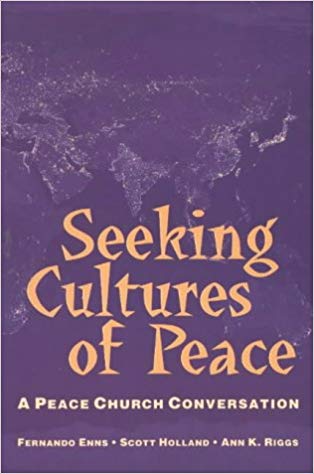
Seeking Cultures of Peace: A Peace Church Conversation

By Fernando Enns (Editor), Scott Holland (Editor), and Ann Riggs (Editor)

The essays in this book represent a contribution of the Historic Peace Churches (HPC) to the work of the World Council of Churches' Decade to Overcome Violence. They are divided into four sections: the first introduces the ecumenical context of this discussion, the history of HPC relations, and the globalized reality in which contemporary violence occurs. The second is written from three geo-social settings and engages the notion of globalization from three viewpoints: biblical studies, theological ethics and historiography. The third section engages the gospel and our traditions within the contexts of HPC communities in North America, Nigeria and Colombia. And the fourth discusses resources in HPC tradition for action, reflection and critique in building a future of justice and peace. An appendix reproduces a statement prepared at a 2001 consultation of interested members of the Brethren, Quaker and Mennonite communities, entitled Just Peace-making: Towards an Ecumenical Ethical Approach from the Perspective of the Historic Peace Churches. A Study Paper for Dialogue with the Wider Church.

https://www.amazon.com/Seeking-Cultures-Peace-Church-Conversation/dp/2825414026
Categories
Resources

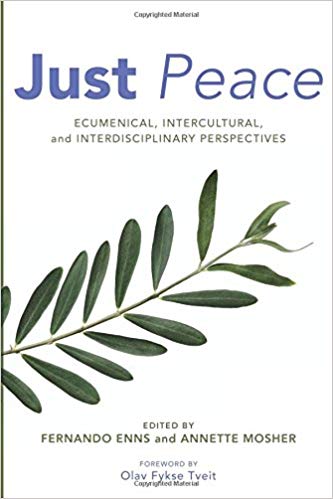
Just Peace: Ecumenical, Intercultural, and Interdisciplinary Perspectives

By Fernando Enns (Editor) and Annette Mosher (Editor)

Christian theology and ethics have wrestled with the challenge to apply Jesus's central message of nonviolence to the injustices of this world. Is it not right to defend the persecuted by using violence? Is it unjust if the oppressed defend themselves-if necessary by the use of violence-in order to liberate themselves and to create a more just society? Can we leave the doctrine of the just war behind and shift all our attention toward the way of a just peace? In 2011 the World Council of Churches brought to a close the Decade to Overcome Violence, to which the churches committed themselves at the beginning of the century. Just peace has evolved as the new ecumenical paradigm for contemporary Christian ethics. Just peace signals a realistic vision of holistic peace, with justice, which in the concept of shalom is central in the Hebrew Bible as well as in the gospel message of the New Testament. This paradigm needs further elaboration. VU University gathered peacebuilding practitioners and experts from different parts of the world (Africa, Latin America, North America, Asia, and Europe) and from different disciplines (anthropology, psychology, social sciences, law, and theology)-voices from across generations and Christian traditions-to promote discussion about the different dimensions of building peace with justice.

https://www.amazon.com/Just-Peace-Intercultural-Interdisciplinary-Perspectives/dp/1620323621