Categories
News Resources

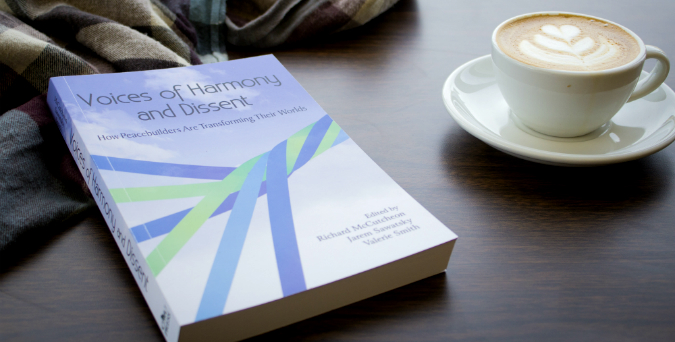
Download your free copy of Voices of Harmony and Dissent

Last June we launched our book, Voices of Harmony and Dissent: How Peacebuilders are Transforming Their Worlds.  Each chapter, authored by a different CSOP instructor, explores three dimensions of peacebuilding:

  • stories of inspiring peace work
  • tools and strategies for peacebuilding in a variety of settings
  • resources that have helped shape the author's views

Now we are making the e-book version of this book available for free.  We think this book captures the spirit of the CSOP and we hope that it will give you a taste of what the CSOP has to offer, particularly for those of you who are unable to join us for one of our five-day courses. 

You can download your free copy of this book at at CommonWord, Amazon, Kobo, Nook, or Apple. If you wish to purchase a print version of the book, you can do that on any of the above sites or through the CSOP website. We hope you will enjoy reading this book and that it will equip and inspire you in your work as a peacebuilder.

Please feel free to let your friends, communities and social media networks know about this free offer.  

What others have said about Voices of Harmony & Dissent:

“This book is an empowering patchwork of rich voices of harmony and dissent… It is a book you can dip into here and there on a plane or before bed. This is because it is a compilation that lets the journey be your own in connecting up the many strands of wisdom it contains. All of us can be much better peacebuilders if we take that journey of the connections with this sumptuous volume.”

– John Braithwaite, author of Crime, Shame and Reintegration

"This book stands out because it reflects and charts the creativity, energy and relevance of the field for global peacemaking. ”

– Tom Woodhouse, author Contemporary Conflict Resolution 

"This is a book of wisdom… Even the experience of reading these essays can prompt a greater peace .”

– John Borrows Canada Research Chair in Indigenous Law at the University of Victoria Law School

"These stories and essays intimately and powerfully convey two fundamental truths. The first is that history changes only through the actions of people who decide it has to change… The second truth is that the human spirit is worth struggling for, day after day, year after year, no matter whether we are successful or not. In this work, which joins us at the heart, we will always find joy, even in the harshest of external circumstances."

– Margaret J. Wheatley, bestselling author Leadership and the New Science

"Voices of Harmony and Dissent holds the heart of how social change happens–people who believe deeply, develop significant relationships, and have the courage to engage together. Each and every chapter provides lessons and inspiration and, most importantly, has a deep resonance that rises from these voices of hard-won experience and reflective practice, an authenticity that touches the reader and points us toward the kind of learning that really makes a difference in our world."

– John Paul Lederach, author The Moral Imagination
 

Categories
News Profiles

CSOP Participant Profile – Michael Wiebe

by Ellen Paulley

What does the Bible teach about justice? How can these teachings be applied in the church and wider society today? Can a compassionate and restorative justice serve the world?

These are some of the topics discussed in the 2015 Canadian School of Peacebuilding (CSOP) class, Justice of God:Questions of Justice in the Bible and the World, taught by Professor Chris Marshall, Victoria University of Wellington, New Zealand.

Canadian Mennonite University alumnus Michael Wiebe was one of the participants in this CSOP course. A Communications and Media major, Wiebe noted the importance of communication and conversation in restoring right relationships.

“Storytelling is one of the biggest assets in making right relationships,” he says. “Everything I’ve learned at CMU has been about storytelling—being in the communications industry, I can be a steward of the earth through storytelling.”

Restoring relationships is a very communicative process and hearing from both parties involved is an important aspect of restorative justice. Additionally, gaining “an understanding of someone’s speech community and the conversation they were raised with, needs to be taken into account in the restorative justice process,” he says.

Wiebe has had opportunities to mediate conflicts in the past and has sought ways to build people up and figure out how to work well with people in conflict.

Taking the course, Justice of God, has helped him discover ways of facilitating what can be difficult conversations and explore how his faith informs the way he does so.

“What does justice mean biblically and to the wider Christian community? Justice means that God is involved in very actively bringing justice about in relationships,” he reflects.

For those who are interested in CSOP, Wiebe’s encouragement is to be prepared to be inspired about something new.

“The course topics that CSOP covers are innately the things that humans want, which are resolving conflict, making relationships right, living in harmony,” he says. “Once you get into the course, you can’t really help but to feel some sort of urge to think harder about these questions and to even make changes in your own life about peace and justice and how to live well in a very broken world.”

Categories
News Profiles

CSOP Participant Profile – Beverley Stewart

By Ellen Paulley

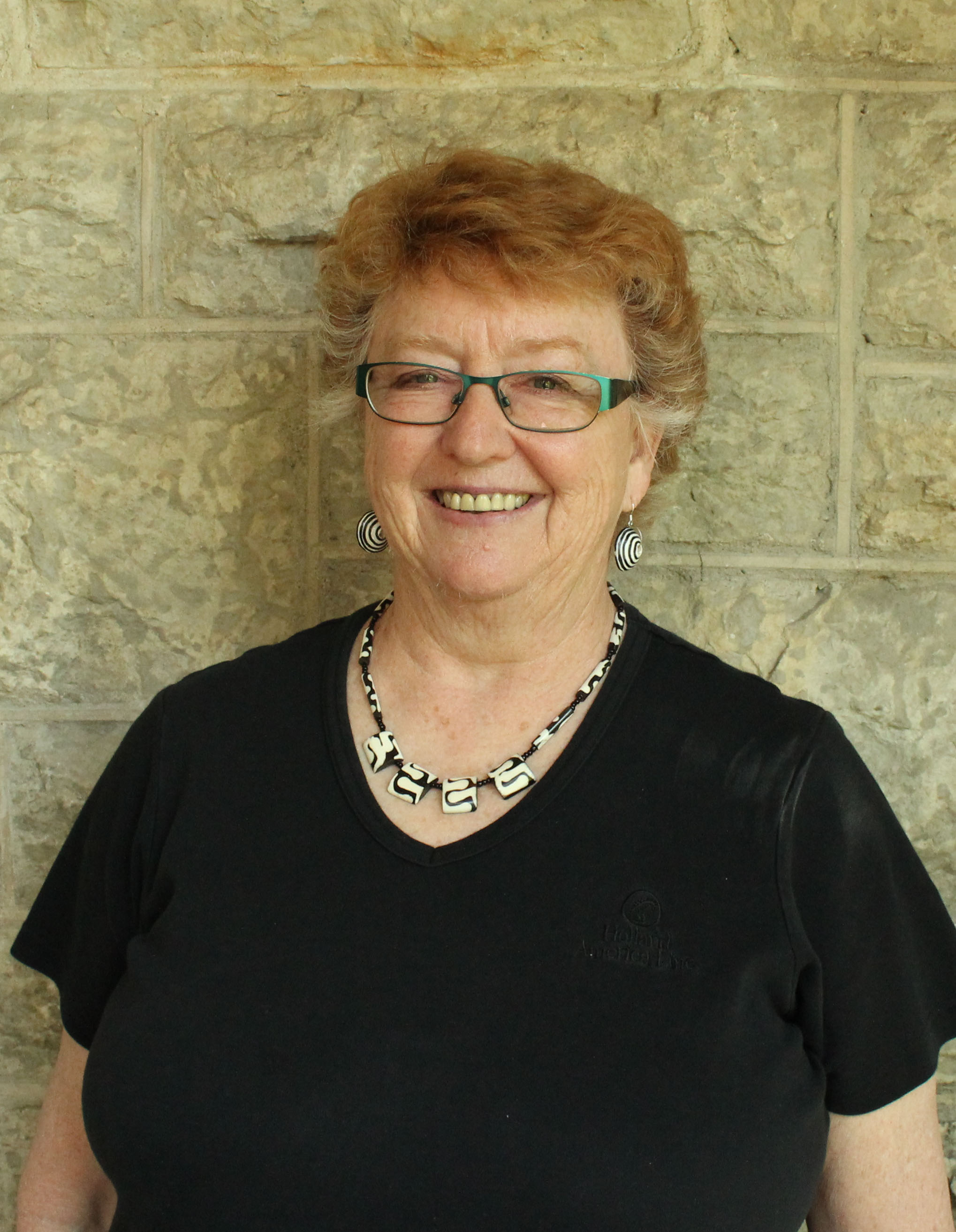
Beverely Stewart has explored her longstanding interest in peace and justice by taking courses at the Canadian School of Peacebuilding over the last few years.

This year she participated in Women and Peacebuilding, taught by Ouyporn Khuankaew and Ginger Norwood.

“I’ve always liked the idea that this [CSOP] is called peacebuilding,” says Stewart. “The focus of this course has been on ourselves and our own personal being. How do we build peace? How do we become a person of peace within our inner being?”

Instructors Khuankaew and Norwood drew on their Engaged Buddhist roots and their work in Burma, India, Sri Lanka, and Thailand to work with participants to analyze women’s involvement in peace action, research, and education. The course also looked at the challenges that women activists face, such as building common ground among women with varied experiences and concerns.

In the past, Stewart has taken Exploring Indigenous Justice and Healing and Human Rights and Indigenous Legal Traditions. After each course, she shares her learning to some extent with family, friends, and colleagues.

“Each year that I’ve come, I’ve been able to move on and listen and learn in a different way than before the course,” she says. “As the story goes, peacebuilding begins with you.”

A retired Anglican priest, Stewart sees a strong connection between faith and social justice.

“It [social justice] is the faith,” she says. “Faith is all about reconciliation and peace and justice. Those two go together.”

Through her work and now in retirement, Stewart has had opportunities to travel in Central Asia, Africa, Iran, and North Korea, on pilgrimages, classes, and tours. As such, she’s been exposed to a diversity of religions, cultures, and governance models.

“Every [trip] is a piece of the puzzle, and it’s all a part of the web. Each one teaches me something different.”

Stewart is grateful for the opportunities she’s had, which have led her to wonder about the options available to affect positive change in the world.

“How much right do we as a nation, a community, a religious institution—any kind of a we or an I—have to tell somebody else what to do, how to believe and behave?”

While peacebuilding and working for change can feel overwhelming at times, Stewart stresses the importance of drawing on faith to stay motivated.

“Peace groups that haven’t had an element of faith haven’t lasted,” she says. “There’s something about the ground work of an element of faith—whatever that faith might mean to that person. It’s like a tree, you have to have that rootedness in order to survive.”

For those interested in attending CSOP, Stewart encourages them to come. “Having international and interfaith communities is one of the absolute blessings of this place,” she says.

Categories
News Resources

Diverse new CSOP book explores peacebuilding around the world

June 10, 2015

CMU to host launch of ‘Voices of Harmony & Dissent’ on Tuesday, June 16

A new book arising from Canadian Mennonite University’s (CMU) Canadian School of Peacebuilding (CSOP) explores the stories, theory, and tools of 16 peace leaders, trainers, and activists from around the world.

Voices of Harmony & Dissent: How Peacebuilders are Changing Their Worlds was edited by Richard McCutcheon, Jarem Sawatsky, and Valerie Smith. The editors will celebrate the release of the book with a launch event happening Tuesday, June 16 at 7:00 PM in the Great Hall at CMU (500 Shaftesbury Blvd.). The event is free, and all are welcome to attend.

Offering an intriguing mix of styles and perspectives, the peacebuilders included in the book describe how they have used their creativity, compassion, and frustrations to learn how to peacefully engage and transform the world around them.

Each contributor has taught at the CSOP, which offers a selection of five-day courses each June.

Smith, co-director of the CSOP, says the book arose out of a desire to expose people to the amazing instructors who teach at the school.

“We have so many people who are interested in the CSOP, and so many who apply but don’t get a chance to come here for all sorts of reasons, like finances and visas,” Smith says. “We wanted to find a way to serve those people who can’t be here in person.”

Published by CMU Press, Voices of Harmony & Dissent includes contributions from Ovide Mercredi, former National Chief of the Assembly of First Nations; Mubarak Awad, a Palestinian-American psychologist; Ouyporn Khuankaew, a Buddhist feminist activist from Thailand; Martin Entz, a professor in the Department of Plant Science at the University of Manitoba; Karen Ridd, Instructor in Peace and Conflict Resolution Studies at CMU; and more.

Through inspiring stories, the book takes readers on a journey of interrelated themes including women and peacebuilding, nonviolent action for social change, restorative justice, indigenous approaches to change, spirituality and creative arts, circle process, food security, mediation, intercultural peacebuilding, and truth and reconciliation.

While the style and topics of the essays are radically diverse, Smith says there are common themes that tie the collection together.

“All of the essays are written by deeply committed, experienced peacebuilders who are living what they teach,” she says.

Smith adds that she is looking forward to the book launch.

“In reading through these essays over and over again, I feel like I’ve learned a little bit about each contributor and what they have offered in their classes at the Canadian School of Peacebuilding,” she says. “That feels like a real gift. I’m excited to share that with the community and hear people’s feedback as they begin to read the book.”

Established in 2009, the CSOP is a learning community of diverse peacebuilders from all faiths, countries, and identity groups who come together to learn, network, and engage in peacebuilding.

Now in its seventh year, the 2015 CSOP courses will take place June 15-19 and June 22-26.

Categories
News Profiles

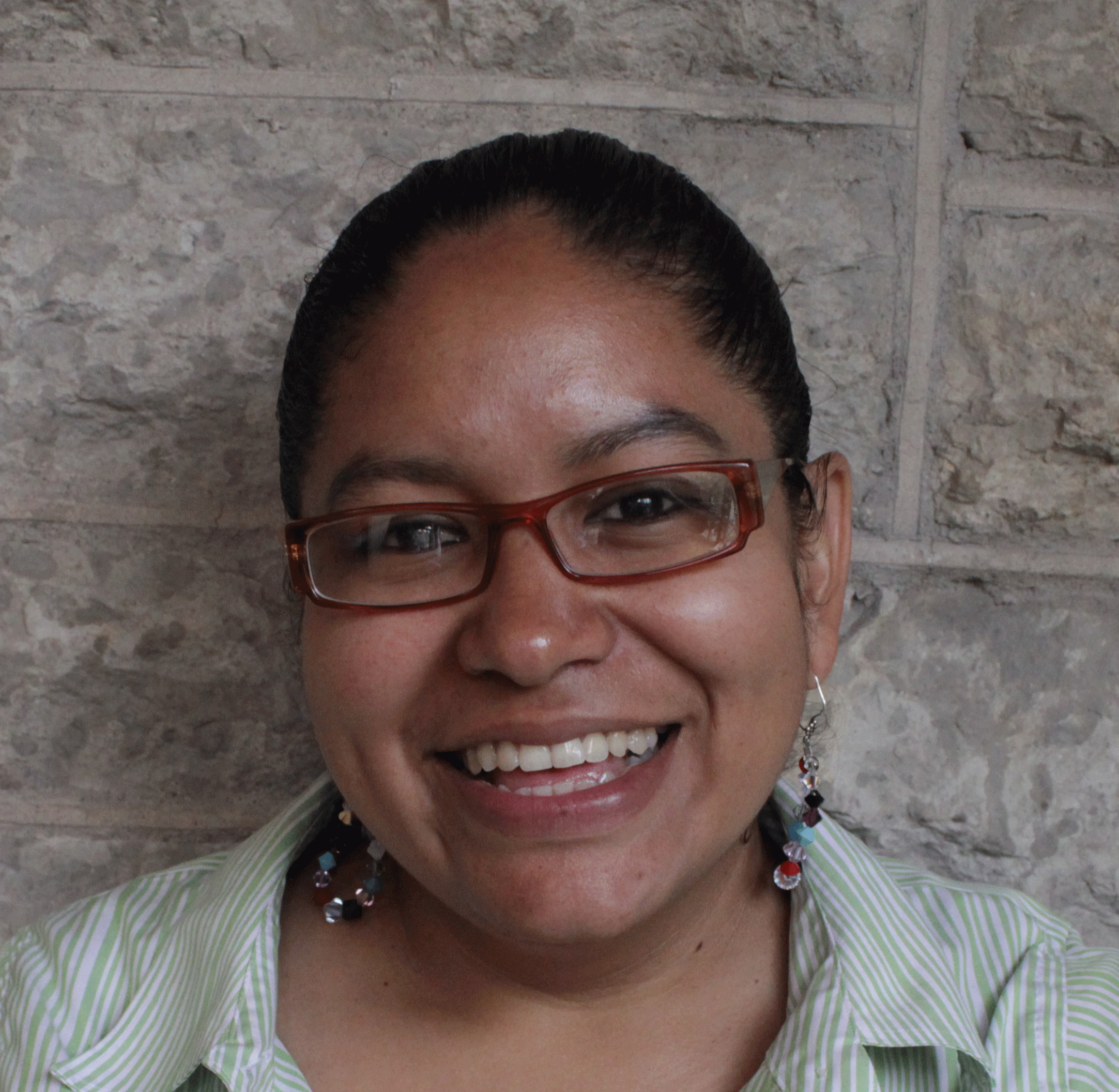
CSOP Participant Profile – Leda Garcia

by Ellen Paulley

Canadian School of Peacebuilding equips student with tools to work in restorative justice

Leda Garcia says her time at the Canadian School of Peacebuilding (CSOP) equipped her with the tools and knowledge to work effectively in the field of restorative justice.

An institute of Canadian Mennonite University, CSOP is a community of diverse peacebuilders who come together to learn, network, and engage in peacebuilding.

Prior to attending CSOP, Garcia says she had some knowledge of restorative justice, but wasn’t sure of “how to put everything together.” After taking the course “Restorative Justice with Youth and Schools,” Garcia says, “Now I have the tools and I know how to use them.”

Garcia intends to use her restorative justice knowledge in her work at home in Honduras. Working with the Mennonite church, Garcia has been involved in mediation and peace programs in schools.

“We’re trying to tell the kids they don’t have to go through life with a gun, beating people up to make a living,” she says.

Garcia has also worked with a friend to establish a mediation program in the school her friend’s children attended, in response to a wave of violence that was occurring in the school.

She’s passionate about working with youth and encourages them that they don’t have to be involved in a life of violence. “They can change, there is an opportunity,” she says. “They have to work hard but they can make it out.”

Growing up, Garcia didn’t have a strong relationship with her parents and says she had role models who “weren’t the right ones.” As a youth, she says she heard God’s voice call her and felt that she needed to find peace within herself.

“To make peace around you, and to find peace, you have to make peace with yourself; find that forgiveness place,” she says.

Garcia spent one year in Canada as part of Mennonite Central Committee’s International Volunteer Exchange Program. She says she wanted to visit Canada to experience being in a place where there’s “peace all around.”

She was also interested in learning about how concepts of justice vary from place to place. “Justice is always related to the culture, to the community,” she says. “What is justice to you could probably be security and welfare. For us, it could be as simple as having clothing or food for one year.” Once basic needs are met, it’s then possible to pursue other types of justice, says Garcia.

Prior to coming to Canada, she was studying ecotourism in university. But she says her time at CSOP assured her that’s not her path. “My way will be community development,” she says. “I know that feels better in my heart.”

Garcia’s advice to those who are considering coming to CSOP is to not be afraid of stepping outside of their comfort zone and to be open to growing and changing.

“I’ve grown more in this time than I’ve grown in my entire life, in ways that I didn’t know I needed to grow,” she says.

Categories
News Profiles

CSOP Participant Profile – Terry Schalm

by Ellen Paulley

Peacebuilding: Beyond Dealing With War

Terry Schalm, wife of a Lieutenant Colonel in the Royal Canadian Air Force, has learned alternative models of peacemaking while studying at the Canadian School of Peacebuilding (CSOP).

Schalm says that the approaches she’s learned at CSOP have been eye opening and that she’s learned “there are different ways of doing things without using force.” An institute of Canadian Mennonite University, CSOP is a community of diverse peacebuilders who come together to learn, network and engage in peacebuilding.

Schalm, who is also a student at CMU, says her education at CSOP and CMU has expanded her understanding of peacebuilding. “It’s not just preventing violence,” she says. “Peacebuilding is so much more than dealing with war. It’s building communities, building harmony, and seeing value and dignity in everyone.”

While Schalm says she finds value and truth in nonviolent peacebuilding, she says she hasn’t “been converted over yet.” She grapples with whether nonviolent action could be sufficient to “deal with leaderships and attitudes in some countries.”

She also ponders what changes would be required in order for nonviolent peacebuilding to become the norm. She says it will likely take the intentional efforts and substantial cooperation of many people for the world to move in the direction of peacebuilding and wonders whether “we’re committed to continue in a military fashion with our western thinking.”

But the idea that peacebuilding occurs at the local and individual level gives Schalm hope – “it all starts with individuals and moving toward [peacebuilding] and facilitating that growth over time.” She says her time at CSOP has taught her that even actions like compassionate listening can bring about peace.

Hearing other perspectives was a highlight of the CSOP class Schalm took this year, “Strategies for Trauma Awareness and Resilience,” taught by Elaine Zook Barge. “It was really helpful to hear what life is really like for those who have experienced trauma, not just what we imagine or hear in the media,” says Schalm.

In the future, Schalm would like to work in the area of mediation and says what she’s learned during this course will be very applicable. Through her time at CSOP, she’s grown in her awareness that “each person comes with a story and that each person should be entitled to voice their story with respect.”

Because of her husband’s 38 years of service with the RCAF, Schalm says she wasn’t initially sure if she’d be welcomed at CSOP, but comments that the diverse makeup of the School means that everyone is given a voice and is validated. “Instructors seem open to sharing their stories and lives with you and likewise are willing to listen to your story,” she says.

Schalm’s looking forward to talking with her husband about the concepts and approaches she’s learned. And while she might not yet be “converted,” her time at CSOP has “softened my attitude that the military way is the only way,” she says. “Maybe there is hope for people in leadership—that their hearts can be softened too.”


Categories
News Profiles

CSOP Participant Profile – Enole & Wazha Ditsheko and Keseopile Gaselebalwe

by Aaron Epp

Canadian School of Peacebuilding helps Botswana church leaders work for peace

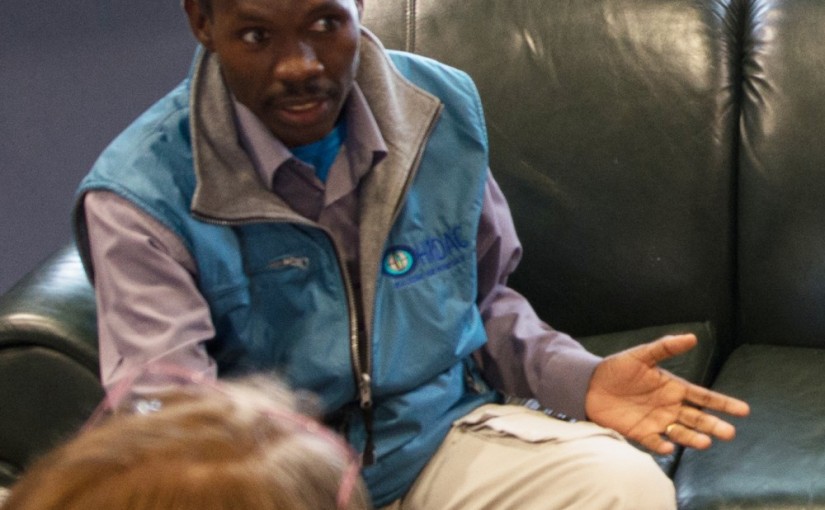
When Enole and Wazha Ditsheko wanted to start a peace centre in their hometown of Gaborone, Botswana, they thought studying at the Canadian School of Peacebuilding at Canadian Mennonite University would help.

So, the Ditshekos travelled from the capital city in the Southern Africa country to Winnipeg this past June to participate. The Ditshekos helped start their church, New Temple of the New Jerusalem, five years ago, and are leaders in that church today. They came to Winnipeg with Keseopile Gaselebalwe, who works with young people that their church helps.

Enole says New Temple of the New Jerusalem is a church that resulted out of conflict. The leaders of his former church were corrupt, leading promiscuous lifestyles and not being open about how they were spending money that parishioners were giving the church. They were not willing to be held accountable — financially, morally or otherwise, Enole says.

“African churches are made up predominantly of poor people,” he explains. “If they are going to put money in the basket, they should be able to ask at a general meeting, Where did that money go?”

The matter was brought to the courts, but the congregation and its leadership were not able to reconcile their differences.

“(The leaders) knew if they gave answers, they would be exposed,” Wazha says.

That conflict showed the Ditshekos that Gaborone could benefit from a peace centre — a place where people could learn practical skills for resolving conflicts without using violence.

In addition to conflicts caused by corrupt church leadership, the Ditshekos say a challenge facing Christians in Botswana is the influx of people from Zimbabwe who have come to Botswana to escape the harsh living conditions in their homeland.

“As local people, we often feel they have taken over,” Enole says. “But these people are desperate and want to make a living.”

The peace centre would help these Zimbabweans adjust to life in Botswana and aid them in getting the proper documentation they need to live and work in the country.

New Temple of the New Jerusalem also currently works with 30 youth between the ages of 10 and 19 who come from difficult home lives because they have lost one or both of their parents to HIV/AIDS. These youth struggle to maintain healthy relationships and get a proper education because they have no positive role models and live in poverty. Drug abuse amongst this group is rampant.

Gaselebalwe and her colleagues already work with these youth, bringing them to the church each weekend where they attend services, sing in a gospel choir and receive a meal. Within six months of connecting with the church, many of these youth have gone from living on the streets to living at home with their grandparents. Most are back in school after having dropped out.

“We find ourselves having to build the blocks of morality for them,” Enole says. “To do that, we feel a peace centre will be very helpful.”

Enole, Wazha and Keseophile’s visit to the CSOP this past June was two years in the making. They worked together with their local church, along with a Mennonite church in Kansas and a Mennonite church in Winnipeg to work out visas, finances and accommodations to make the trip possible.

Enole says that taking classes at CSOP was important to the group, and with any luck, he and other people from his church will be back in 2015.

“For as long as the CSOP is running, we want to send people here,” he says. “That is my desire. That is my dream.”

Categories
News Profiles

CSOP Participant Profile – John Fox

by Aaron Epp

Criminal, prosecutor reunite at Canadian School of Peacebuilding

John Fox and Rupert Ross are used to seeing each other in the courtroom, not the classroom.

When Ross worked as the Assistant Crown Attorney for the District of Kenora, Fox encountered him during numerous bail hearings after being arrested for a variety of crimes, including assault and weapons charges.

“He was the enemy,” says Fox, 43. “It was always us against them.”

The two reunited at the 2014 Canadian School of Peacebuilding (CSOP), this time on friendlier terms: Fox enrolled in Exploring Indigenous Justice and Healing, a course taught by Ross.

Between 1992 and 1995, Ross was seconded to the federal Aboriginal Justice Directorate. He travelled across Canada, examining Aboriginal approaches to justice with special emphasis on healing programs for victims, offenders, families, and communities.

He wrote two books as a result: Dancing with a Ghost: Exploring Indian Reality and Return to the Teachings: Exploring Aboriginal Justice.

Fox discovered the books as a student at Menno Simons College (MSC).

“I loved his books,” Fox said, adding that reading them gave him a better understanding of his Aboriginal heritage, the gap in communication between Aboriginal peoples and the dominant white Canadian society, and the history of violence in his family.

“I was hurt a lot as a child,” Fox said. “Because of that hurt, if you don’t deal with it properly, you tend to hurt other people.”

Fox grew up in Big Trout Lake First Nation, a fly-in community in northwestern Ontario. From the age of 11 to 15, he was sexually abused. He lost two close friends to suicide as a teenager, and turned to drugs and alcohol to deal with the pain.

Until a few years ago, he had spent most of his life working as a drug dealer. Fox was a violent person whose run-ins with the law led to nine or 10 stints in jail.

In 2008, his then-girlfriend’s sister committed suicide in front of him. Blaming Fox, the woman’s brother and boyfriend burned down his house.

After the suicide, things began to change for Fox. He stopped dealing drugs and started attending Alcoholics Anonymous. He began volunteering at a church drop-in centre and embarked on a healing journey that has relied heavily on traditional Aboriginal practices.

Today, Fox has been sober for four years and he is happily married.

Reuniting with Ross at the CSOP was a pleasure for Fox, and an indication of how far he has come.

“He’s such a storyteller,” Fox said of Ross. “He reminds me of an elder. Ask him a question and he doesn’t answer, he tells you a story.”

Fox may be enrolled in Conflict Resolution classes at MSC, but he says that what he’s really studying is the man he sees when he looks in the mirror.

“I’m studying myself, because I was a person with so much conflict.”


Categories
News Resources

Peace, Conflict and Violence: Peace Psychology for the 21st Century

By Daniel J. Christie

This comprehensive book brings together the key concepts, themes, theories, and practices that are defining peace psychology as we begin the 21st century. It is rooted in psychology, but includes a wide range of interpersonal, community, national and international contexts, multiple levels of analysis from micro to macro, and multi-disciplinary perspectives. It reflects the breadth of the field and captures the main intellectual currents in peace psychology: violence, social inequalities, peacemaking, and the pursuit of social justice. This book contains a wide range of topics, including ethnic conflict, family violence, hate crimes, militarism, conflict management, social justice, nonviolent approaches to peace, and peace education. It is ideal for readers interested in peace education, international studies, psychology, political science, anthropology, and sociology.

http://www.amazon.com/Peace-Conflict-Violence-Psychology-Century/dp/0130968218/ref=sr_1_2?s=books&ie=UTF8&qid=1417730146&sr=1-2

Categories
News

Mubarak Awad is “The ‘Palestinian Gandhi’ Who Still Believes Non-Violence Is the Answer”

Mubarak Awad, non-violent activist and teacher and 2013 CSOP instructor, was recently featured in an article in Newsweek.  Read the article at http://www.newsweek.com/2014/08/22/palestinian-gandhi-who-still-believes-non-violence-answer-264041.html