Categories
News Profiles

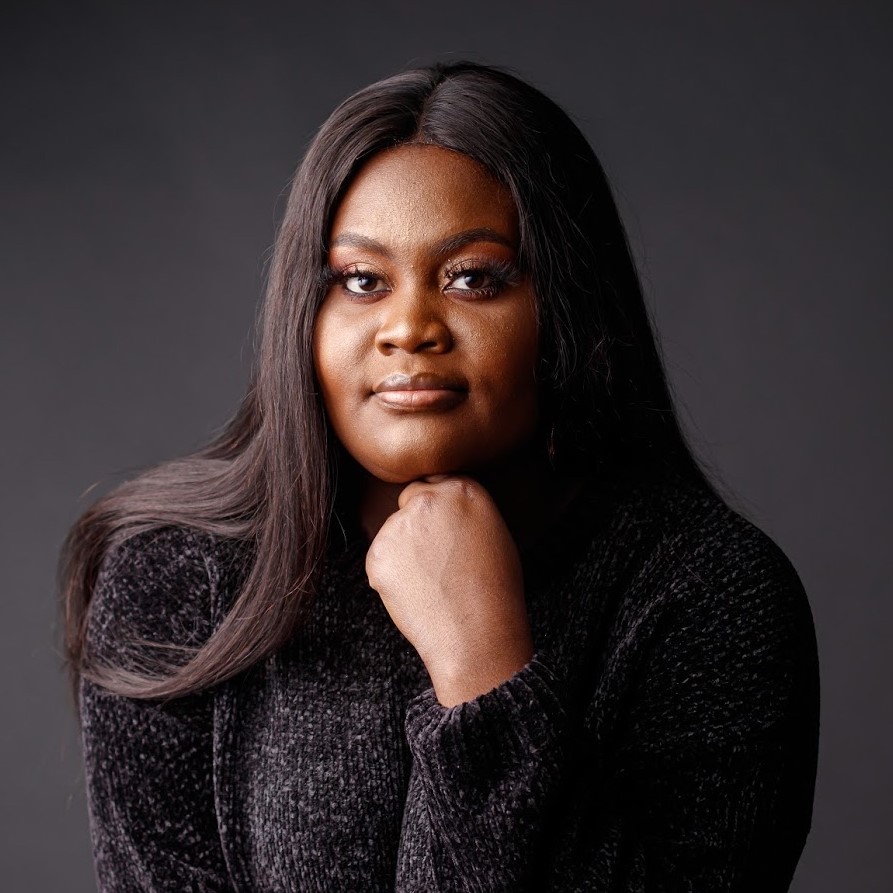
CSOP Participant Profile – Itiovie Ayeni

By Nicolien Klassen-Wiebe

CSOP course engages student’s passion for supporting refugees

After graduating, Itiovie Ayeni wants to work in services supporting refugees, a cause about which she’s passionate. So, when she read the Canadian School of Peacebuilding (CSOP) courses offered in 2021, she knew exactly which one she needed to take.

She enrolled in Refugees and Displacement: Learning to Extend Hospitality, co-taught by Mary Jo Leddy and Dan Epp-Tiessen. Leddy is a renowned Canadian writer, theologian, and social activist, who is known for her work with refugees at Toronto’s Romero House. Epp-Tiessen is Emeritus Associate Professor of Bible at Canadian Mennonite University (CMU) and a preacher, writer, and former pastor who explores how scripture intersects with issues of peace and justice.

Ayeni, 25, moved to Canada from Nigeria in 2019 to study for her Master of Arts in Peacebuilding and Collaborative Development at CMU. Before that, she spent a year mentoring young girls in northern Nigeria, where there is a prevalent culture of child marriage. She raised money on her own initiative so the girls under her care could stay in school. “I had to make sure they knew that they mattered,” Ayeni said, “because the culture is more like only boys matter, girls don’t matter.”

When she first started at CMU, she took a course on refugees and forced displacement with Stephanie Stobbe, Associate Professor of Conflict Resolution Studies at Menno Simons College, a program centre of CMU. Ayeni said that while the fight for refugee rights and gender rights are not identical, what she was learning about refugee advocacy “resonated with what I had been doing before.”

Her experience at CSOP reinforced those connections, and only strengthened her desire to bring her skills to the field. “Although I had known I wanted to work with refugees, I feel like this class sealed it for me,” Ayeni said. “Mary Jo has been working with refugees for more than 30 years, and just hearing first-hand the struggles that people have to go through, it just resonated with me and made me say, ‘yes, this is what I want to do’.”

Refugees face a lot of challenges when they flee to another country, like Canada. Some are left alone and without a community, facing language barriers, inadequate affordable housing, and stereotypes and stigma. Ayeni didn’t come to Manitoba as a refugee, but she could relate to their experiences: “Coming here without a family, just myself, having to look for housing, learn to use the bus, trying to get a job, settling down is something I had to struggle through a bit,” she said. Knowing the difficulties of her own experience and realizing the additional struggles that refugees face was impactful for her.

Reading Leddy’s book, The Other Face of God: When the Stranger Calls Us Home, alongside Leddy’s teaching made theoretical situations come to life—sometimes quite literally. Hidat, a central figure in one of the stories in Leddy’s book, actually came in-person to share her story with the CSOP class. Hidat faced deportation decades ago and was given an unfair hearing, with an inadequate translator and a lawyer who slept during the trial. It wasn’t until Leddy stepped in and fought for her that Hidat had a chance of staying in Canada.

Ayeni was particularly moved by Hidat’s story after meeting her. “This is one person out of thousands of refugees,” Ayeni said. “I’m sure there are so many people who do not have that opportunity for anybody to fight for them. They get the ruling and that’s it.”

Stories like these inspired her to be more aware of what people around her are going through. “This course made me realize I have to slow down and check my environment, check myself. Where have I just ignored someone, where have people needed my help and I haven’t paid attention to it and passed by?”

Categories
News Profiles

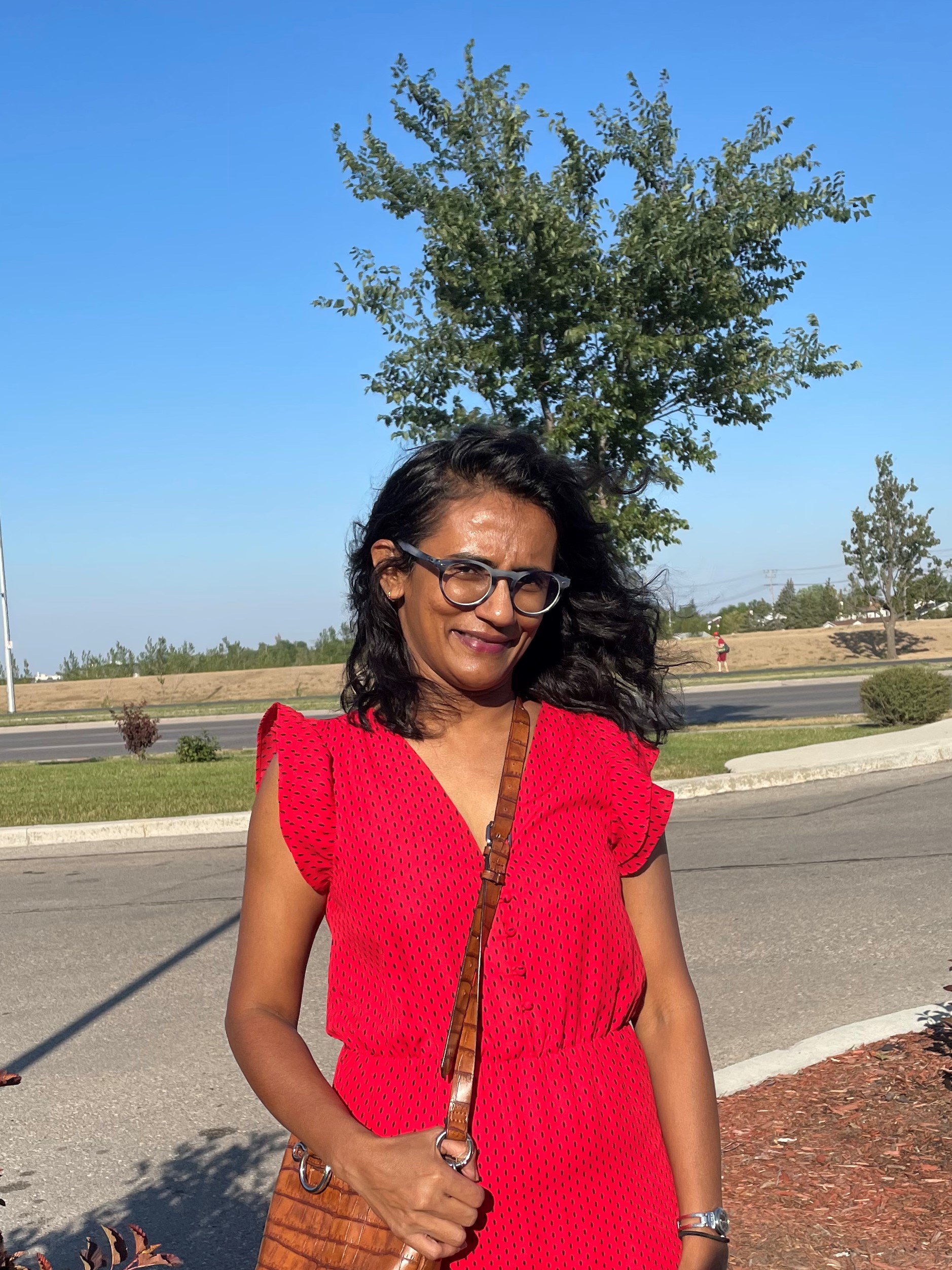
CSOP Participant Profile – Reezwana Yadallee

By Nicolien Klassen-Wiebe

CSOP student brings learning back to social services work

When Reezwana Yadallee heard that Mary Jo Leddy was teaching a course at the 2021 Canadian School of Peacebuilding (CSOP), she told herself she could not miss it.

Leddy is the author of Radical Gratitude, a book that greatly impacted Yadallee when she read it for her class on voluntary simplicity at Canadian Mennonite University (CMU). “[The book] forces you to do some self-introspection in a way, on yourself and what life actually really means,” Yadallee said.

The 45-year-old is studying Peace and Conflict Transformation Studies while also working in employment and income social services for the provincial government.

For her first CSOP course, she took Refugees and Displacement, Learning to Extend Hospitality with Leddy and Dan Epp-Tiessen, Emeritus Associate Professor of Bible at CMU. Epp-Tiessen is a preacher, writer, and former pastor who explores how scripture intersects with current issues like peace and justice and creation care. Leddy is a renowned Canadian writer, theologian, and social activist, who is known for her work with refugees at Toronto’s Romero House. “She inspires a lot of us just because of her way of seeing the world,” Yadallee said of Leddy. 

Yadallee also enrolled in the course because she interacts with refugees on a regular basis through her work, and wanted to bring her learning back to the office. She sees refugee crises broadcast on the news, debated in politics, and discussed among friends—and she knows refugees face challenges and misconceptions.

As a newcomer who came to Canada from Mauritius in 2017, Yadallee can connect to parts of refugees’ experiences. “In a way we’ve also fled our country, not because of war but for other reasons, trying to seek a new beginning,” she says.

Yet there’s much she can’t understand because her experience is fundamentally different. So listening to her CSOP classmates share about their lives was really meaningful. “It gives you a lot to think about when you listen to them,” she says. “That’s the chance where I get to really listen to someone, to a refugee, and learn from that person.”

The course’s participants came from a host of different countries, contexts, and ages, some even from different locations due to the online format. This diversity was a highlight that enriched Yadallee’s learning experience. “It’s just that I get to interact with other people whom I can relate with, which is something very important for me,” she says. “Having other students from different cultural backgrounds really helps.”

Categories
News Profiles

CSOP Participant Profile – Nicole Ternowesky

By Nicolien Klassen-Wiebe

CSOP student uses course to enrich youth work

When Nicole Ternowesky first signed up for the Canadian School of Peacebuilding (CSOP), she never imagined it would lead her to a summer job.

Ternowesky, 20, is a third-year student from Brandon, MB, majoring in Peace and Conflict Transformation Studies at Canadian Mennonite University (CMU). After enrolling in a course for the 2019 session of CSOP, she attended a dinner party over Christmas where she happened to meet someone who would be taking the same course at the summer peacebuilding school.

That person was Dwayne Dyck, Executive Director of Westman Youth for Christ (WYFC) in Brandon. Once they made the CSOP connection and started talking, one thing led to another and soon Ternowesky landed the position of Summer Student Mentor at WYFC.

She spent the summer working with youth facing homelessness. WYFC sets up youth with transitional housing in subsidized apartments and helps them apply for Employment and Income Assistance (EIA) to help them pay their rent. Then they create a personal development plan together, working to achieve goals like finishing their high school diploma, getting a job, and improving mental and physical health.

“Basically we just ask them, ‘What do you want to get out of this experience?’ . . . they decide and then we walk alongside them and provide support and friendship. And we try and let them know that no matter what they do, they always have the relationships,” she says. “It’s really fun, like I just hang out with youth all day and get to be their friend and connect with them.”

During her week at CSOP, Ternowesky took the course, Indigenous Perspectives on Salvation, Repentance, Peace, and Justice with Ray Aldred. He is a Cree man who is director of the Indigenous Studies Program at the Vancouver School of Theology and an ordained minister within the Christian and Missionary Alliance in Canada.

“I took the class because I am really interested in how Indigenous Christians are following Jesus in their own cultural way and I wanted to learn more about that,” says Ternowesky, who is Métis.

“It’s a really interesting class. I like the idea of incorporating Indigenous ceremonies into Christian worship. I like that he talks about how doing that actually enriches Christianity, because a lot of people are scared it threatens the integrity of the gospel, but actually it enriches our encounter with Christ.”

She appreciates how he invited everyone in the class into an Indigenous spirituality, even though many were not Indigenous, and encouraged people to experience Jesus in a new way. “Because as Indigenous people, the ceremonies and practices that we have are gifts, you know? We should be sharing them with people,” she says.

Ternowesky was excited to share what she learned with the youth at WYFC. “We have really deep faith conversations a lot of the time, so I’m really excited to bring what I’m learning back to them, because a lot of them are Indigenous,” she says. “I feel like it would be cool to help them be proud of who they are and make sure they know they don’t have to be one or the other, Christian or Indigenous—they can be both . . . now I feel like I’ll be better equipped to have that conversation.”


Changes to the 2020 Canadian School of Peacebuilding courses and schedule

Due to the ongoing travel restrictions and social distancing directives in place across North America in response to the global COVID-19 pandemic, CMU’s Canadian School of Peacebuilding (CSOP) is announcing the following changes to its June 2020 courses.

The following three courses will be offered in online format only:

  • Leading in an Age of Polarization, with David Brubaker (Eastern Mennonite University). 
  • Does Religion Cause Violence, with William Cavanaugh (DePaul University)
  • Reconciling Stories: Indigenous Laws and Lands, with Niigaanwewidam James Sinclair (University of Manitoba) REVISED COURSE – this course may be of interest to participants originally registered for Indigenous Politics, Land and Globalization (Rauna Kuokkanen) and Dreaming of Kanata and Canada (Niigaan Sinclair).

The following four courses are cancelled:

  • Indigenous Politics, Land, and Globalization, with Rauna Kuokkanen
  • Active Bystander Training, with Joy Meeker
  • Trauma, Healing, and Reconciliation, with Kelly Bernardin-Dvorak
  • Dreaming of Kanata and Canada: Indigenous Graphic Novels and Reconciliation, with Niigaanwewidam James Sinclair

For more information please see the news release about changes to CSOP 2020.

Categories
News Profiles

CSOP Participant Profile – Ha Na Park

By Nicolien Klassen-Wiebe

“This school certainly builds a peacebuilder”

Minister inspired by the transformation CSOP created in herself and others

Ha Na Park enrolled in the Canadian School of Peacebuilding (CSOP) when she witnessed firsthand the transformative impact it can have on people’s lives.

Park, 39, migrated from Korea to Canada in 2007 and now calls Winnipeg home. She is an ordained minister in the United Church of Canada and currently serves as the minister at Immanuel United Church in Winnipeg, where she has worked for the last two years.

Her partner took a few CSOP courses in recent years, and she watched as every morning he got excited to go to class. “In the last course he took at CSOP, I saw real transformation,” she says. “He was challenged by the instructor when he asked a question and he really took the challenge seriously. I could see that challenge began to shift something . . . I could really see the change at home and in other things and relationships.”

He became more attentive and dedicated to dismantling his own patriarchal actions. She thought, “This school certainly builds a peacebuilder! I became very convinced that something great happens here.” She registered herself almost immediately.

For her first class at CSOP, Park took Trauma, Peacebuilding, and Resilience – Level 1, taught by Vicki Enns, Clinical Director of the Crisis & Trauma Resource Institute, and Wendy Kroeker, Assistant Professor of Peace and Conflict Transformation Studies at Canadian Mennonite University (CMU).

Park says she appreciated the diversity amongst the participants and how inclusive the environment was. “I have been so delighted to see how [the instructors] were so willing and able to really create this space for everyone to participate with truth and being fully themselves. Everyone has been encouraged to express their thoughts and questions without hesitance,” she says. “And the subject is exceptionally important and unique, linking the individual psychological trauma healing with justice aspects of peacebuilding.”

Park sees many ways in which she can apply the new knowledge she learned at CSOP in her faith context and is interested in learning more about how this kind of work is taking place outside the church. “I really hope that my learning from the course can change me and inform me in the lens of trauma so that I can more properly listen and share stories with everyone,” she says.

She is also absorbing her learning in a personal way. “I began to see my own lived experience through the lens of trauma, even though I don’t consider my life events as more classic trauma events. But for example, patriarchy can be slow, systemic trauma for some people. So I’m really taking this learning . . . to see where I am and it has been helping me in the process of healing too.”

Categories
News Profiles

CSOP Participant Profile – Zina Hamu

By Nicolien Klassen-Wiebe

Yazidi student finds hope in sharing stories at CSOP

When Zina Hamu entered the classroom for Trauma, Peacebuilding, and Resilience – Level 1, the course she was taking at the Canadian School of Peacebuilding (CSOP) last June, she walked in with a very personal perspective.

Hamu, 23, is a survivor of the Yazidi genocide in northern Iraq.

She was in her last year of high school, hanging out with her friends and making goals for her future, hoping to be a pediatrician. Then in August of 2014, ISIS attacked her village. While their homes burned and people were being killed and abducted, she fled with her family and neighbours to the mountains. It took two days to get to safety, walking in 40-degree heat with no water or food. After almost two weeks, they arrived in a refugee camp, where she discovered that few people in her village had survived. More than five years later, people are still living in refugee camps, including her family.

In addition to the course on trauma, taught by Vicki Enns, Clinical Director of the Crisis & Trauma Resource Institute, and Wendy Kroeker, Assistant Professor of Peace and Conflict Transformation Studies at Canadian Mennonite University (CMU), Hamu also took Making Music, War, and Peace with Dr. Svanibor Pettan, internationally renowned lecturer, researcher, and chair of the ethnomusicology program at the University of Ljubljana, Slovenia.

While taking the first course, Hamu said, “It’s kind of heavy because it’s about trauma, but at the same time it’s very interesting, because we in the class, we international people, share our different stories and learn from each other. I’m also happy to share my story with them, and so we all can learn from each other.”

In the refugee camp, which held more than 3,500 families, she worked with women and children at a health centre and kindergarten. She was also a photographer, capturing not only the struggles of living in the camp, but also the rich tradition and culture of her Yazidi people.

She was told she could still take the final exams to graduate high school, but she didn’t see how she could possibly pass because she had no books. “There was nothing in my head but trauma. I felt like I was dead and there was nothing good left in life for us.” But the exams came, and she passed them all.

In 2017, she had the opportunity to go to LCC International University in Lithuania. It was at a photo exhibition put on by the university that she met Cheryl Pauls, President of CMU. Hamu received a scholarship to study at CMU as a war-affected student and is now in her second year of studying International Development Studies, wanting to help people who are suffering around the world and back home. “I get the chance to study here. I’m very grateful for it.”

It was in her classes that she heard about CSOP. She was intrigued, but it was only when she was immersed in the environment that she realized what she would gain from it. “Every person’s stories … they gave me a lesson to learn from it and apply to my life and other’s lives too. I’m very inspired about the knowledge they bring in the class and they are willing to build peace. Some of them talk about their projects they do to help the people and the work they do, so I think I can learn from their experiences and I can do something for my people, too.”

Categories
News Profiles

CSOP Participant Profile – Brooke Nagle and Lenora Yarkie

By Nicolien Klassen-Wiebe

A community of change-makers

Connecting with peacebuilders at CSOP empowering and inspiring

Before Brooke Nagle and Lenora Yarkie were even finished their 2019 Canadian School of Peacebuilding (CSOP) courses, they had already chosen their course for next year’s session.

“This is our third year at CSOP,” says Nagle. “I’ve gotten a lot out of these courses. I find they’re really thought provoking and useful in the volunteer work that I do.”

The two women met in El Salvador while volunteering as election observers for the presidential election in 2014. Yarkie, 69, from Alberta, was doing human rights work on Canadian mining in El Salvador with the United Church of Canada. Nagle, 63, from California, was working in the country with the organization Center for Interchange and Solidarity, which runs schools, clean water projects, and provides scholarships for students.

Now, years later, CSOP is an opportunity for the friends to reconnect every year. Although they keep in touch and sometimes see each other at the border of Arizona and Mexico, where they live with a group of Catholic nuns and do volunteer work with migrants, Yarkie says, “CSOP is a special time.”

This year, she took Peace Skills Practice with Natasha Mohammed, a community counsellor, mediator, and victim impact worker who has taught for almost two decades. Nagle took Making Music, War, and Peace with Dr. Svanibor Pettan, internationally renowned lecturer, researcher, and chair of the ethnomusicology program at the University of Ljubljana, Slovenia.

Not only is CSOP a chance to take fascinating courses and catch up with old friends; it’s also a place to form new relationships. “The ability to meet other students, both Canadian and international, who are struggling with some of the same issues in their own countries and hearing their experiences, I think this is huge,” says Yarkie.

Last year, Nagle and her husband travelled to Bangladesh after being invited by a Bangladeshi judge whom they had met at CSOP the previous year. “The people have been very interesting, very inspirational, from around the world. I find it a very impressive program,” she says.

Yarkie emphasizes how meaningful it is to meet people who are on the same page as you and who really understand what you’re talking about, even if you’ve never met before and are from opposite sides of the world.

“You always meet somebody here who is either interested in the international work you’re doing or who has done the same thing,” she says. Sometimes they’ve worked or visited more recently and can provide an update on the situation. “There’s a connection there and there’s a shared learning. This is what I really love.”

The way the world is these days, it’s comforting and empowering to be around people that can relate and are doing similar work, Nagle says. “There’s power in that sense of unity.” “You don’t feel like you’re alone in doing this sort of stuff,” Yarkie agrees.

Categories
News Profiles

CSOP Participant Profile – Lisa-Marie Hasiuk

By Jonathan Dyck

The CSOP Grows Community of Peacebuilders

“There are not a lot of opportunities like this in the world, where you can have people from all over the world who are all passionate about the same thing,” says Lisa-Marie Hasiuk. Like a lot of students at the Canadian School of Peacebuilding (CSOP), Hasiuk loves the community and the passion for peacebuilding that CSOP, now in its 11th year, brings.

A university student, Hasiuk is an International Development Studies major and has been studying for the last 11 years, due to switching majors. She first heard about CSOP three years ago and was excited to complete her first week of studies with CSOP just this past June.

CSOP sparked a passion for social justice in Hasiuk that she never knew she had. Specifically, it was the course titled “Who is my Neighbor? Ethics in a Bordered World”—taught by Roger Epp, Professor of Political Science at the University of Alberta—that had the biggest impact.

In the future, Hasiuk plans to work one-on-one with people in Indigenous communities. “I think that's where a lot of work needs to happen as opposed to policy change and it has to start at the grass roots,” she says.

She is planning for her future practicum with two people, Michael and Judie Bopp, that she met through the CSOP. “They're people who have done it all. They're doing a lot of work in Indigenous communities and I want to become involved.” Had it not been for the CSOP program, Hasiuk would not have discovered her passion for social justice, nor would she have met the Bopps and thus developed a network through which to pursue her calling to work with Indigenous communities.

Categories
News Profiles

CSOP Participant Profile – Carol McNaughton

by Nicolien Klassen-Wiebe

Peacebuilding across borders

Travel inspires young peacebuilder to attend the CSOP

Carol McNaughton spent a semester in South Africa with Outtatown, Canadian Mennonite University’s (CMU) discipleship program, and has dedicated herself to peacebuilding ever since.

“I did Outtatown right after high school and that kind of sucked me into the Mennonite world I would say.” She began working at Camp Valaqua, a Mennonite camp in Alberta, and participated in Mennonite Central Committee (MCC) programs like Serving and Learning Together, where she spent a year in Cambodia. The 25-year-old now works full-time as the Peace Program Coordinator at MCC Alberta.

It was on Outtatown that McNaughton first heard about the Canadian School of Peacebuilding (CSOP). She took a course shortly afterwards and enjoyed it so much that she returned for more.

This past June she took the CSOP class “Who is my Neighbour? Ethics in a Bordered World” with Roger Epp, Professor of Political Science at the University of Alberta. “I’ve really enjoyed it,” she says. She’s excited to dig further into what they discussed, like the question of who your neighbour is and how to approach ethics if everyone is your neighbour, not just the person who lives next door.

“I chose this course because it felt like it was more out of my comfort zone in some ways … this one was more new to me,” says McNaughton, who has a degree from the University of Calgary in Social Work with a minor in Dance. It was also the themes of neighbours and borders that drew her to the course, as her trip to Israel Palestine two weeks earlier on an MCC learning tour had left the image of the wall cutting through Israel Palestine sharp in her memory.

McNaughton had visited once before, but as a tourist. “I spent most of my time in Israel, [I] hadn’t been to Palestine really,” she says. “It was intense both physically and emotionally to hear those stories but also energizing and inspiring to hear directly from people who are working toward peace and justice.”

A lot of things from the CSOP will stay with McNaughton, but one sticks out in particular. “People at CSOP come from all over the world. That is really the amazing thing about CSOP, is you meet up in a classroom with those different perspectives,” she says.

“Just having that inspiration of having a community of peacebuilders that, even when it doesn’t seem practical in some ways, are still committed that we have to keep caring and we have to keep working through these things to best love our neighbours.”

Categories
News Profiles

CSOP Participant Profile – Andrea De Avila

by Jonathan Dyck

From Mexico to America to Canada: Trauma and Pastoring

“I found out about CSOP (Canadian School of Peacebuilding) through CMU (Canadian Mennonite University) and everyone I knew. They all said it was a great program,” Andrea De Avila says.

Andrea De Avila’s life story begins in Mexico. “I grew up as a Quaker and was only one in a thousand Quakers in Mexico. The faith and tradition that was passed down to me has meant a lot to me.”

“Our family moved to another city closer to the Mexican border, where we tried out multiple different churches and finally my dad discovered a Mennonite church,” she says. “He only knew Mennonites as people who ‘sold cheese’ at that point.”

This was De Avila’s first connection to the Mennonite community. Later she attended Eastern Mennonite University (EMU) in Virginia, got married, and moved to Winnipeg.

De Avila, 27 years old, is now the Associate Pastor at Sargent Mennonite Church in Winnipeg. “My reason for joining CSOP was to learn from different profs and to immerse myself in the world of peacebuilding,” she says. She feels the class she took at the 2018 CSOP—Trauma, Peacebuilding, and Resilience – Level 1— is relevant to her work. “As a pastor, people trust you, and because of that a lot of people tell you their stories of trauma and resilience.”

De Avila feels it is crucial to learn about peacebuilding and help people through trauma they experience through witnessing violence. This is exactly what Vicki Enns, Clinical Director of the Crisis & Trauma Resource Institute, and Wendy Kroeker, Assistant Professor of Peace and Conflict Transformation Studies at CMU, equipped students to do in their class. “I learned very practical ways of grappling with trauma and finding a centering point,” says De Avila.

In her class, De Avila talked about the conflicts behind the United States election and how it related to peacebuilding. “Something that I reflected on in class was that there were two different ways of interpreting the last U.S. election. Something important to know about the CSOP program is that they do not have any biases on anything. When they discuss the 2016 election, they do not do it with an “anti-Trump” agenda … but rather they examine both sides and try to rationalize why people support Trump.” “On one hand there is hearing people's fears, and on the other hand, there was inviting people to listen to that discontent.” CSOP is very informative in terms of understanding why the world is the way it is and presenting it in a way that doesn’t have any biases.

What Andrea learned through her CSOP studies will always be important to her, not just in her work as a pastor, but also in her understanding of the world around her.

Categories
News Profiles

CSOP Participant Profile – Iryna Dehtiarova

by Alison Ralph

CSOP gives Ukrainian peacebuilder tools to help those affected by war

Conflict in Ukraine led Iryna Dehtiarova to the 2017 Canadian School of Peacebuilding (CSOP).

“The war started three years ago, and people have experienced so much trauma,” says Dehtiarova, who works as a project coordinator for health, education and now peace projects, with Mennonite Central Committee (MCC) in Zaporizhzhia, Ukraine.

“It was surreal. These things happen in other parts of the world, but not here.”

MCC’s response in the Ukraine began with humanitarian aid. Four years on, Dehtiarova and her colleagues have seen the need for psychological support, trauma healing, and peacebuilding.

“A lot of internally displaced people have come to Zaporizhzhia and they are traumatized by the experience,” says Dehtiarova. “We have veterans who are returning, and we want to support them, but we have no idea how to respond.”

Some of Dehtiarova’s colleagues have studied at the CSOP over the years, so when her supervisors approached her about the possibility of coming herself, she was excited.

Dehtiarova says the CSOP is giving her the practical tools she needs to help people in her home community.

In her first week at the CSOP, she took Expressive Trauma Integration: Caregiving and Conflict Transformation with Dr. Odelya Gertel Kraybill, a leading trauma therapist, researcher, and consultant, with experience as a trainer with the UN in the Philippines, South Korea, China, and Japan.

“It relates so well to my context,” says Dehtiarova, recalling a woman in her church who hid when the New Year’s fireworks went off. The noise and flashes of light triggered the trauma she had experienced in the conflict zone.

“Without these courses I wouldn’t have understood her reaction,” Dehtiarova says. “Now I understand not only the emotional response, but also the physical response in the body and the brain, and I can help people to overcome that through art, and creative exercises.”

In her second week at the CSOP, she took Practices for Transforming the Peacebuilder, with Dr. Ron Kraybill, a peacebuilding consultant with over 30 years of experience, including most recently six years as Senior Advisor on Peacebuilding and Development for the UN in Lesotho and the Philippines.

 “People have been vulnerable and I value that,” says Dehtiarova. “To learn from other peoples’ personal experiences is powerful.”