Categories
News Profiles

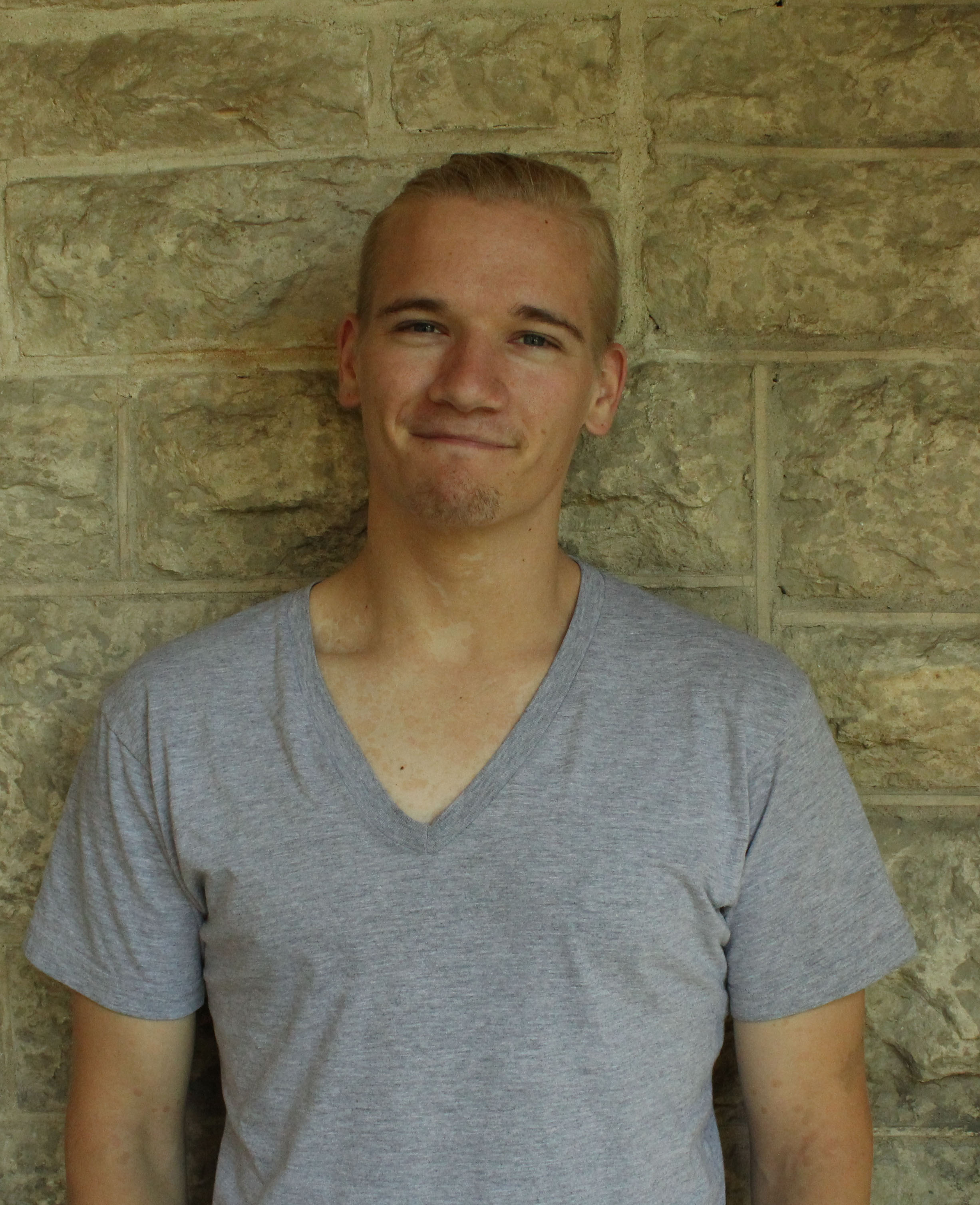
CSOP Participant Profile – Darnell Barkman

By Aaron Epp

CSOP massively energizing for Canadian peacebuilder working in the Philippines

When it comes to peace work in the Philippines, Darnell Barkman is on the front lines.

Barkman and his wife, Christina, are Mennonite Church Canada Witness Workers, giving pastoral leadership to PeaceChurch Philippines, an Anabaptist church they helped plant in Metro Manila.

Originally from Abbotsford, B.C., the Barkmans have also been instrumental in the development of Peace Assemblies Network, also known as the Philippines Anabaptist Network, a group of peace-oriented individuals and churches who seek to transform their society by embodying a culture of peace in their faith communities in the Philippines.

“Jesus calls us to nonviolence,” Darnell says. “That’s very distinct in the whole world. That’s very distinct in the Philippines.”

The Barkmans and their colleagues work for peace and reconciliation between Christians, Muslims, and the indigenous people of the Philippines in a variety of ways.

They respond to disasters by supporting marginalized people who get less help than others, they train military leaders in peacebuilding and human rights through partner organizations, and they challenge the larger church in the Philippines to love their neighbour and seek justice, just as Jesus taught.

“The evangelical church of the Philippines is missing the peace and reconciliation teachings of scripture,” Darnell says on his website, DarnellBarkman.com.

“Most leaders and members don’t see scripture’s ethics and peace teachings. They don’t know how to see them – no one has ever highlighted them and they are seldom taught. My goal is that the church centers herself on Jesus’ example and teaching as the soul of the faith. His teaching and examples in the Gospel are the primary story we are living to emulate.”

Darnell is passionate about Mennonite theology and Anabaptist history, and sharing that knowledge with people in the Philippines. He also describes himself as an “experimenter in personal transformation,” discontent to enjoy the status quo and always looking to learn something new.

That’s why, when he found out he would be on furlough in Canada when the 2015 Canadian School of Peacebuilding (CSOP) was taking place, he had to enrol.

Darnell travelled to Winnipeg to take the course The Justice of God: Questions of Justice in the Bible and the World, taught by Dr. Christopher Marshall, Professor of Restorative Justice at Victoria University of Wellington in New Zealand.

Darnell appreciated the way Marshall synthesized restorative justice principles with examples from his personal experience.

“What’s really cool is how he’s involved as a practitioner of restorative justice,” Darnell says.

Just as valuable as what he learned in the classroom was the opportunity Darnell had to meet new people at the CSOP.

“Peacebuilding can be very lonely work,” he says. Attending the CSOP was massively energizing because it allowed him to connect with other peacebuilders. “It’s amazing. It’s what we need.”

Now back in Manila, Darnell is excited to incorporate what he learned at CMU into his day-to-day work.

“Peace is not just a ‘60s hippy idea, or an individualistic,  new-age feeling,” Darnell says on his website. “Peacebuilding has a tangible output: Healed relationships and experienced justice in all sectors of society.”
Categories
News Profiles

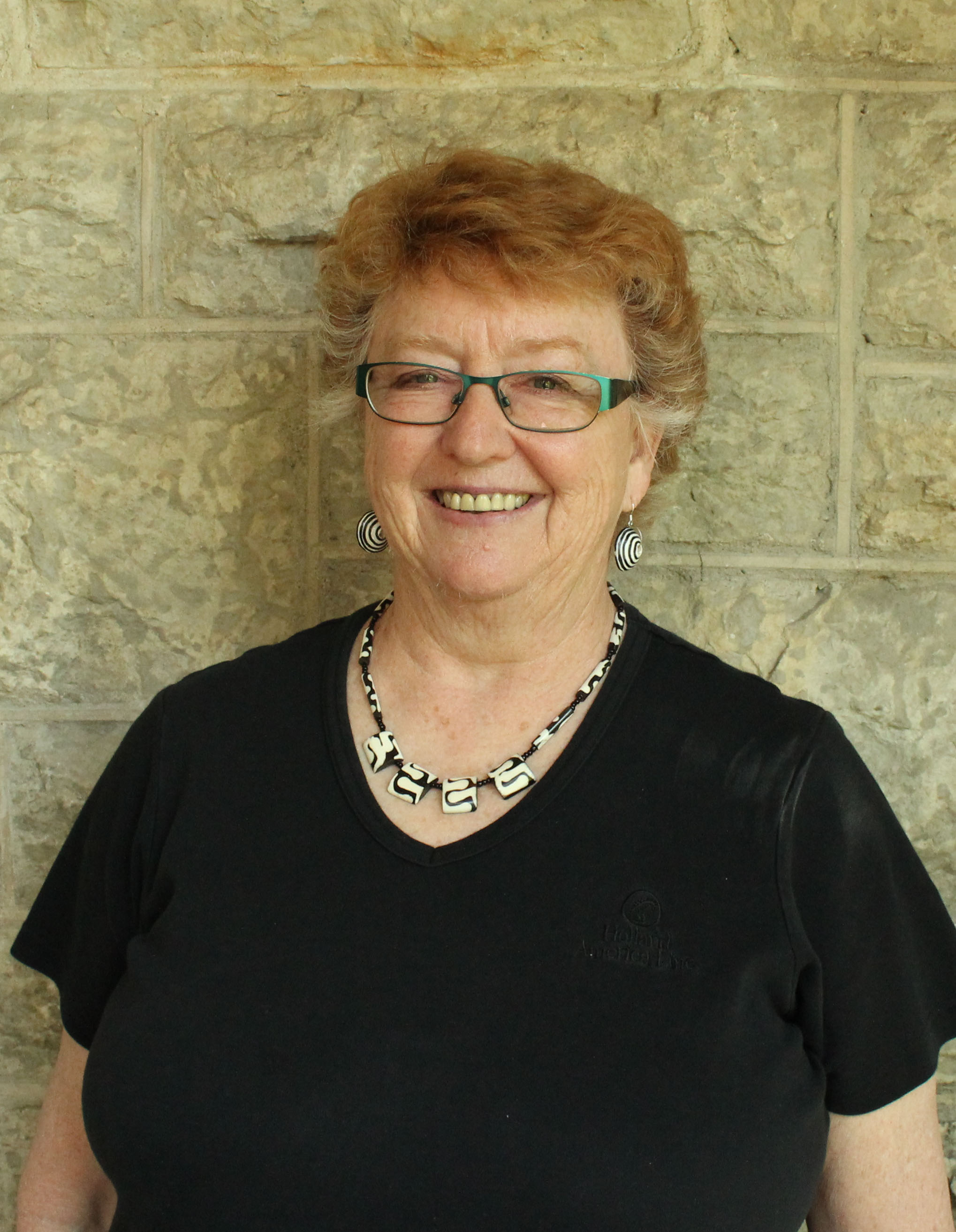
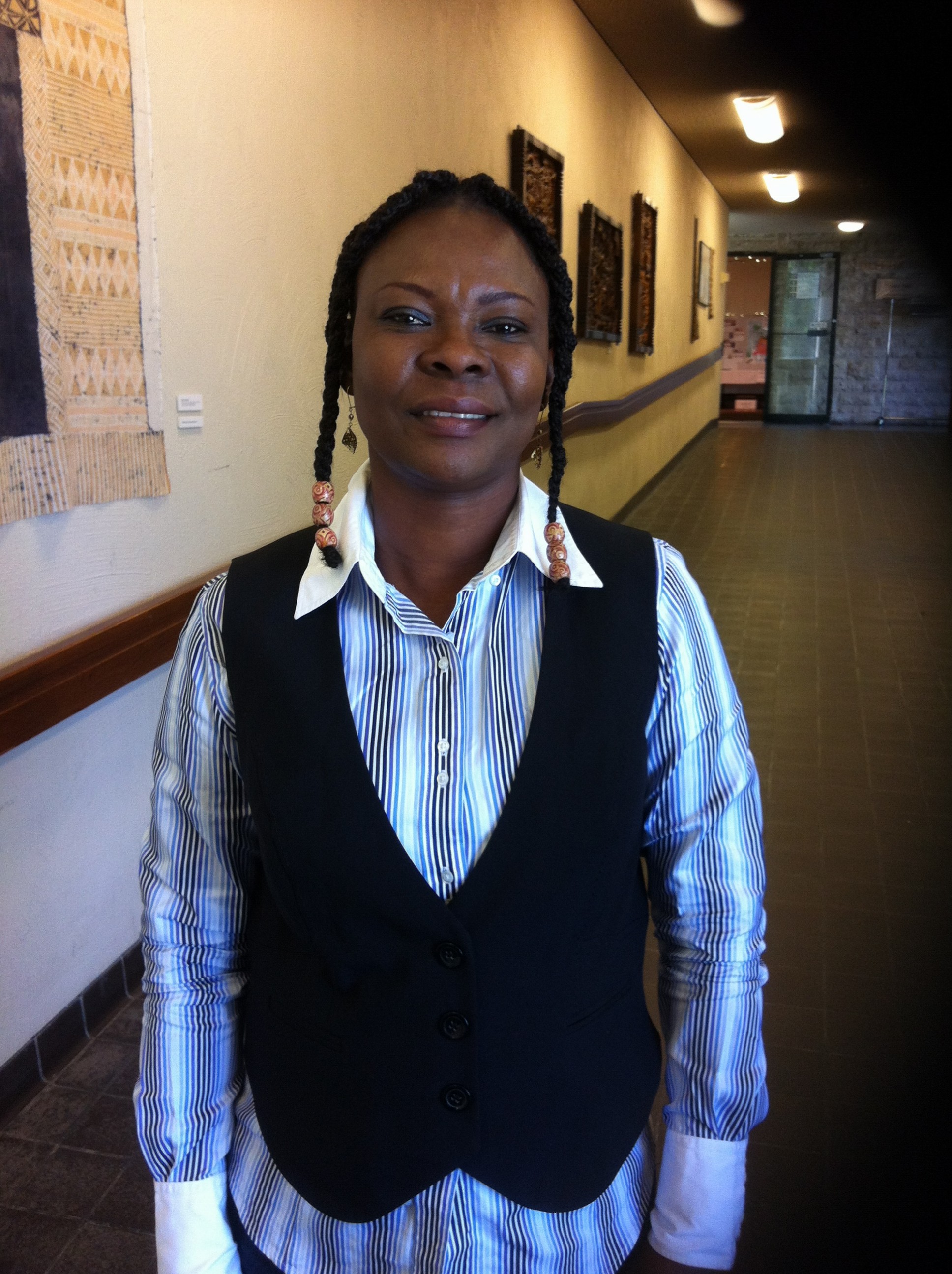
CSOP Participant Profile – Folake Aderibigbe

By Aaron Epp

CSOP helps parliamentary aid from Nigeria advocate for women’s rights

Violence in the home, sexual harassment at school and work, rape and defilement, enforcement of gender-biased laws, harmful traditional practices – these are some of the things women in Nigeria face.

Through her role as an assistant in Nigeria’s parliament, Folake Aderibigbe is working to peacefully change her society’s views on women so that they are treated equally.

“Women are not able to talk about it because our culture or society does not allow these things to be said,” Aderibigbe says, “but I think it’s better to come out and say what’s going on.”

Aderibigbe, who is writing a book about domestic violence and its effects on children, traveled from her hometown of Lagos to Canadian Mennonite University (CMU) in Winnipeg this past June to study at the university’s Canadian School of Peacebuilding (CSOP).

Aderibigbe took a course titled Women and Peacebuilding, which explored women’s involvement in peace action, research, and education.

The things Aderibigbe learned in the class will be useful in her work as a parliamentary aid. Only seven of Nigeria’s MPs are female, and Aderibigbe plans to brief them on what she learned.

In Nigeria, women are traditionally “to be seen and not heard,” Aderibigbe says, but she feels it’s important to speak up.

“I’ll use my pen. I’ll (prepare) a write-up and give it to the MPs,” she says. “We (women) need the same education, we need the same rights. We need to network, we need to have a voice, we need to come together as allies.”

While the Nigerian government recently began passing laws prohibiting violence against women, many women are still afraid to come forward.

“It’s hectic (and) sometimes it’s difficult,” Aderibigbe says.

She hopes her work, and sharing the things she learned at the CSOP, will influence the MPs to create even better legislation to protect women.

Born and raised in Lagos, Aderibigbe worked hard to get where she is today.

She has a Bachelor of Arts in Philosophy, as well as graduate degrees in International Relations and Public Administration from the Lagos City University and the University of Lagos, respectively.

After democratic rule returned to Nigeria in 1999, Aderibigbe was among the first sets of people employed to work in parliament.

In addition to assisting six MPs, Aderibigbe’s work includes writing. Five years ago, she published her first book. A Decade of Positive Legislation examines the history of Nigeria’s current parliament and how it works.

As the mother of a 15-year-old girl, issues of violence against women are close to Aderibigbe’s heart.

She says her experience at the CSOP was positive.

“The experience has been good,” Aderibigbe says. “The people are loving and ready to accommodate (students)… The environment is serene and it’s conducive to learning.”

Aderibigbe hopes to bring some MPs with her when she returns to the school in 2016.

“I hope they will come here so that they can better serve their constituents.”

Categories
News Profiles

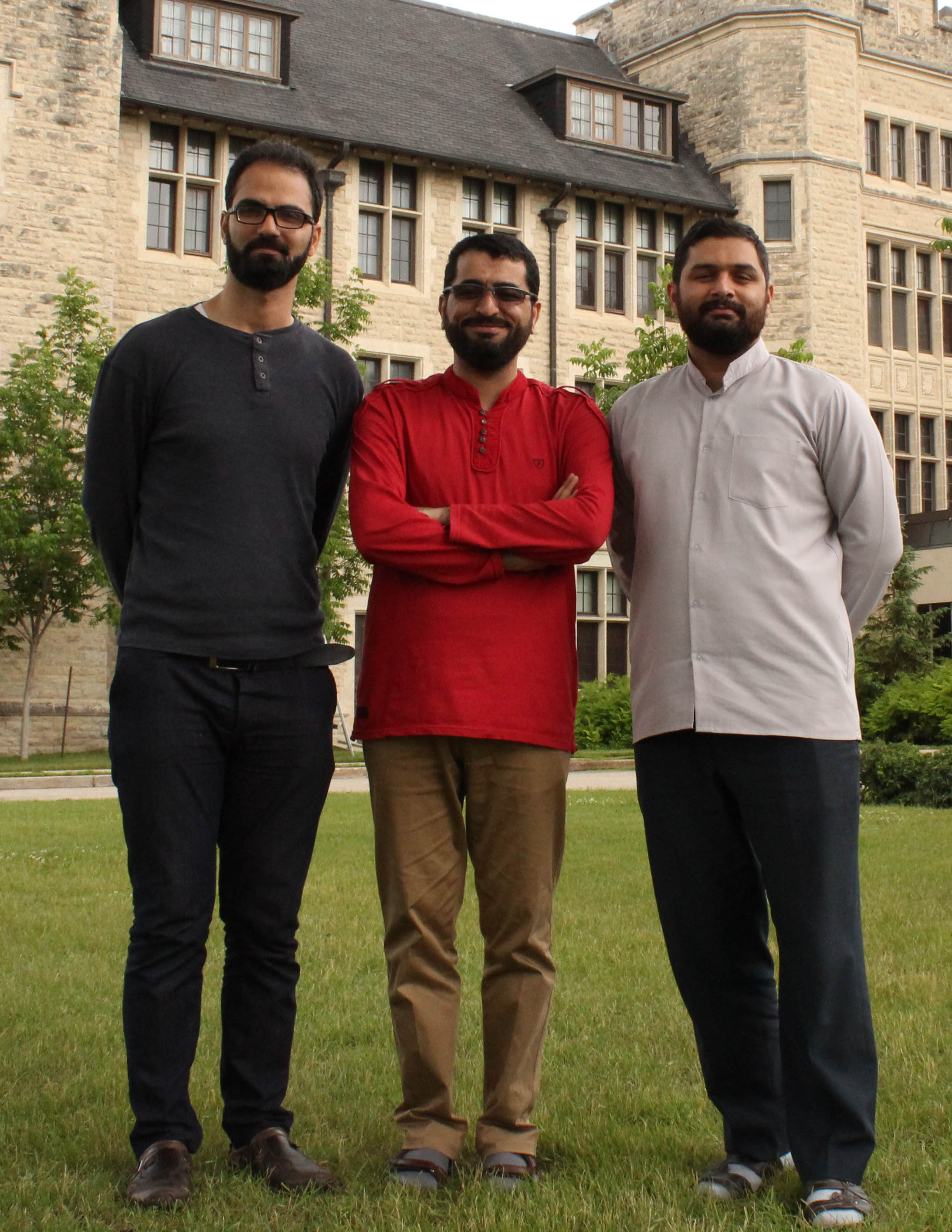
CSOP Participant Profile – Ali Shakeri, Mohammad Hozourbakhsh & Mohammad Barteh

By Aaron Epp

Iranian graduate students discover new ideas at Canadian School of Peacebuilding

Did you know that the 2015 Canadian School of Peacebuilding (CSOP) took place during Ramadan? Three of its students were very aware of this.

Ali Shakeri, Mohammad Reza Hozourbakhsh, and Mohammad Rida Barteh traveled from their home in Qom, Iran to study at the CSOP. The three graduate students practice the Muslim faith, and so spent mid-June to mid-July fasting from sunrise to sunset as part of the annual act of worship.

According to Islamic belief, Ramadan is meant to commemorate the first revelation of the Quran to Muhammad.

The purpose is for Muslims to practice the presence of God in their daily life, Hozourbakhsh said.

“(The purpose is) to feel it more, grasp it more, and to share it with others, and to understand the hunger and thirst of poor people,” he said.

Being in a Christian atmosphere at Ramadan was a completely new experience for the three.

“Participating in classes in which all members are drinking and eating and we just have to (watch) is also new,” Shakeri said.

While all three had been to CMU prior to their visit in June – they were part of a group of graduate students from the International Institute for Islamic Studies (IIIS) in Qom, Iran who visited CMU March 8-18 to take a course in Christian Systematic Theology – it was their first time studying at the CSOP.

All three enrolled in the course The Justice of God: Questions of Justice in the Bible and the World, taught by Dr. Christopher Marshall, Professor of Restorative Justice at Victoria University of Wellington in New Zealand.

Barteh said the things they learned in the course will help them in their careers as university professors.

“There are two kinds of thinking,” he said. “The first is that you focus on differences between people and (the other is) finding similarities and coming together, and sharing the similar things we understand about humanity and the goal of life and the good life.

“We think this course (will) help us to find the simplest and best way (when working with) people from different nationalities, different races, different backgrounds, different nations. That’s why we are here.”

Barteh added that he and his colleagues enjoyed studying with Marshall.

“We found him to be a very devoted Christian,” Bareh said. “Every day, he comes up with ideas that are really genuinely new to us… Chris is a really informative person.”

The trio were invited to study at the CSOP after their visit in March.

That visit stemmed from a series of dialogues that began in 2002 that bring together Shi’a Muslim scholars from Iran and Mennonite scholars from Canada and the U.S. The goal of these dialogues is to improve understanding between Muslims and Christians.

The dialogues have resulted in a series of exchanges that have seen Iranian students from the IIIS travel to Winnipeg to study at CMU, and vice versa.

“We hope this process will be ongoing in the future,” Bareh said, “and we appreciate this recent invitation (to study at) the CSOP.”

Categories
News Profiles

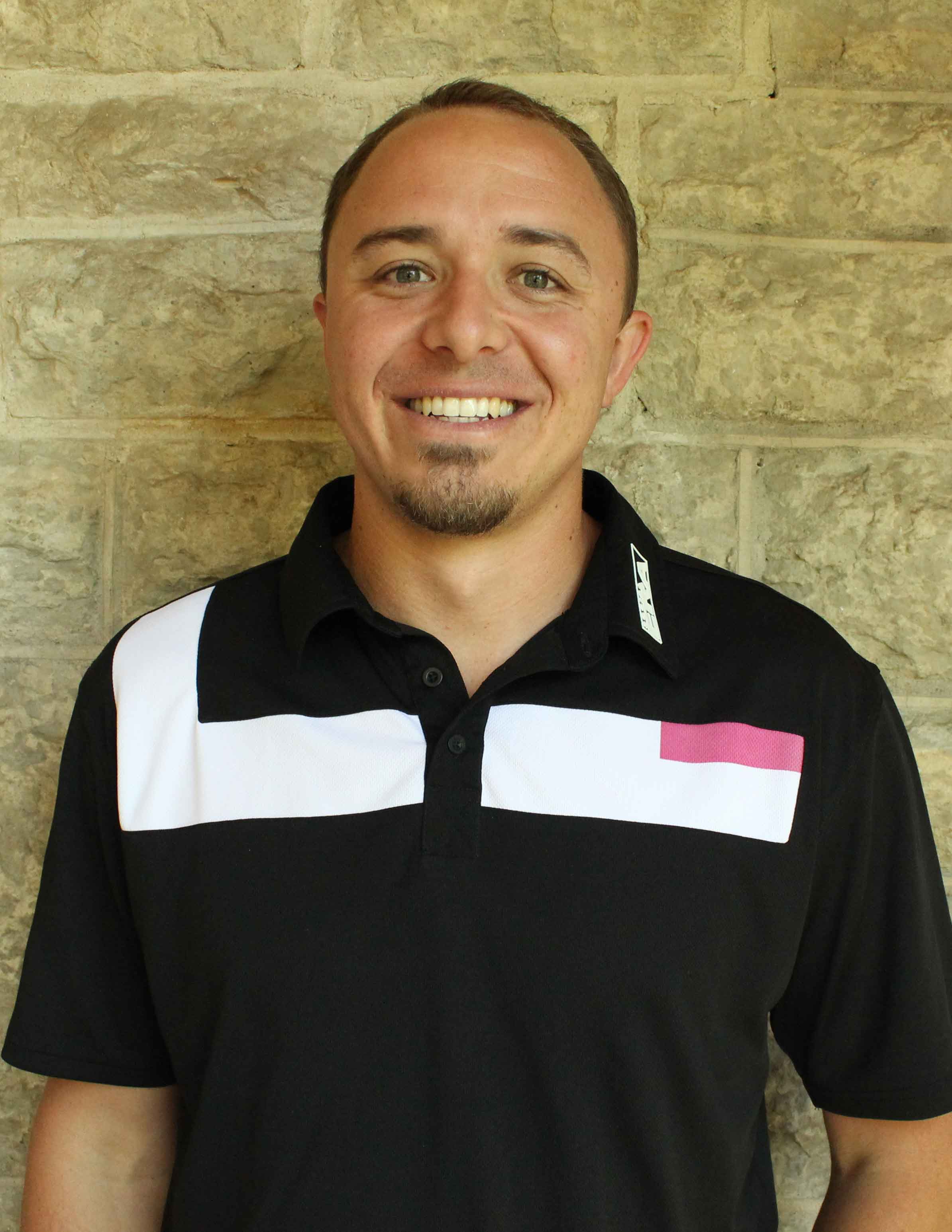
CSOP Participant Profile – Michael Wiebe

by Ellen Paulley

What does the Bible teach about justice? How can these teachings be applied in the church and wider society today? Can a compassionate and restorative justice serve the world?

These are some of the topics discussed in the 2015 Canadian School of Peacebuilding (CSOP) class, Justice of God:Questions of Justice in the Bible and the World, taught by Professor Chris Marshall, Victoria University of Wellington, New Zealand.

Canadian Mennonite University alumnus Michael Wiebe was one of the participants in this CSOP course. A Communications and Media major, Wiebe noted the importance of communication and conversation in restoring right relationships.

“Storytelling is one of the biggest assets in making right relationships,” he says. “Everything I’ve learned at CMU has been about storytelling—being in the communications industry, I can be a steward of the earth through storytelling.”

Restoring relationships is a very communicative process and hearing from both parties involved is an important aspect of restorative justice. Additionally, gaining “an understanding of someone’s speech community and the conversation they were raised with, needs to be taken into account in the restorative justice process,” he says.

Wiebe has had opportunities to mediate conflicts in the past and has sought ways to build people up and figure out how to work well with people in conflict.

Taking the course, Justice of God, has helped him discover ways of facilitating what can be difficult conversations and explore how his faith informs the way he does so.

“What does justice mean biblically and to the wider Christian community? Justice means that God is involved in very actively bringing justice about in relationships,” he reflects.

For those who are interested in CSOP, Wiebe’s encouragement is to be prepared to be inspired about something new.

“The course topics that CSOP covers are innately the things that humans want, which are resolving conflict, making relationships right, living in harmony,” he says. “Once you get into the course, you can’t really help but to feel some sort of urge to think harder about these questions and to even make changes in your own life about peace and justice and how to live well in a very broken world.”

Categories
News Profiles

CSOP Participant Profile – Beverley Stewart

By Ellen Paulley

Beverely Stewart has explored her longstanding interest in peace and justice by taking courses at the Canadian School of Peacebuilding over the last few years.

This year she participated in Women and Peacebuilding, taught by Ouyporn Khuankaew and Ginger Norwood.

“I’ve always liked the idea that this [CSOP] is called peacebuilding,” says Stewart. “The focus of this course has been on ourselves and our own personal being. How do we build peace? How do we become a person of peace within our inner being?”

Instructors Khuankaew and Norwood drew on their Engaged Buddhist roots and their work in Burma, India, Sri Lanka, and Thailand to work with participants to analyze women’s involvement in peace action, research, and education. The course also looked at the challenges that women activists face, such as building common ground among women with varied experiences and concerns.

In the past, Stewart has taken Exploring Indigenous Justice and Healing and Human Rights and Indigenous Legal Traditions. After each course, she shares her learning to some extent with family, friends, and colleagues.

“Each year that I’ve come, I’ve been able to move on and listen and learn in a different way than before the course,” she says. “As the story goes, peacebuilding begins with you.”

A retired Anglican priest, Stewart sees a strong connection between faith and social justice.

“It [social justice] is the faith,” she says. “Faith is all about reconciliation and peace and justice. Those two go together.”

Through her work and now in retirement, Stewart has had opportunities to travel in Central Asia, Africa, Iran, and North Korea, on pilgrimages, classes, and tours. As such, she’s been exposed to a diversity of religions, cultures, and governance models.

“Every [trip] is a piece of the puzzle, and it’s all a part of the web. Each one teaches me something different.”

Stewart is grateful for the opportunities she’s had, which have led her to wonder about the options available to affect positive change in the world.

“How much right do we as a nation, a community, a religious institution—any kind of a we or an I—have to tell somebody else what to do, how to believe and behave?”

While peacebuilding and working for change can feel overwhelming at times, Stewart stresses the importance of drawing on faith to stay motivated.

“Peace groups that haven’t had an element of faith haven’t lasted,” she says. “There’s something about the ground work of an element of faith—whatever that faith might mean to that person. It’s like a tree, you have to have that rootedness in order to survive.”

For those interested in attending CSOP, Stewart encourages them to come. “Having international and interfaith communities is one of the absolute blessings of this place,” she says.

Categories
News Resources

Diverse new CSOP book explores peacebuilding around the world

June 10, 2015

CMU to host launch of ‘Voices of Harmony & Dissent’ on Tuesday, June 16

A new book arising from Canadian Mennonite University’s (CMU) Canadian School of Peacebuilding (CSOP) explores the stories, theory, and tools of 16 peace leaders, trainers, and activists from around the world.

Voices of Harmony & Dissent: How Peacebuilders are Changing Their Worlds was edited by Richard McCutcheon, Jarem Sawatsky, and Valerie Smith. The editors will celebrate the release of the book with a launch event happening Tuesday, June 16 at 7:00 PM in the Great Hall at CMU (500 Shaftesbury Blvd.). The event is free, and all are welcome to attend.

Offering an intriguing mix of styles and perspectives, the peacebuilders included in the book describe how they have used their creativity, compassion, and frustrations to learn how to peacefully engage and transform the world around them.

Each contributor has taught at the CSOP, which offers a selection of five-day courses each June.

Smith, co-director of the CSOP, says the book arose out of a desire to expose people to the amazing instructors who teach at the school.

“We have so many people who are interested in the CSOP, and so many who apply but don’t get a chance to come here for all sorts of reasons, like finances and visas,” Smith says. “We wanted to find a way to serve those people who can’t be here in person.”

Published by CMU Press, Voices of Harmony & Dissent includes contributions from Ovide Mercredi, former National Chief of the Assembly of First Nations; Mubarak Awad, a Palestinian-American psychologist; Ouyporn Khuankaew, a Buddhist feminist activist from Thailand; Martin Entz, a professor in the Department of Plant Science at the University of Manitoba; Karen Ridd, Instructor in Peace and Conflict Resolution Studies at CMU; and more.

Through inspiring stories, the book takes readers on a journey of interrelated themes including women and peacebuilding, nonviolent action for social change, restorative justice, indigenous approaches to change, spirituality and creative arts, circle process, food security, mediation, intercultural peacebuilding, and truth and reconciliation.

While the style and topics of the essays are radically diverse, Smith says there are common themes that tie the collection together.

“All of the essays are written by deeply committed, experienced peacebuilders who are living what they teach,” she says.

Smith adds that she is looking forward to the book launch.

“In reading through these essays over and over again, I feel like I’ve learned a little bit about each contributor and what they have offered in their classes at the Canadian School of Peacebuilding,” she says. “That feels like a real gift. I’m excited to share that with the community and hear people’s feedback as they begin to read the book.”

Established in 2009, the CSOP is a learning community of diverse peacebuilders from all faiths, countries, and identity groups who come together to learn, network, and engage in peacebuilding.

Now in its seventh year, the 2015 CSOP courses will take place June 15-19 and June 22-26.