Categories
Resources

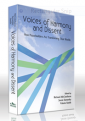
Voices of Harmony and Dissent: How Peacebuilders are Changing Their Worlds

By Richard McCutcheon (editor), Jarem Sawatsky (editor) and Valerie Smith (editor)

Harmony and Dissent: How Peacebuilders are Transforming their Worlds is a resource book and sampling of the CSOP designed to engaged, equip and inspire peace and justice practitioners around the world. Formerly this was only accessible by attending the annual June School in Winnipeg, Canada. Each chapter of the book is authored by these peace leaders. It tells stories of inspiring peacework, offers case studies into communities embodying these lessons and offers the key resources of have helps shape these peace leaders. Authors include: Ovide Mercredi, Mubarak Awad, Stuart Clark, David Dyck, Martin Entz, Harry Huebner, Ouyporn Khuankaew, George Lakey, Ivo Markovic, Maxine Matilpi, Stan McKay, Piet Meiring, Sophia Murphy , Kay Pranis, and Karen Ridd.

http://csop.cmu.ca/peacebook/

Categories
Resources

Heart of Hope: A Guide for Using Peacemaking Circles to Develop Emotional Literacy, Promote Healing & Build Healthy Relationships

By Carolyn Boyes-Watson and Kay Pranis

This resource guide is designed for practitioners who work with youth, young adults, and their families within social services, violence/pregnancy prevention, education, and positive youth development programs. It offers a flexible set of tools that can be applied to a range of settings and for a variety of purposes. We believe that any caring and responsible individual can learn to use these practices safely, creatively, and effectively:

  • the peacemaking circle;
  • the practice of mindfulness/meditation; and
  • exercises and concepts derived from Power Source, an emotional awareness/emotional literacy program for at-risk youth and young adults.

The peacemaking circle is the core practice of the guide. In Heart of Hope (HOH), the peacemaking circle provides the environment in which participants develop emotional awareness and emotional literacy and learn to practice mindfulness. Users learn how to plan, create, and facilitate the peacemaking circle as a safe place for shared dialogue. The resource guide provides 50 step-by-step model circles. Each model circle offers activities for building and deepening relationships as well as for developing emotional awareness and emotional literacy. It also includes easy-to-use exercises in breathing, simple yoga, and meditation.

www.livingjusticepress.org/index.asp?SEC=%7B93AFCED1-3FDA-4DB1-83CA-A97EE3FEBC3A%7D&Type=B_BASIC&persistdesign=none


Categories
Resources

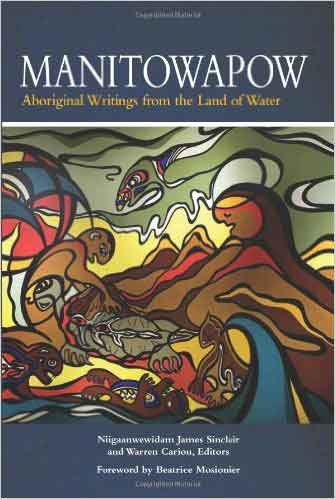
Manitowapow: Aboriginal Writings from the Land of Water

By Niigaanwewidam James Sinclair (Editor) and Warren Cariou (Editor)

This anthology of Aboriginal writings from Manitoba takes readers back through the millennia and forward to the present day, painting a dynamic picture of a territory interconnected through words, ideas, and experiences. A rich collection of stories, poetry, nonfiction, and speeches, it features:

  • Historical writings from important figures
  • Vibrant literary writing by eminent Aboriginal writers
  • Nonfiction and political writing from contemporary Aboriginal leaders
  • Local storytellers and keepers of knowledge from far-reaching Manitoba communities
  • New, vibrant voices that express the modern Aboriginal experiences
  • Anishinaabe, Cree, Dene, Inuit, Métis, and Sioux writers from Manitoba

Created in the spirit of the Anishinaabe concept debwe (to speak the truth), The Debwe Series is a collection of exceptional Aboriginal writing from across Canada. Manitowapow, a one-of-a-kind anthology, is the first book in The Debwe Series. Manitowapow is the traditional name that became Manitoba, a word that describes the sounds of beauty and power that created the province.

Because the editors want to give back to the local Aboriginal communities that have inspired them with their words, Niigaan and Warren have chosen to donate the proceeds from Manitowapow to a special fund administered through the Centre for Creative Writing and Oral Culture at the University of Manitoba. This fund supports literacy and creative writing initiatives among Manitoba’s Aboriginal youth. Many of the book’s contributing authors and copyright holders have also joined in this initiative by donating their fees to help support the next generation of Aboriginal writers.

https://highwaterpress.com/product/manitowapow/

Categories
Resources

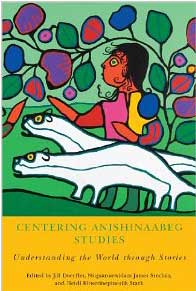
Centering Anishinaabeg Studies: Understanding the World through Stories

By Jill Doerfler (Editor), Niigaanwewidam James Sinclair (Editor), Heidi Kiiwetinepinesiik Stark (Editor)

For the Anishinaabeg people, who span a vast geographic region from the Great Lakes to the Plains and beyond, stories are vessels of knowledge. They are bagijiganan, offerings of the possibilities within Anishinaabeg life. Existing along a broad narrative spectrum, from aadizookaanag (traditional or sacred narratives) to dibaajimowinan (histories and news)—as well as everything in between—storytelling is one of the central practices and methods of individual and community existence. Stories create and understand, survive and endure, revitalize and persist. They honor the past, recognize the present, and provide visions of the future. In remembering, (re)making, and (re)writing stories, Anishinaabeg storytellers have forged a well-traveled path of agency, resistance, and resurgence. Respecting this tradition, this groundbreaking anthology features twenty-four contributors who utilize creative and critical approaches to propose that this people’s stories carry dynamic answers to questions posed within Anishinaabeg communities, nations, and the world at large. Examining a range of stories and storytellers across time and space, each contributor explores how narratives form a cultural, political, and historical foundation for Anishinaabeg Studies. Written by Anishinaabeg and non-Anishinaabeg scholars, storytellers, and activists, these essays draw upon the power of cultural expression to illustrate active and ongoing senses of Anishinaabeg life. They are new and dynamic bagijiganan, revealing a viable and sustainable center for Anishinaabeg Studies, what it has been, what it is, what it can be.

www.amazon.com/Centering-Anishinaabeg-Studies-Understanding-American/dp/1611860679/ref=sr_1_1?ie=UTF8&qid=1448571483&sr=8-1&keywords=Centering+Anishinaabeg+Studies%3A+Understanding+the+World+Through+Stories
Categories
Resources

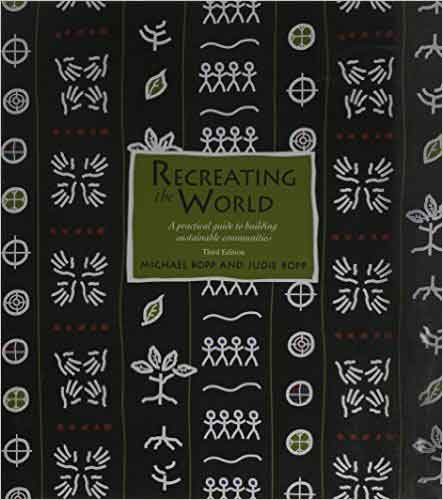
Recreating the World: A practical guide to building sustainable communities

By Michael Bopp and Judie Bopp

Rooted in decades of work with indigenous communities in the Americas, as well as extensive experience in Africa, Asia, the Pacific and the former Soviet Union, "Recreating the world" is really two books woven together. The first is a down-to-earth exposition of models, principles and strategies for understanding what community development is and how it can be promoted. The second is a rich collection of stories, games, activities and tools that can be used to help others to learn about various aspects of community development practice. In this book, building sustainable community is presented as a primary strategy for solving critical human problems. Community building is not merely viewed as a means to an end, however. Sustainable community is a basic human need, and in its absence, human life becomes distorted, painful, and often self-destructive.

www.amazon.ca/Recreating-World-practical-sustainable-communities/dp/0968823319/ref=sr_1_4?ie=UTF8&qid=1448572420&sr=8-4&keywords=michael+bopp

Categories
Resources

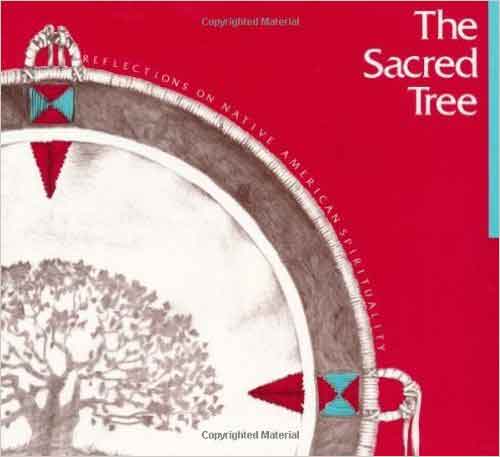
Sacred Tree: Reflections on Native American Spirituality

By Michael Bopp, Judie Bopp, Lee Brown and Phil Lane Jr.

The Sacred Tree was created by the Four Worlds Development Project, a native American inter-tribal group, as a handbook of Native Spirituality for indigenous peoples all over the Americas and the world. This handbook is being used by the Four Worlds Development Project to eliminate widespread drug and alcohol abuse in tribal communities. It is now being shared for the first time with all members of the human family desiring personal growth.

www.amazon.ca/Sacred-Tree-Reflections-Spirituality-Paperback/dp/B010WI2ZHK/ref=sr_1_1?ie=UTF8&qid=1448572077&sr=8-1&keywords=michael+bopp


Categories
Resources

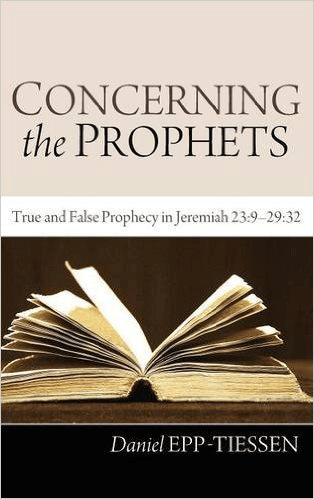
Concerning the Prophets: True and False Prophecy in Jeremiah 23:9–29:32

By Dan Epp-Tiessen

This book sheds light on the compositional history structure, and theology of the book of Jeremish by demonstrating that a large concentric unit of material focusing on true and false prophecy stands at the center of the book.  This unit, titled, "Concerning the Prophets" (23:9), utilizes the heritage of Jeremiah to contrast the nature of true and false prophecy in order to warn the Second Temple community of the disastrous consequences of false prophecy and to highlight the saving potential of true prophecy.  False prophecy leads to doom because it ignores the moral failings of the community, promises well-being in the face of catatrophy, and reinforces the misleading theological certainties of Judah's pre-587 way fo life.  In contrast, the true prophet Jeremiah challenges the faith community to embrace the physical and spiritual dislocation of the Babylonian destruction.  Post-disaster life stands under the saving purposes of YHWH, but the only way forward is to learn the painful lessons of catastrophe and heed the prophetic summons to repent and embrace a Torah-based way of life.

http://wipfandstock.com/concerning-the-prophets.html


Categories
Resources

Circle Forward: Building a Restorative School Community

By Carolyn Boyes-Watson and Kay Pranis

Circle Forward is a resource guide designed to help teachers, administrators, students and parents incorporate the practice of Circles into the everyday life of the school community.  This resource guide offers comprehensive step–by-step instructions for how to plan, facilitate and implement the Circle for a variety of purposes within the school environment.  It describes the basic process, essential elements and a step-by-step guide for how to organize, plan, and lead Circles. It also provides over one hundred specific lesson plans and ideas for the application of Circles in the following areas of school life:

•    Learning and establishing a Circle practice
•    Establishing and affirming community norms
•    Teaching and learning in Circle
•    Building connection and community
•    Promoting social-emotional skills
•    Facilitating important but difficult conversations
•    Working together as adults
•    Engaging parents and the wider community
•    Developing students as leaders in peer Circles
•    Using Circles for restorative discipline

http://www.livingjusticepress.org/index.asp?Type=PRODLIST&SEC={9643748B-1735-4115-A479-FA6F18327BAD}&DE={3D3F9629-546F-4123-B857-DFC2E8D97820}

Categories
Resources

Power Of Youth: Youth and Community-Led Activism in Canada

By Brigette DePape (Editor)

Power of Youth is a collection of articles by young activists working for change that benefits us all. Dispelling the myth that youth are apathetic, their bold and creative action shows that youth are not only engaged – but also powerful when they take collective action.

The collection has something for everyone: young people who are interested in making change but are unsure how, left baby-boomers and gen-xers who are concerned about the future, seasoned activists, and anyone seeking to build a better world. The book explores the intersecting themes of climate justice, Indigenous sovereignty, education and Indigenous women, anti-poverty and anti-criminalization, anti-war, anti-violence and anti-racism, women and LGBTQ, social media, and system change for economic and democratic justice.

http://www.goodreads.com/book/show/13793566-power-of-youth-youth-and-community-led-activism

Categories
Resources

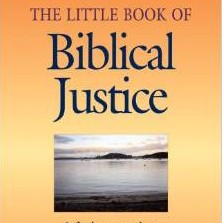
The Little Book of Biblical Justice: A Fresh Approach to the Bible’s Teaching on Justice

By Chris Marshall

A biblical scholar identifies basic features of the Bible’s teachings on justice, treating the subject with a direct, yet almost lyrical tone. He manages a thorny, multi-faceted subject clearly and ultimately singles out the areas of theological agreement among the Bible’s writers on the subject.

Upfront, Marshall addresses the many complexities that surround “justice” in the Bible: the Bible seems to hold conflicting points of view; there is a huge amount of data to deal with; the world of the Bible and our present world are vastly different.

http://www.amazon.com/Little-Book-Biblical-Justice-Peacebuilding/dp/1561485055/ref=sr_1_4?ie=UTF8&qid=1418158434&sr=8-4&keywords=little+book+of+biblical