Categories
News

Changes to the 2020 Canadian School of Peacebuilding courses and schedule

Due to the ongoing travel restrictions and social distancing directives in place across North America in response to the global COVID-19 pandemic, CMU’s Canadian School of Peacebuilding (CSOP) is announcing the following changes to its June 2020 courses.

The following two currently scheduled courses will be offered in online format only, via the Zoom platform:

Leading in an Age of Polarization, with David Brubaker (Eastern Mennonite University). 

  • PCTS/BUSI-3950 and PCD-5990
  • Revised course schedule: June 8-12 and 15-19, 1:304:30 PM CST, two weeks.

Does Religion Cause Violence, with William Cavanaugh (DePaul University)

  • BTS/PCTS-3895 and BTS/PCD-5700
  • Revised course schedule: June 8-12 and 15-19, 9:00 AM12:00 PM CST, two weeks.
  • Because of high enrollment, new registrants for this course will be asked to indicate a second course choice. After current registrations have been confirmed in light of the course changes, registrations will be confirmed – please see the CSOP Courses page for updates.

The following revised course will also be offered in online format only, on new dates and may be of interest to participants originally registered for the cancelled courses Indigenous Politics, Land, and Globalization and Dreaming of Kanata and Canada:

Reconciling Stories: Indigenous Laws and Lands, with Niigaanwewidam James Sinclair (University of Manitoba)

  • POLS/INDS/PCTS-3950 and PCD-5190
  • Revised course schedule: June 1-5, 9:00 AM12:00 PM and 1:004:00 PM CST, one week.

New Course Description:  This course introduces participants to narratives of Indigenous laws and lands and how Indigenous peoples have used story, song, and oral and written expressions to articulate epistemologies, resistance, and record their histories, rights and responsibilities to themselves and others. Issues in the course will include the impact of colonization and globalization on Indigenous peoples of Canada and the role of social justice movements nationally and internationally in historical and contemporary struggles for recognition of sovereignty and resistance to theft of lands and resources. Participants will study Indigenous traditional and contemporary literatures (specifically graphic texts and novels), Indigenous critical theory, and devise responses and presentations based on their impressions and ideas.     

Revised syllabi for these three courses will be posted on the CSOP Courses page as soon as possible.

These four courses are cancelled:

Indigenous Politics, Land, and Globalization, with Rauna Kuokkanen
Active Bystander Training, with Joy Meeker
Trauma, Healing, and Reconciliation, with Kelly Bernardin-Dvorak
Dreaming of Kanata and Canada: Indigenous Graphic Novels and Reconciliation, with Niigaanwewidam James Sinclair

Fees:  Course fees remain the same:  $806 for CMU Academic credit, $592 for Training (audit). The late registration fee has been waived.

Course registration changes and confirmations: Participants who have already registered for all originally scheduled CSOP courses will be contacted via email to confirm their registrations in the rescheduled/revised courses, and to arrange refunds if meals and lodging have been paid.

If you were registered in one of the courses that has been cancelled and want to switch into a different course, contact the CSOP office by April 3. After April 3, you may still register but a spot in an alternate CSOP course cannot be guaranteed.

New applications: If you wish to now register in either of the two ‘open’ courses, please apply via the CSOP website (csop.cmu.ca) or via the CMU student portal (currently registered CMU students only). These revised online registration windows will be operational by Wed, April 1.

Registration deadlines: The registration deadline for all courses is the Friday prior to the course beginning (May 29 or June 5).

Refunds:  Participants who have paid the $100 advance deposit or full course fees for a cancelled course may receive refunds if they do not wish to register for one of the three rescheduled/revised courses. Refunds will be made by the same method payment was made and will take 8-12 weeks to process – we appreciate your patience.

If you have any questions, please contact the CSOP registration office at csop@cmu.ca
 

Categories
Resources

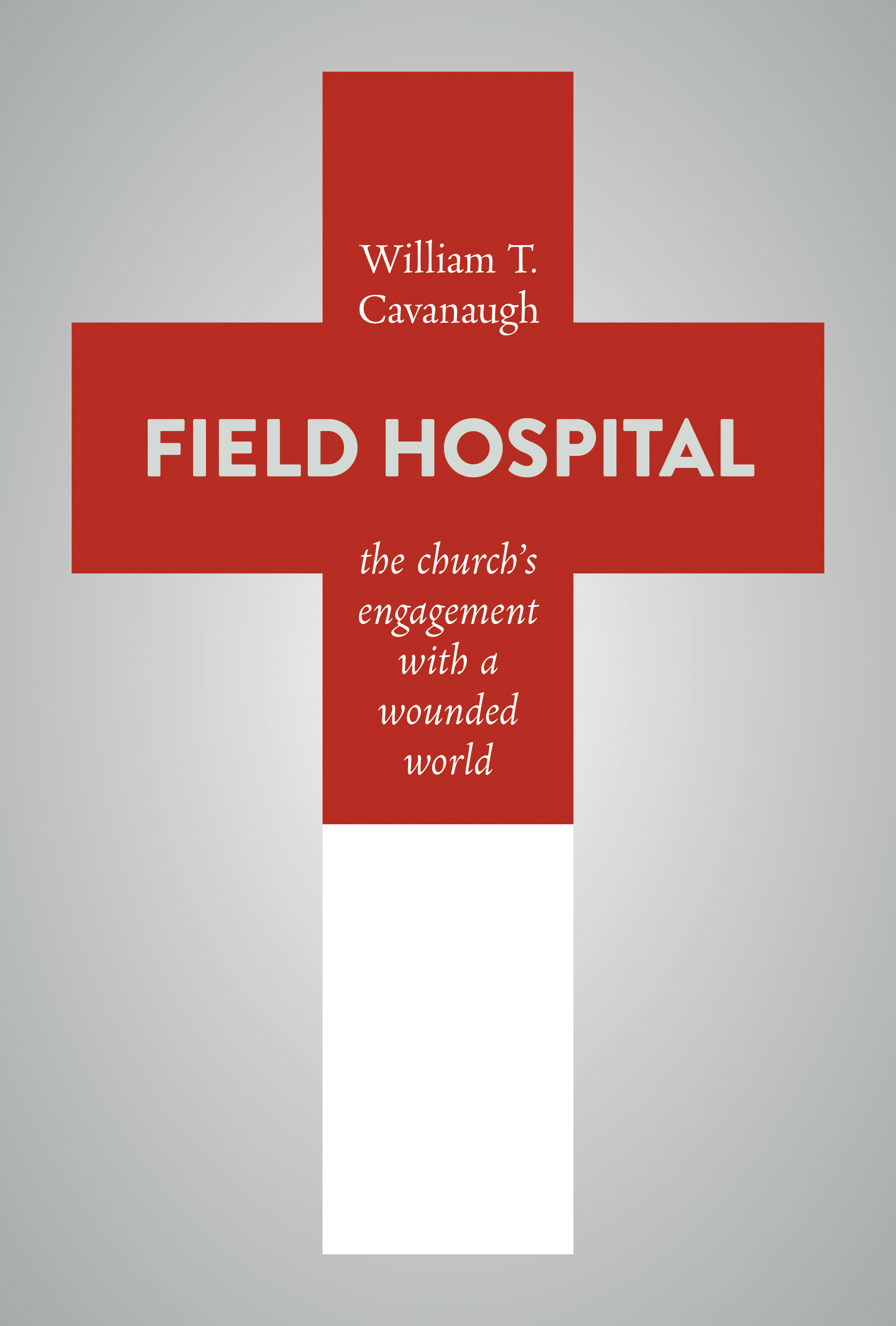
Field Hospital: The Church’s Engagement with a Wounded World

By William T. Cavanaugh

Pope Francis in a 2013 interview famously likened the church to a field hospital. In this book William Cavanaugh adopts Pope Francis's metaphor to show how the church can help heal both the spiritual and the material wounds of the world.

As he examines the intersection of theology with themes of religious freedom, economic injustice, religious violence, and other pressing topics, Cavanaugh emphasizes that the church cannot condemn the evils of the world from a position of superiority. Rather, he says, its practices of solidarity with humanity must be based on a profound recognition that the church shares in the guilt of human sin.

Cavanaugh's Field Hospital provides guideposts for a church that is willing to go outside of itself onto today's battlefields — both metaphorical and literal — not to inflict wounds but to bind them up and heal them.

https://www.eerdmans.com/Products/7297/field-hospital.aspx

Categories
Resources

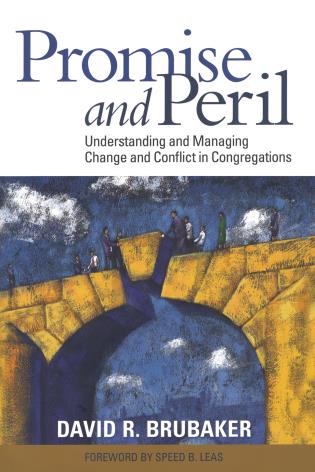
Promise and Peril: Understanding and Managing Change and Conflict in Congregations

By David Brubaker

Congregations cannot exist without finances, priorities, leadership, worship, and decision making, yet these five aspects breed the most conflict between church members and clergy. These conflicts unfortunately tend to bring about the most negative consequences: drops in giving, resignation of leaders, and, perhaps most pointedly, loss of members. The importance of congregations and their effect on our lives is clear, yet what is less clear is what makes conflicts in faith communities inevitable. In Promise and Peril: Understanding and Managing Change and Conflict in Congregations, David Brubaker brings the tools of organizational theory and research to the task of understanding the deeper dynamics of congregational conflict. With a doctorate in sociology and more than twenty years working with congregational conflicts, Brubaker helps to explore the causes and effects of conflicts on a wide range of congregations. This book will help congregations avoid the pitfalls of conflict and instead head toward a healthy relationship between and among church staff and members.

https://rowman.com/ISBN/9781566993821/Promise-and-Peril-Understanding-and-Managing-Change-and-Conflict-in-Congregations

Categories
Resources

The Myth of Religious Violence: Secular Ideology and the Roots of Modern Conflict

By William T. Cavanaugh

The idea that religion has a dangerous tendency to promote violence is part of the conventional wisdom of Western societies, and it underlies many of our institutions and policies, from limits on the public role of religion to efforts to promote liberal democracy in the Middle East. William T. Cavanaugh challenges this conventional wisdom by examining how the twin categories of religion and the secular are constructed. A growing body of scholarly work explores how the category 'religion' has been constructed in the modern West and in colonial contexts according to specific configurations of political power. Cavanaugh draws on this scholarship to examine how timeless and transcultural categories of 'religion and 'the secular' are used in arguments that religion causes violence. He argues three points: 1) There is no transhistorical and transcultural essence of religion. What counts as religious or secular in any given context is a function of political configurations of power; 2) Such a transhistorical and transcultural concept of religion as non-rational and prone to violence is one of the foundational legitimating myths of Western society; 3) This myth can be and is used to legitimate neo-colonial violence against non-Western others, particularly the Muslim world.

https://www.oupcanada.com/catalog/9780195385045.html

Categories
Resources

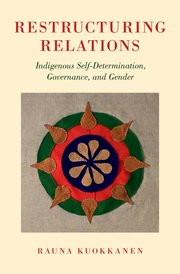
Restructuring Relations: Indigenous Self-Determination, Governance, and Gender

By Rauna Kuokkanen

Adopted in 2007, the UN Declaration on the Rights of Indigenous Peoples establishes self-determination – including free, prior, and informed consent – as a foundational right and principle. Self-determination, both individual and collective, is among the most important and pressing issues for Indigenous women worldwide. Yet Indigenous women's interests have been overlooked in the formulation of Indigenous self-government, and existing studies of Indigenous self-government largely ignore issues of gender. As such, the current literature on Indigenous governance conceals patriarchal structures and power that create barriers for women to resources and participation in Indigenous societies.

Drawing on Indigenous and feminist political and legal theory–as well as extensive participant interviews in Canada, Greenland, and Scandinavia – this book argues that the current rights discourse and focus on Indigenous-state relations is too limited in scope to convey the full meaning of "self-determination" for Indigenous peoples. The book conceptualizes self-determination as a foundational value informed by the norm of integrity and suggests that Indigenous self-determination cannot be achieved without restructuring all relations of domination nor can it be secured in the absence of gender justice. As a foundational value, self-determination seeks to restructure all relations of domination, not only hegemonic relations with the state. Importantly, it challenges the opposition between "self-determination" and "gender" created and maintained by international law, Indigenous political discourse, and Indigenous institutions. Restructuring relations of domination further entails examining the gender regimes present in existing Indigenous self-government institutions, interrogating the relationship between Indigenous self-determination and gender violence, and considering future visions of Indigenous self-determination, such as rematriation of Indigenous governance and an independent statehood.

https://global.oup.com/academic/product/restructuring-relations-9780190913281?cc=ca&lang=en&

Categories
Resources

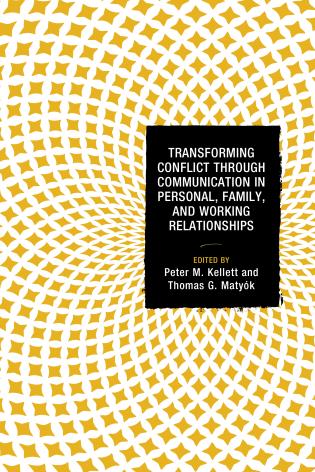
Transforming Conflict through Communication in Personal, Family, and Working Relationships

By Peter M. Kellett (Editor) and Thomas G. Matyók (Editor)

With a chapter by Joy Meeker

A transformational approach to conflict argues that conflicts must be viewed as embedded within broader relational patterns and social and discursive structures. Central to this book is the idea that the origins of transformation can be momentary, situational, and small-scale or large-scale and systemic. The momentary involves shifts and meaningful changes in communication and related patterns that are created in communication between people. Momentary transformative changes can radiate out into more systemic levels, and systemic transformative changes can radiate inward to more personal levels. This book engages this transformative framework by bringing together current scholarship that epitomizes and highlights the contribution of communication scholarship and communication-centered approaches to conflict transformation in personal, family, and working relationships and organizational contexts. The resulting volume presents an engaging mix of scholarly chapters, think pieces, and personal experiences from the field of practice and everyday life. The book embraces a wide variety of theoretical and methodological approaches, including narrative, critical, intersectional, rhetorical, and quantitative. It makes a valuable additive contribution to the ongoing dialogue across and between disciplines on how to transform conflicts creatively, sustainably, and ethically.

https://rowman.com/ISBN/9781498515030/Transforming-Conflict-through-Communication-in-Personal-Family-and-Working-Relationships

Categories
Resources

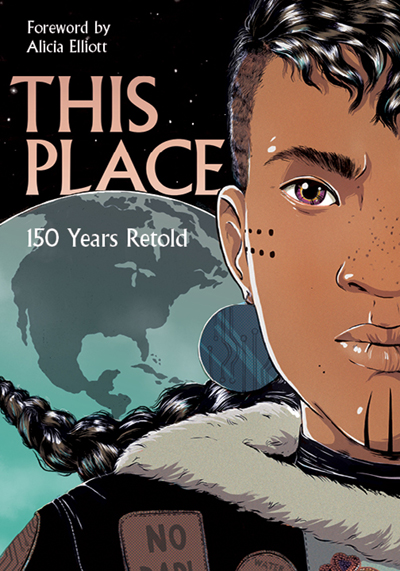
This Place: 150 Years Retold

By Kateri Akiwenzie-Damm, Sonny Assu, Brandon Mitchell, Rachel and Sean Qitsualik-Tinsley, David A. Robertson, Niigaanwewidam James Sinclair, Jen Storm, Richard Van Camp, Katherena Vermette, Chelsea Vowel

Illustrated by Tara Audibert, Kyle Charles, GMB Chomichuk, Natasha Donovan, Scott B. Henderson, Ryan Howe, Andrew Lodwick, Jen Storm

Colour by Scott A. Ford, Donovan Yaciuk

Explore the past 150 years through the eyes of Indigenous creators in this groundbreaking graphic novel anthology. Beautifully illustrated, these stories are an emotional and enlightening journey through Indigenous wonderworks, psychic battles, and time travel. See how Indigenous peoples have survived a post-apocalyptic world since Contact.

https://highwaterpress.com/product/this-place/

Categories
Resources

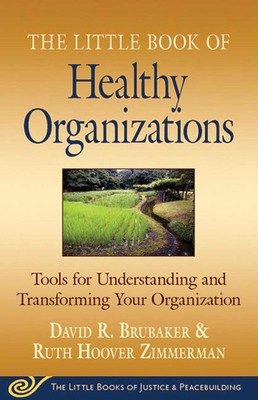
Little Book of Healthy Organizations: Tools For Understanding And Transforming Your Organization

By David Brubaker and Ruth H. Zimmerman

The best way to change the world may be one organization at a time. With this ambitious claim, the authors of this highly readable primer provide insightful analysis for evaluating and improving the health of any organization. They advocate a "systems approach," which views organizations as living systems, interconnected in their various departments, and interfacing with their environments. Leaders of organizations from all sectors will find sound advice concerning the four major components of organizations — their structure, leadership, culture, and environment. Find out: What the classic dispute over "who gets the corner office" is really about. The difference between a good leader and a great one. What new hires may know about an organization that longer-term employees don't. How organizational change and conflict are not only inevitable, but survivable. Each chapter contains examples from the authors' varied experiences with organizational change and conflict, written from a spirited, hopeful approach for creating a better world. A title in The Little Books of Justice and Peacebuilding Series.

https://www.simonandschuster.ca/books/Little-Book-of-Healthy-Organizations/David-Brubaker/9781561486649

Categories
Resources

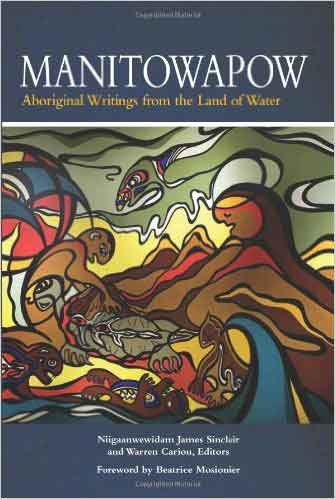
Manitowapow: Aboriginal Writings from the Land of Water

By Niigaanwewidam James Sinclair (Editor) and Warren Cariou (Editor)

This anthology of Aboriginal writings from Manitoba takes readers back through the millennia and forward to the present day, painting a dynamic picture of a territory interconnected through words, ideas, and experiences. A rich collection of stories, poetry, nonfiction, and speeches, it features:

  • Historical writings from important figures
  • Vibrant literary writing by eminent Aboriginal writers
  • Nonfiction and political writing from contemporary Aboriginal leaders
  • Local storytellers and keepers of knowledge from far-reaching Manitoba communities
  • New, vibrant voices that express the modern Aboriginal experiences
  • Anishinaabe, Cree, Dene, Inuit, Métis, and Sioux writers from Manitoba

Created in the spirit of the Anishinaabe concept debwe (to speak the truth), The Debwe Series is a collection of exceptional Aboriginal writing from across Canada. Manitowapow, a one-of-a-kind anthology, is the first book in The Debwe Series. Manitowapow is the traditional name that became Manitoba, a word that describes the sounds of beauty and power that created the province.

Because the editors want to give back to the local Aboriginal communities that have inspired them with their words, Niigaan and Warren have chosen to donate the proceeds from Manitowapow to a special fund administered through the Centre for Creative Writing and Oral Culture at the University of Manitoba. This fund supports literacy and creative writing initiatives among Manitoba’s Aboriginal youth. Many of the book’s contributing authors and copyright holders have also joined in this initiative by donating their fees to help support the next generation of Aboriginal writers.

https://highwaterpress.com/product/manitowapow/