Categories
News Profiles

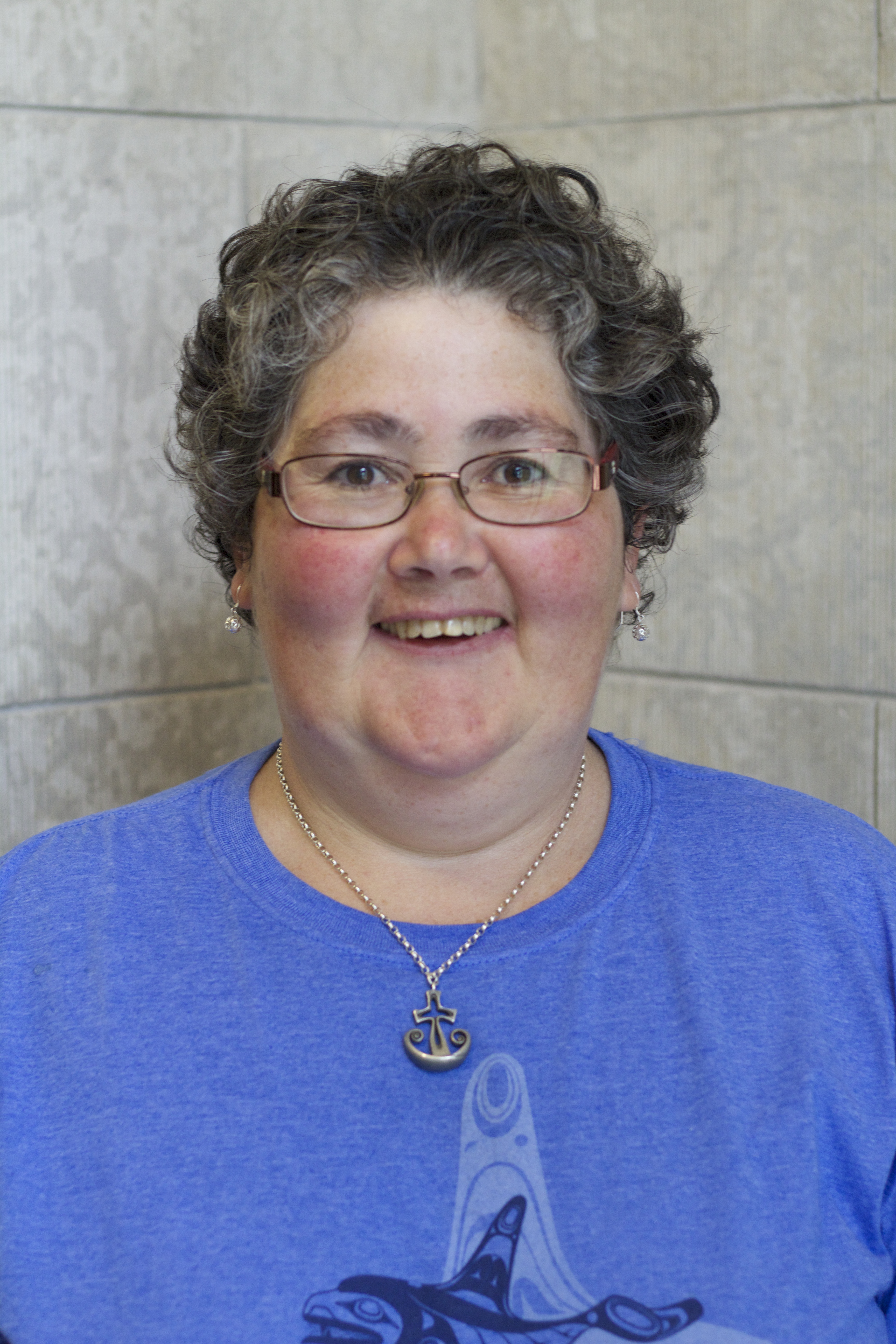
CSOP Participant Profile – Ashley Hayward

by Alison Ralph

Peacebuilder bridges gap between undergrad and master’s studies at the CSOP

Growing up Ashley Hayward was told that she could do anything. It was a positive message, but an overwhelming one as well, with enough options and opportunities to get lost in.

She knew she had to find something that fit with her values. That’s how she found herself at CMU’s Menno Simons College (MSC), majoring in Conflict Resolution Studies.

"From the very first course I took, I realized how applicable it was to my life and the further I went the more I realized how applicable it was to so many things beyond.”

As a working mother and a full-time student, Hayward also knows the value of practicality.

That’s what appealed to her about attending the 2017 Canadian School of Peacebuilding.

Hayward had just completed the Honours thesis for her undergraduate studies at MSC on how language shapes conflict and figured that studying at the CSOP would be a good bridge to her master’s training.

In her first week at the CSOP, Hayward took Journalism and Peacebuilding. She loved it.

“Communications theories are as important to relationships and to peacebuilding as the theory and practice of peacebuilding itself,” Hayward says “It’s critical.”

In her second week at the CSOP, Hayward—who is Métis—took Human Rights and Indigenous Legal Traditions.

She says she’s only just beginning to get to know her Indigenous heritage, and the course has helped her to do that.

Hayward adds that studying with people from a variety of backgrounds was a highlight of her CSOP experience.

“The international perspectives around the table and the actual experience from people around the world, from different walks of life, different parts of their careers, gave a different reference point for us,” she says.

Hayward is now a student in the Joint Master of Arts Program in Peace and Conflict Studies at the University of Manitoba and the University of Winnipeg.

She is the first person in her family to graduate from university.

“I’ve felt a lot of pressure, but I’ve felt a lot of support as well,” she says. “The coolest moment for me was to hear my six-year-old say, ‘My mum’s becoming a problem solver.’”

“It showed me that my kids are picking up on what I’m doing,” she adds. “They’re being impacted by what I’m learning, even if they don’t realize.”
Categories
News Profiles

CSOP Participant Profile – Joe Heikman

by Aaron Epp

Ongoing Muslim-Christian dialogue inspires Saskatoon pastor to study at the CSOP

‘The energy of people who are walking the talk of peacebuilding exists throughout this space,’ Joe Heikman says.

An ongoing interfaith dialogue that his church is having with a nearby Muslim community led Joe Heikman to the Canadian School of Peacebuilding (CSOP).

Heikman, pastor at Wildwood Mennonite Church in Saskatoon, SK, came to Canadian Mennonite University (CMU) in June 2017 to take the course Peace Resources in Islam and Christianity.

“They’ve invited us to their mosque, and we’ve had them to our church for a potluck and presentation,” Heikman said of some of the events his church and the nearby mosque have participated in together since first forming a friendship in mid-2016. “That’s been a really good thing, and I wanted some more language for how to engage in meaningful dialogue with the Islamic story.”

Heikman enjoyed the course, taught by Dr. Mohammad Shomali, founding director of the International Institute for Islamic Studies in Qom, Iran, and Dr. Harry Huebner, Professor Emeritus of Theology and Philosophy at CMU.

“It’s an amazing group of people to be a part of,” Heikman said, noting that the class was made up of people from five different continents, including people from different sects of Islam, different denominations of Christianity and one student with a secular Jewish background. “It’s just a real mix of perspectives.”

The CSOP often takes place during Ramadan, and organizers offer students who observe the annual month of fasting a food package that allows them to eat before dawn and after sunset.

Although he is not a Muslim, Heikman chose the Ramadan food package. There were two reasons for this decision.

“This is a course about common ground between Christianity and Islam, and fasting is part of both of our traditions,” he explained. “It’s something I could participate in that’s true to both tradiations. That’s half of it.

“The other half is that every good cultural tradition involves eating together. If the Muslim students aren’t eating at (regular) meal times, eating at 10:00 PM gives me a chance to (spend time with them).”

In a letter to Saskatoon’s StarPhoenix newspaper, published in June 2016, Heikman noted that “Christians have much to learn from our Muslim neighbours about Islam…, about the nature of faith and spirituality, and about ourselves as new friendships invite us to consider our own assumptions and ways of life.

“I’m also learning that we have much in common despite the differences between Christianity and Islam: shared values of love and peace, shared work in humanitarian aid, and shared visions of hope for our community.”

In that vein, Heikman was struck at the CSOP by Shomali’s teaching about the continuity between Judaism, Christianity and Islam as one ongoing story of the Abrahamic tradition.

It showed him that Jews, Christians, and Muslims are starting from the same place when engaging in interfaith dialogue.

“Where we end up is unclear,” Heikman said, “but we have common ground to begin with.”

He added that he was happy with his decision to study at the CSOP.

“The environment is what I hoped it would be,” Heikman said. “The energy of people who are walking the talk of peacebuilding exists throughout this space.”

“Participating in that is good for me,” he added. “It’s good for anyone interested in doing the work of peace.”


Categories
News Profiles

CSOP Participant Profile – Tirzah Maendel and Doris Wurtz

by Aaron Epp

Hutterites learn about the Islamic faith at Canadian School of Peacebuilding

‘This is my effort to bring real knowledge… to my community,’ teacher says

When you engage in interfaith dialogue, you can end up finding strong similarities between what you and your dialogue partners believe.

That’s one of the biggest things Tirzah Maendel and Doris Wurtz learned at the 2017 Canadian School of Peacebuilding (CSOP).

Maendel and Wurtz travelled from their home on the Baker Hutterite Colony, 130 km west of Winnipeg near MacGregor, MB, to take the course Peace Resources in Islam and Christianity.

The course was taught by Dr. Mohammad Shomali, founding director of the International Institute for Islamic Studies in Qom, Iran, and Dr. Harry Huebner, Professor Emeritus of Theology and Philosophy at Canadian Mennonite University.

The class was made up of students from five different continents, including people from different sects of Islam, different denominations of Christianity and one student with a secular Jewish background.

“After one such (interfaith) conversation, people were commenting that they had forgotten that someone’s a Muslim here and someone’s a Christian here,” Wurtz said. “They were so fully in that dialogue that those labels fell away, and that’s what we have to work for.”

Maendel, a graphic designer who runs a print shop, and Wurtz, a high school teacher, took the course so that they could gain a better understanding of the Islamic faith and Muslim culture.

“In the past year, I’ve been involved with two refugee families (from Syria), so I’m hoping to learn how to be a better ally (to) them,” Maendel said.

The global rhetoric surrounding Muslim people as well as the current political climate in the United States inspired Wurtz to take the course.

“I wanted to have real information so that I could be a better teacher of history and social studies. This is my effort to bring real knowledge… to my culture, to my community,” Wurtz said. “The texts that we were given to read and study were exactly what I was looking for.”

Maendel and Wurtz agree that learning about the Islamic faith is fascinating.

“(Muslims) see it as a religion of submitting to God’s will, and (I am trying) to bring that idea of submissiveness together with Christian ideas,” Wurtz said.

The Christian faith and the Islamic faith might not be so different after all.

“Sometimes it seems like taking a different road to the same idea,” Maendel said. “It’s nice how familiar it feels.”

This was Maendel and Wurtz’s first time at the CSOP, but “probably not the last,” according to Wurtz.

“This (five-day) format is so easy for me to participate in as a full-time teacher,” she said. “I’ll probably be doing this every year.”


Categories
News Profiles

CSOP Participant Profile – Rebaz Mohammed

by Aaron Epp


Lawyer-turned-activist from Iraqi Kurdistan excited to share what he’s learned at the CSOP

Dissatisfied with the work he was doing in his native Iraqi Kurdistan, Rebaz Mohammed moved 9,000 km to Canada last summer to work with Christian Peacemaker Teams’ Indigenous Peoples Solidarity group.

But first, Mohammed stopped at Canadian Mennonite University’s (CMU) Canadian School of Peacebuilding (CSOP) to take the course, Human Rights and Indigenous Legal Traditions.

For Mohammed, who holds a PhD in law, the things he learned about Indigenous legal traditions was completely different from his background in Iraqi Kurdistan’s civil law system.

“I’m really enjoying (the course), especially since one of the facilitators is Indigenous,” Mohammed said during the middle of his week at the CSOP. “It’s not an outsider, but an insider who is giving us the course.

“I’m learning to rewire my brain to accept the fact that this is a whole different legal system that I need to be open (to).”

After graduating from university, Mohammed worked as a lawyer. Ultimately, he didn’t like the work, so he got a position with a human rights organization. He hoped that as an activist, he could make more of a difference than he could as a lawyer.

Working with the human rights organization was all right, but Mohammed didn’t appreciate the bureaucracy involved.

Joining CPT appealed to him because it would allow him to “work on the ground with people, instead of being on a policy-making level, and being disconnected from the reality of what is going on.”

“One other thing I liked about CPT is that it’s not neutral,” he adds.

“All the other organizations I was working with were neutral, trying to stay distant from (taking a side). CPT was clear in their writings that (what is happening to Indigenous peoples in Canada) is wrong, and we stand by this group to make it right.”

Mohammed was excited about what he learned at the CSOP not only because it would help him in his work with CPT, but also because it would aid him when he goes back to Iraqi Kurdistan.

Iraqi law, Mohammed says, is a “weird mix of Islamic law and French law.” Meanwhile, Kurdish legal traditions were lost hundreds of years ago after the Kurds “became Islamicized and Arabicized.”

“I teach once every week at my alma mater, and I can’t wait to go back and tell them that there is a different legal system (they) didn’t know about,” Mohammed says. “It will be very interesting for my students to know what’s being done to revive (these old traditions).”


Categories
News Profiles

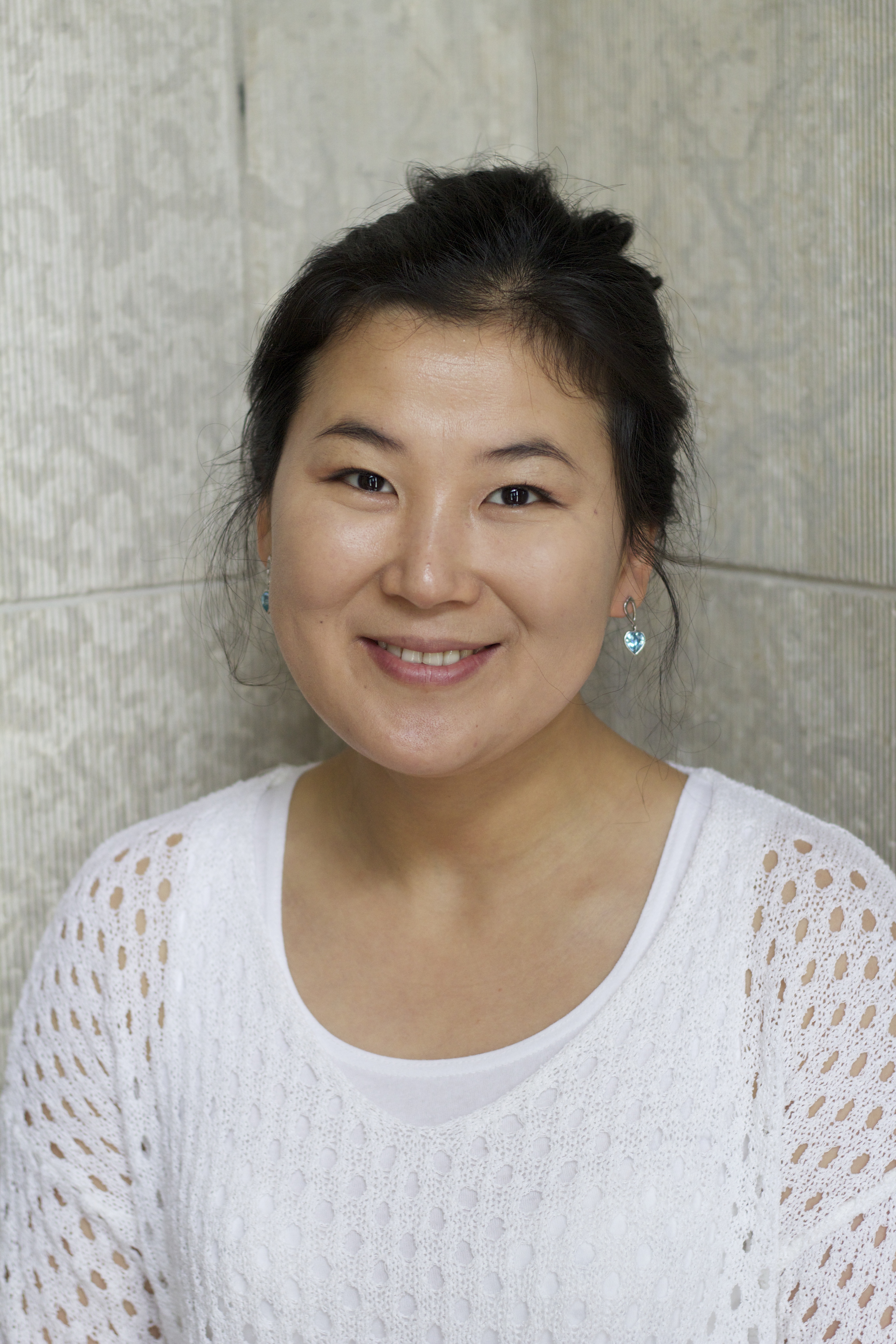
CSOP Participant Profile – Duha Alassaf

by Aaron Epp

‘Everybody is accepted’ at the CSOP, Jordanian peacebuilder finds

Duha Alassaf is passionate about peacebuilding.

“Peacebuilding is a subject that should be mandatory in schools and universities for how to deal with others,” she said. “If people only knew peacebuilding, we wouldn’t have these conflicts and wars.”

It’s this interest that led Alassaf to the Canadian School of Peacebuilding last June. Alassaf, who lives in Amman, Jordan, was searching for professional development opportunities online when she found the CSOP.

“I found this program and it just caught my eyes and my heart (because) it’s about peacebuilding,” she said.

Alassaf is a master’s student in the human rights and human development program at the University of Jordan.

She also works as a health officer with the international NGO Medair. Her work involves assessing the psychological status of Syrian refugees and conducting group therapy sessions with them.

At the CSOP, Alassaf took the course Expressive Trauma Integration: Caregiving and Conflict Transformation.

She believes the things that she has learned will aid her in her work with Medair.

“Mostly we work with people who are traumatized, and we are helping them overcome their traumas,” Alassaf explained. “This course is helping me to get familiar with other types of work other than just the use of talk therapy.”

She credited the professor, Dr. Odelya Gertel Kraybill from Lesley University (Cambridge, MA), and the CSOP staff with creating a safe environment for students to learn about sensitive subjects.

“What I really do like the most is the people here,” Alassaf said, adding that as a Muslim woman coming from Jordanian culture, she didn’t have any problems fitting in at the CSOP. “The acceptance and positive vibes are all over the place.”

Alassaf is currently writing a dissertation about using community-based rehabilitation as a tool to promote social justice.

She plans to continue the work she is doing, and hopes to return to the CSOP.

“I just want to thank Canadian Mennonite University, because it has made a small world inside it where everybody is accepted.”

Categories
News

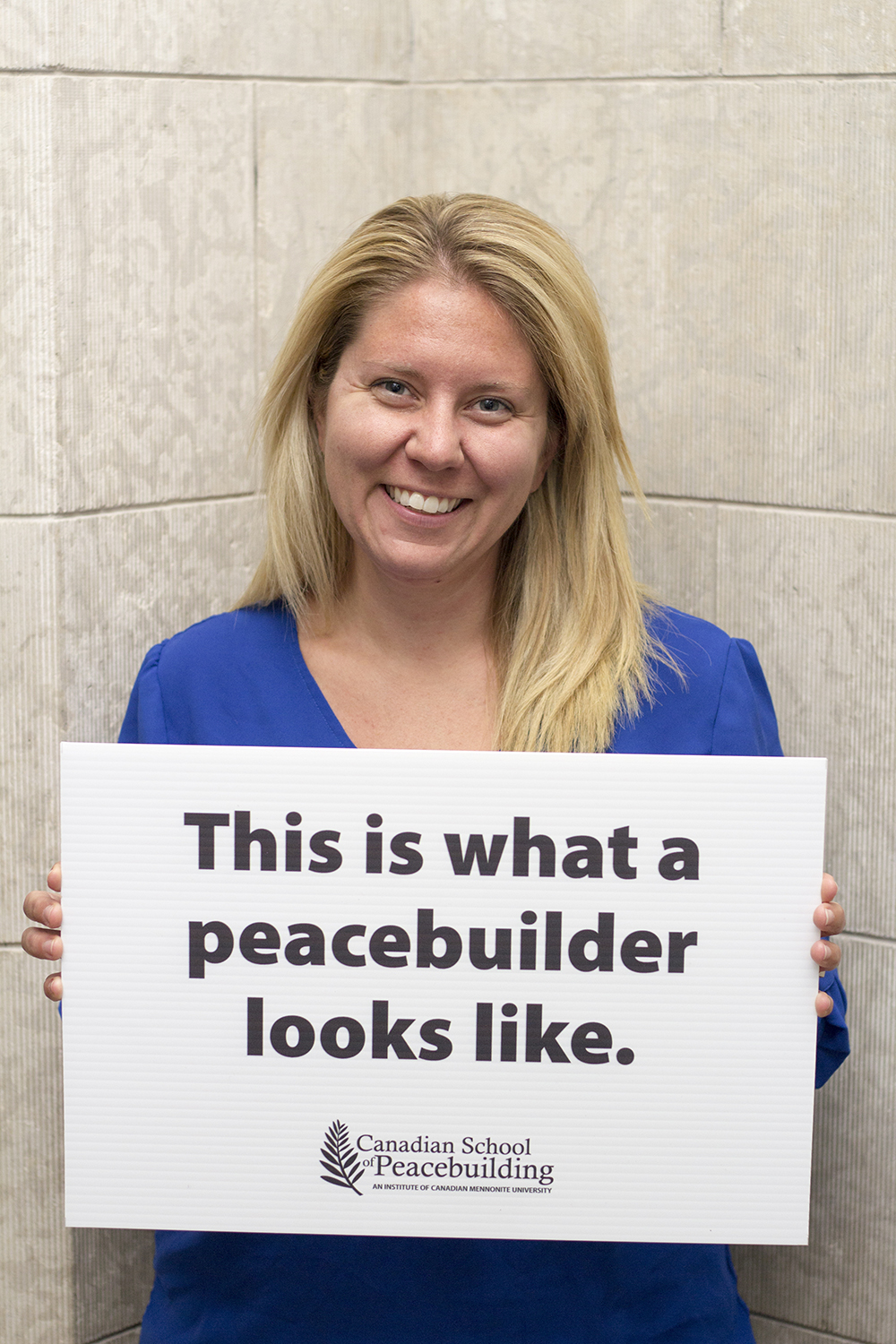
Join our “I am a peacebuilder” campaign

Who is a peacebuilder? You might be surprised.

Peacebuilders can be found around the world, in your workplace and in your family. Peacebuilders can be found in every country, all faiths and each generation. Peacebuilders are stay-at-home parents and retirees, lawyers, teachers, farmers and activists. Peacebuilders, through acts big and small, work to transform conflict, promote justice and bring peace within their own context. As you work to cultivate compassion, fairness, equality, honesty, well-being and peace, you too, are a peacebuilder.

If you've been following us on social media or at our events, you've had a chance to see some of the many faces and stories of peacebuilders in our network and you are invited to join us.  Download and print out one of the signs below (or make your own), post it on your social media account and tag us.  You are a peacebuilder!  

#iamapeacebuilder

#whatapeacebuilderlookslike

Sign – I am a peacebuilder

Sign – This is what a peacebuilder looks like

Categories
News Profiles

CSOP Participant Profile – Shahadat Hossain

by Aaron Epp

Bangladeshi judge travels to CSOP to learn about refugee response

Growing up, Shahadat Hossain dreamt of contributing to his country’s legal system. That dream became a reality, and for the past 10 years, Hossain has worked as a judge.

“In our country, most of the people are poor,” said Hossain, who lives in Bogra, a major city in northeast Bangladesh. “Most of the litigant people are poor, and I wanted to do something for them—to help them, to give them justice.”

In recent years, Bangladesh has experienced an influx of refugees from Myanmar and the Middle East.

To better understand how they might respond to their country’s refugee situation, Hossain and two of his colleagues made the 11,500 km. trip from South Asia to Winnipeg, Manitoba, Canada last June to study at the 2017 Canadian School of Peacebuilding.

At the 2017 CSOP, Hossain took the course Exploring the Refugee Challenge with Dr. Stephanie Stobbe, Associate Professor of Conflict Resolution Studies at Menno Simons College.

“I’m enjoying the course very much,” Hossain said in the middle of his week in Winnipeg.

Hossain was struck by the diversity in his class, which included students from the U.S., Canada, Ethiopia, Nigeria, and Iran.

He added that he hopes to return to the CSOP in 2018.

“The environment is wonderful, the people are very friendly, we are enjoying the class, and we are learning something new,” he said.

Categories
News Profiles

CSOP Participant Profile – Mary Jane McCallum

by Aaron Epp

Senator finds strong spirituality, support at Canadian School of Peacebuilding

One of Canada’s newest senators is an alumnus of CMU’s Canadian School of Peacebuilding.

Dr. Mary Jane McCallum, who was appointed late last year as one of two independent senators to fill vacancies in the Senate, studied at the CSOP in 2016 and 2017.

McCallum is a First Nations woman of Cree heritage and an advocate for social justice who, over the course of her distinguished career, has provided dental care to First Nations communities across Manitoba.

She is believed to be the first Indigenous woman in Canada to become a dentist.

A residential school survivor, McCallum came to the CSOP to learn about peace skills she could use in her work in northern communities.

“Because I was in residential school for 11 years, I came out of the process very angry and very aggressive, and I was tired of being like that,” McCallum said.

She spoke with a Mohawk elder about her anger, and the elder advised McCallum that if she wanted to learn about peace, she should go to the Mennonite community.

“‘They’re the peacebuilders of the world,’” McCallum recalled the elder saying. Fifteen years later, McCallum found the CSOP.

Last June, McCallum took the course Human Rights and Indigenous Legal Traditions with Val Napoleon, a professor from the University of Victoria in B.C.

McCallum was inspired to take the course after her experiences working in her home community of Brochet, MB, located 1,200 km. north of Winnipeg near the Saskatchewan border.

In Brochet, McCallum managed community health programs, including a children’s dental program, a diabetes program, and a prenatal program. She also volunteered for several committees, including a housing committee, a school committee, and an education committee.

She also ran a monthly dinner and meeting with the Elders to discuss social issues affecting the community.

McCallum wants to see northern communities thrive.

“What did we have before that helped us sustain healthy communities?” McCallum asks. “How do we make our way back to some of the healthier habits or healthier conditions we had before?”

Although she was intimidated by the prospect of studying with a group of lawyers, McCallum enjoyed Human Rights and Indigenous Legal Traditions because it gave her additional tools to use in her work.

“When you’re raised in a violent community, sometimes you don’t see any hope, but there are resources,” McCallum says. “You can do different techniques, different disciplines that will help people to move toward healing, to move toward reconciliation.”

Studying at the CSOP, McCallum says, has been part of her spiritual journey.

“To me, this is an environment that’s safe,” she says of the CSOP. “There’s strong spirituality, there’s support. What more could you want?”

Categories
News Profiles

CSOP Participant Profile – Bridget Crisp

By Aaron Epp

New Zealand nun starts her sabbatical at the Canadian School of Peacebuilding

Ask Bridget Crisp what the best part of being a nun is and she’s quick to answer.

“It’s never boring,” said Crisp, 46, who is a Sister of Mercy in Auckland, New Zealand. “People’s perception is that religious life is set in routine. Yes, you have your routine times that you pray, but your prayer and your work could be different each day… It’s never the same.”

Take travelling to Canada for the first time ever, for instance.

Crisp got to do that this past June when she made her way to Canadian Mennonite University in Winnipeg for the 2016 Canadian School of Peacebuilding (CSOP).

For Crisp, her two weeks at the CSOP were the start of a yearlong sabbatical that also included stops in South Carolina and New York.

Crisp enrolled in the courses Peace Skills Practice with Natasha Mohammed, and Peacebuilding Through Community Development with Judie Bopp and Michael Bopp.

Crisp figured studying at the CSOP would be a great way to add to her skillset. She was not disappointed.

“I’m excited and saturated like a sponge or a prune or a date – stacked with knowledge that I still have to process,” Crisp said during her second week at the CSOP, adding that she would spend time on her sabbatical processing what she learned and discerning what she can use when she gets back to New Zealand.

“(The CSOP shows) you topics and strategies, and it’s up to you to look at your peace toolbox as to which are going to be worthwhile, while keeping in mind the ones you might need down the line,” Crisp said.

“There’s a richness and depth to the ideas as well as the approaches that you can’t just process in a day. You have to do some serious thinking.”

Crisp has always had an interest in social justice. That interest was further developed when she was a student studying agriculture at Massey University in the late ‘80s and early ‘90s.

She attended anti-nuclear protests, and got involved in causes like whaling and apartheid.

One of the first things she did when she became a nun was create a community garden.

Crisp and her colleagues work with members of the community – primarily people on a low income – and teach gardening skills, as well as how to cook nutritious meals on a budget.

Crisp is happy she started her sabbatical at the CSOP.

“It’s been a fantastic experience.”

Categories
News Profiles

CSOP Participant Profile – Hyun Hee Kim

By Beth Downey Sawatzky

On Fear, Perspective and Peace

Hyun Hee Kim, age 32, is a student at Canadian Mennonite University, completing pre-Master's requirements in Peace and Conflict Transformation Studies (PACTS). What you would never guess after an ordinary conversation with her, is that this is in itself is a miracle.

Kim was born in North Korea, fled with her mother and brother to China at age 14, whence they were deported back to North Korea, narrowly escaped firing squad and endured three months in a NK prison camp; when she was 17 the family fled again, living illegally in China until 2004 when they were able to make there way into South Korea with fake documents and gain official citizenship. By this time, Kim was 25; having lived in partial-hiding nearly all her life, she had received no formal education since age 12.*

Kim enrolled with CSOP for relevant degree credit, taking “The Biblical Story of Hope and Healing” with CMU's own Dan Epp-Tiessen, and Al Fuertes' “Psychosocial Trauma Healing.” As to the first, she recounts how Epp-Tiessen framed his course by sharing his own testimony of loss, hope in Christ, and healing:

“I was really impressed by the instructor's story about how he lost his son; he told us 'There is hope, even when you are in a horrible situation,' and hearing about what he had been through, I couldn't imagine being in that situation—but he held on to hope, to God, with prayer and sometimes even lament. It reminded me of my own experience; our time in China…it was very insecure because we stayed illegally, but my brother and I, we cried out to God for help. I am familiar with what it means to cling to hope through fear.”

Unsurprisingly, Kim struggles with “anxiety, that can sometimes be severe,” and frequently receives counselling to help her cope. For her, these two courses have very practical, personal relevance: “It's a very deep feeling and I want to know, where does it come from, this feeling in me? So the word healing in both these courses called to me. This will be, I hope, not just for credit but a healing experience as well, where I can learn from other students and the teachers, and their stories.”

In “Psychosocial Trauma Healing”, Kim says the topic of resilience stood out. “The word resilience, we learned, indicates a person's ability to recover quickly from trauma or stress. I notice that many North Korean defectors, especially women, do not seem very resilient—they seem weak, not like my mother.” It is the first time in a long time this interviewer has heard the adjective “weak” used so utterly without condemnation. Kim's words carry no malice or judgement at all. She says the question that will remain with her coming away from these courses, is one of practical applied compassion:

“As I experienced, although we know there is hope sometimes we are so weak, we are so depressed, so low, so beaten down that we can't even think about hope. We have, for the moment, lost all hope, and feel powerless. I believe it is true everyone has the power to overcome trouble, but when people feel powerless, when they have lost hope, how can we help them build up their strength, their resilience? How do we restore their hope, and encourage them to carry on?”

Asked about recommendations, Kim observes, in what could be a metaphor for so many of us in our daily battles with pain, strife and loss, “When you are in Korea, North or South, it's hard to see different perspectives on life, on peace.” She adds, “I want so many Koreans—North and South Koreans—to take these courses because they can gain such good perspective. [CSOP] is unique, so I would want them to take it.”

* For a more detailed account of Kim's breath-taking testimony, see article “Piecing together her peace” by MCC's Deborah Froese.