Categories
News Profiles

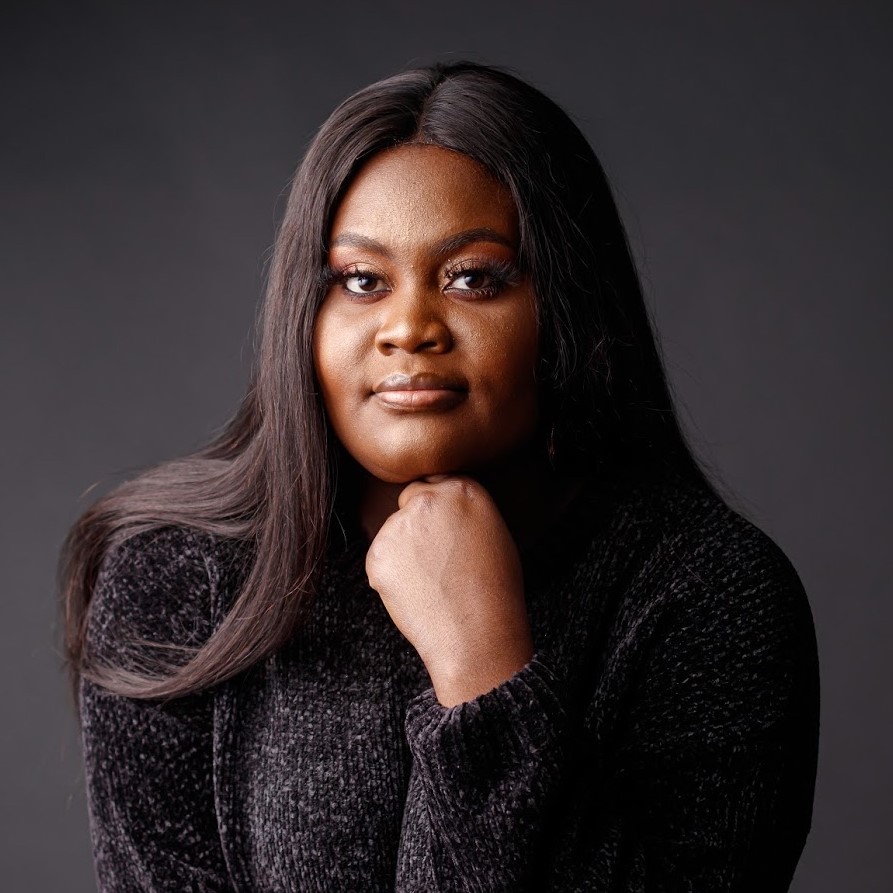
CSOP Participant Profile – Itiovie Ayeni

By Nicolien Klassen-Wiebe

CSOP course engages student’s passion for supporting refugees

After graduating, Itiovie Ayeni wants to work in services supporting refugees, a cause about which she’s passionate. So, when she read the Canadian School of Peacebuilding (CSOP) courses offered in 2021, she knew exactly which one she needed to take.

She enrolled in Refugees and Displacement: Learning to Extend Hospitality, co-taught by Mary Jo Leddy and Dan Epp-Tiessen. Leddy is a renowned Canadian writer, theologian, and social activist, who is known for her work with refugees at Toronto’s Romero House. Epp-Tiessen is Emeritus Associate Professor of Bible at Canadian Mennonite University (CMU) and a preacher, writer, and former pastor who explores how scripture intersects with issues of peace and justice.

Ayeni, 25, moved to Canada from Nigeria in 2019 to study for her Master of Arts in Peacebuilding and Collaborative Development at CMU. Before that, she spent a year mentoring young girls in northern Nigeria, where there is a prevalent culture of child marriage. She raised money on her own initiative so the girls under her care could stay in school. “I had to make sure they knew that they mattered,” Ayeni said, “because the culture is more like only boys matter, girls don’t matter.”

When she first started at CMU, she took a course on refugees and forced displacement with Stephanie Stobbe, Associate Professor of Conflict Resolution Studies at Menno Simons College, a program centre of CMU. Ayeni said that while the fight for refugee rights and gender rights are not identical, what she was learning about refugee advocacy “resonated with what I had been doing before.”

Her experience at CSOP reinforced those connections, and only strengthened her desire to bring her skills to the field. “Although I had known I wanted to work with refugees, I feel like this class sealed it for me,” Ayeni said. “Mary Jo has been working with refugees for more than 30 years, and just hearing first-hand the struggles that people have to go through, it just resonated with me and made me say, ‘yes, this is what I want to do’.”

Refugees face a lot of challenges when they flee to another country, like Canada. Some are left alone and without a community, facing language barriers, inadequate affordable housing, and stereotypes and stigma. Ayeni didn’t come to Manitoba as a refugee, but she could relate to their experiences: “Coming here without a family, just myself, having to look for housing, learn to use the bus, trying to get a job, settling down is something I had to struggle through a bit,” she said. Knowing the difficulties of her own experience and realizing the additional struggles that refugees face was impactful for her.

Reading Leddy’s book, The Other Face of God: When the Stranger Calls Us Home, alongside Leddy’s teaching made theoretical situations come to life—sometimes quite literally. Hidat, a central figure in one of the stories in Leddy’s book, actually came in-person to share her story with the CSOP class. Hidat faced deportation decades ago and was given an unfair hearing, with an inadequate translator and a lawyer who slept during the trial. It wasn’t until Leddy stepped in and fought for her that Hidat had a chance of staying in Canada.

Ayeni was particularly moved by Hidat’s story after meeting her. “This is one person out of thousands of refugees,” Ayeni said. “I’m sure there are so many people who do not have that opportunity for anybody to fight for them. They get the ruling and that’s it.”

Stories like these inspired her to be more aware of what people around her are going through. “This course made me realize I have to slow down and check my environment, check myself. Where have I just ignored someone, where have people needed my help and I haven’t paid attention to it and passed by?”
Categories
News Profiles

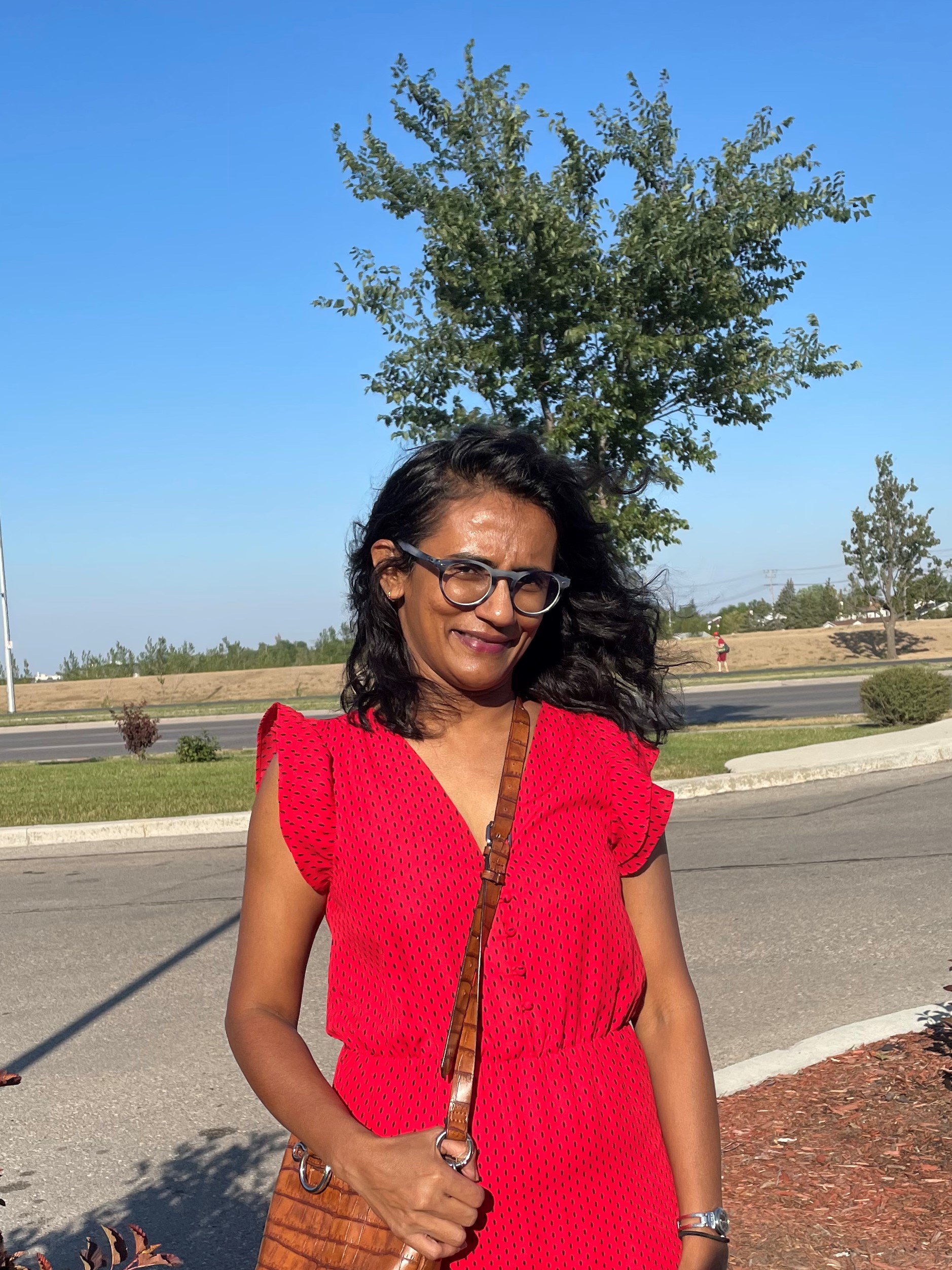
CSOP Participant Profile – Reezwana Yadallee

By Nicolien Klassen-Wiebe

CSOP student brings learning back to social services work

When Reezwana Yadallee heard that Mary Jo Leddy was teaching a course at the 2021 Canadian School of Peacebuilding (CSOP), she told herself she could not miss it.

Leddy is the author of Radical Gratitude, a book that greatly impacted Yadallee when she read it for her class on voluntary simplicity at Canadian Mennonite University (CMU). “[The book] forces you to do some self-introspection in a way, on yourself and what life actually really means,” Yadallee said.

The 45-year-old is studying Peace and Conflict Transformation Studies while also working in employment and income social services for the provincial government.

For her first CSOP course, she took Refugees and Displacement, Learning to Extend Hospitality with Leddy and Dan Epp-Tiessen, Emeritus Associate Professor of Bible at CMU. Epp-Tiessen is a preacher, writer, and former pastor who explores how scripture intersects with current issues like peace and justice and creation care. Leddy is a renowned Canadian writer, theologian, and social activist, who is known for her work with refugees at Toronto’s Romero House. “She inspires a lot of us just because of her way of seeing the world,” Yadallee said of Leddy. 

Yadallee also enrolled in the course because she interacts with refugees on a regular basis through her work, and wanted to bring her learning back to the office. She sees refugee crises broadcast on the news, debated in politics, and discussed among friends—and she knows refugees face challenges and misconceptions.

As a newcomer who came to Canada from Mauritius in 2017, Yadallee can connect to parts of refugees’ experiences. “In a way we’ve also fled our country, not because of war but for other reasons, trying to seek a new beginning,” she says.

Yet there’s much she can’t understand because her experience is fundamentally different. So listening to her CSOP classmates share about their lives was really meaningful. “It gives you a lot to think about when you listen to them,” she says. “That’s the chance where I get to really listen to someone, to a refugee, and learn from that person.”

The course’s participants came from a host of different countries, contexts, and ages, some even from different locations due to the online format. This diversity was a highlight that enriched Yadallee’s learning experience. “It’s just that I get to interact with other people whom I can relate with, which is something very important for me,” she says. “Having other students from different cultural backgrounds really helps.”

Categories
News Profiles

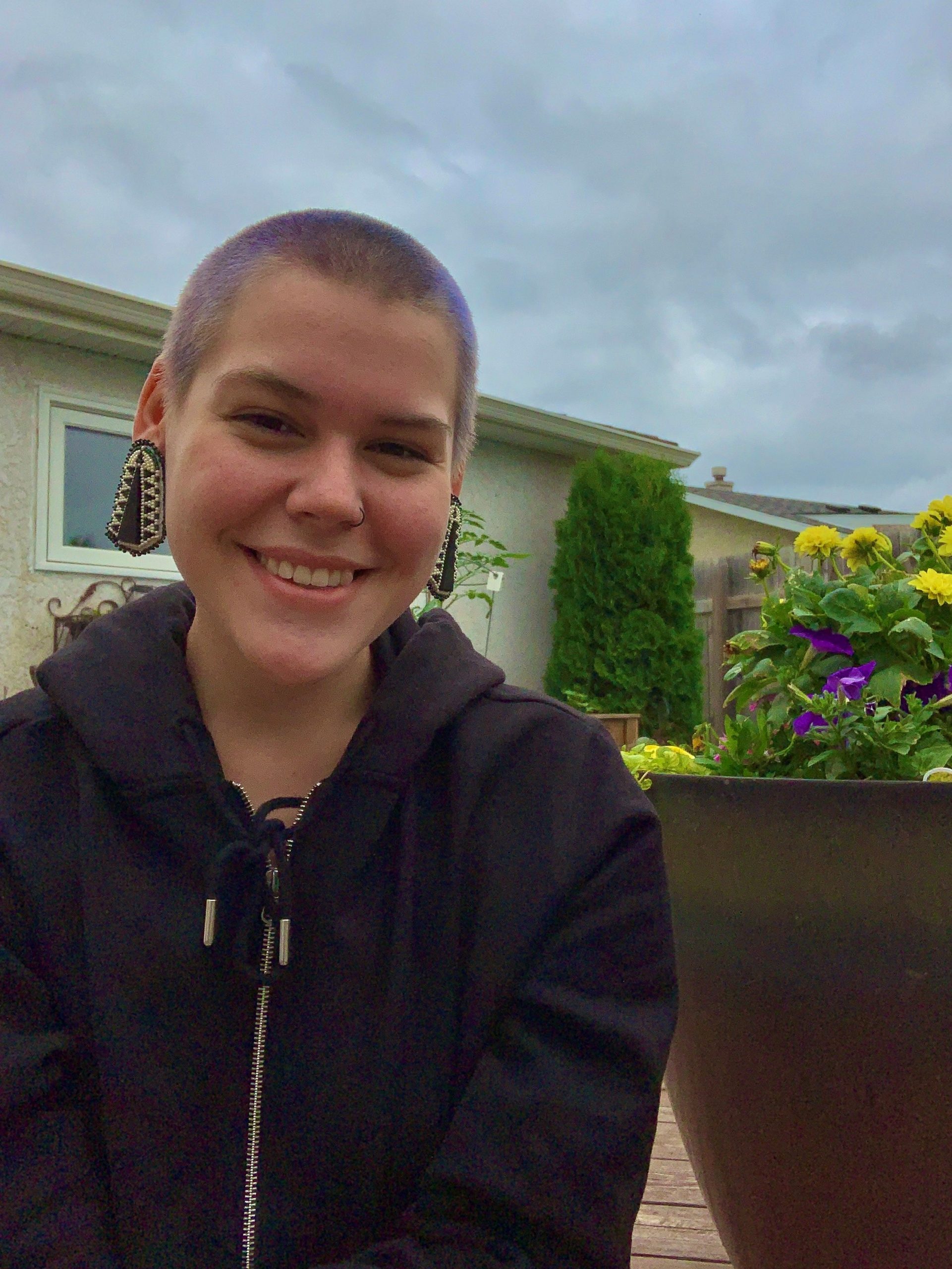
CSOP Participant Profile – Katie Anderson

by Nicolien Klassen-Wiebe

CSOP course inspires student to navigate Indigenous and Christian identities

Katie Anderson signed up for the Canadian School of Peacebuilding (CSOP) because with the notoriously full schedule of a music student, she wanted to spread out her course load. But the class quickly became so much more than just getting another credit under her belt.

Anderson, 20 years old and from Winnipeg, is in her third year of a Bachelor of Music with a concentration in early years education at Canadian Mennonite University (CMU). For her first CSOP course, she took Creation and Community in Biblical and Indigenous Perspectives. It was taught by Sunder John Boopalan, Assistant Professor of Biblical and Theological Studies at CMU, and Danny Zacharias, Associate Professor of New Testament Studies at Acadia Divinity College in Nova Scotia and a faculty member of the North American Institute for Indigenous Theological Studies (NAITTS).

The professors and participants examined biblical texts about creation and community, and worked to decolonize scripture by shedding western lenses and instead reading the text through Indigenous lenses. They explored the similarities and differences between Christian and traditional Indigenous values related to creation and community.

“It’s super interesting as an Indigenous person and as a Christian to see how they can relate and differentiate from each other,” Anderson says. “I’m navigating what it means to be Indigenous and a Christian at the same time and how those can coexist together, so the course was super interesting to me.”

She wasn’t connected to her Indigenous culture while growing up because her family dissociated themselves from their Indigenous identity as a result of their Christianity. When she started attending CMU and was able to explore faith on her own, she began to see how the two were not mutually exclusive. “That’s what I appreciate about courses like this, is you can see where they both exist instead of just one or the other.”

Anderson appreciated the format of the course, which ran every morning for two weeks and included a lot of discussion time in addition to lectures. They covered a lot of ground, from capitalism to creation’s existence outside of its relationship to humans. Other participants contributed significantly to her learning: “I have a lot of graduate students in my class, so listening to what they interpret from scripture has been really interesting . . . People have made interesting connections that I just never thought about.”

Anderson explains this education in diversity will be helpful not only for her personal growth, but also for her future work in schools, where she will teach students and interact with coworkers from countless different cultures and religions. She hopes to take more CSOP courses in the future: “It’s exciting to see more classes like this in the curriculum.”