Categories
Audio Media

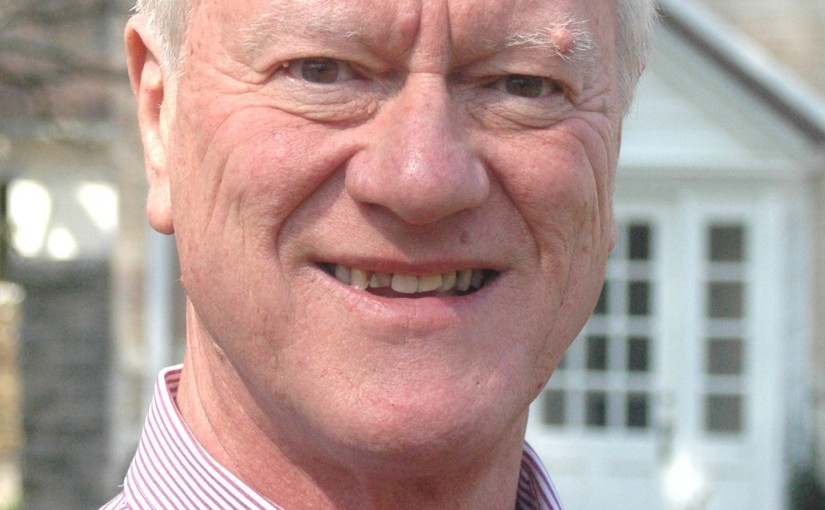
Peacebuilder Banquet – George Lakey and the story of Barbara Smith

Click    to listen to the story of Barbara Smith, as told by George Lakey at the CSOP Peacebuilders Banquet, June 23, 2011.

Each week during the Canadian School of Peacebuilding we invite the general public to join our students for a lunch banquet of great local food and storytelling by one of the week’s instructors on the the theme of great peacebuilders.  This is a time to gather as a community of peacebuilders, to celebrate with great food and to be inspired by the stories of peacebuilders from around the world.


Categories
Audio Media

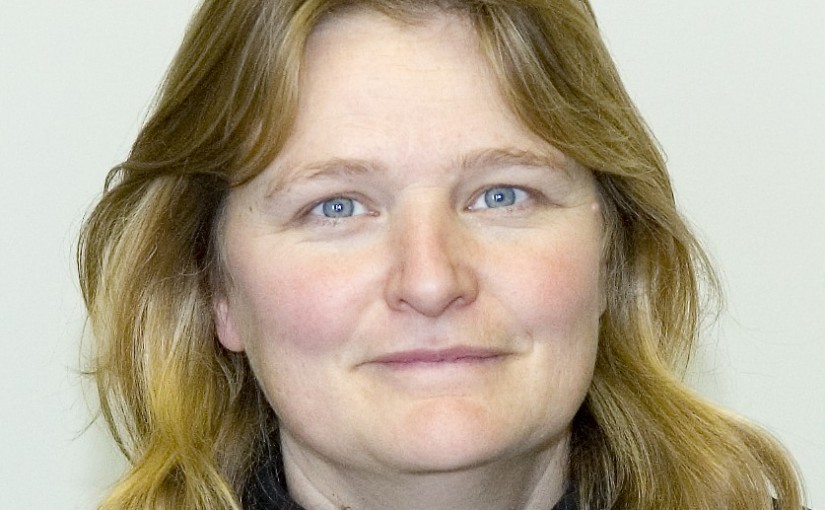
Peacebuilder Banquet – Karen Ridd and the story of the Hummingbird

Click    to listen to the story of the hummingbird, as told by Karen Ridd at the CSOP Peacebuilders Banquet, June 29, 2012.

Each week during the Canadian School of Peacebuilding we invite the general public to join our students for a lunch banquet of great local food and storytelling by one of the week’s instructors on the the theme of great peacebuilders.  This is a time to gather as a community of peacebuilders, to celebrate with great food and to be inspired by the stories of peacebuilders from around the world.


Categories
News

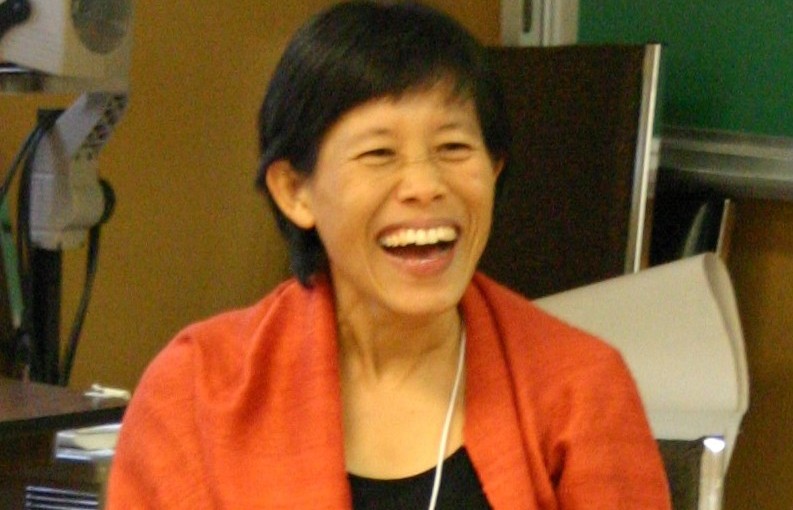
CSOP Instructor Ouyporn Khuankaew – Activist, Peace Trainer, Role Model

January 11, 2013 –   Ouyporn Khuankaew travelled a long way to teach at the 2012 Canadian School for Peacebuilding (CSOP) at Canadian Mennonite University (CMU) last summer – and she says that it was well worth her journey.

Khuankaew is a Buddhist feminist peace trainer who has been working with activists in South and Southeast Asia since 1995. In 2002, she co-founded International Women’s Partnership for Peace and Justice (IWP) which runs its own center and workswith activists in Burma, India, Sri Lanka, and Thailand, teaching Buddhist peacebuilding, non-violent action, counselling for trauma survivors, leadership for social change, gender, and sexuality, feminism and Buddhism for change, and meditation retreats for activists. On a personal level, she is a domestic trauma survivor – and that experience, along with the injustices and gender inequality she has witnessed in South and Southeast Asia – led her to pursue a life dedicated to peacebuilding, and to inspiring a new generation of women to do the same.

“My experience at the Canadian School of Peacebuilding was wonderful,” Khuankaew shares. “I loved how the event was organized, with an emphasis on small groups and integrating diverse groups of people. Everyone was so welcoming, so eager to know each other. We were really able to accomplish a lot in a very short period of time. The students especially were very analytical and engaged – especially the young women – and it was exciting to see.”

“I hope that the course that I taught inspired them,” she continues. “When I was young, we didn’t have role models for women doing this kind of work. I hope that I can be that kind of mentor, increasing women’s confidence and helping them connect with likeminded people so they don’t feel alone in their passions and their efforts. I feel a responsibility to help create a space for women to feel connected and empowered. No one is alone.”

“Peacebuilding has become one of the major issues of this generation. We are all in need of peace, whether in family conflicts or widespread war,” says Kuankaew. “I admire CMU’s commitment not just to peace, but to peacebuilding, and the way they are involving women in the solution. In my work, I have seen the impact of feminine involvement. In Burma, when we teach women to be peacebuilders, they can go back and teach men and women, and they help to increase the role and status of women in their communities.”

Khuankaew feels strongly about equipping women as leaders in the peacebuilding process. “In our culture, we assume that women are natural peacemakers,” she says. “We see this role at work in our families – and as important as that is, this role should not be confined to the home. We need it on a global level. A woman’s perspective and approach is different than a man’s. We are uniquely qualified to be peacebuilders. From a young age, we are trained through gender roles to be caring and loving, to share and listen and experience – and that is the foundation of peacemaking. It doesn’t need to be taught. We intuitively understand the emotional and psychological aspects of peacebuilding. We need to be committed to deliver the training required to empower women to take that understanding and use it to impact the world around them.”

“We need to use our hearts, and use more than intellect and logic to solve our issues,” says Khuankaew. “Our world is in trouble because we use our heads without our hearts. When we use our hearts, there’s no argument or anger there – it equalizes us. Women are more in touch with that. But in the end, we all need to work together. It’s not a matter of men versus women, it’s humans working toward a solution, together.”


Article: by Linsday Wright for CMU       

Photograph: of Ouyporn Khuankaew, courtesy of CMU


Categories
Resources

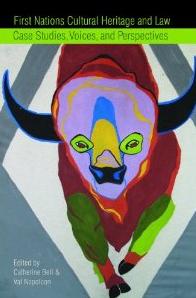
First Nations Cultural Heritage and Law: Case Studies, Voices, and Perspectives

First Nations Cultural Heritage and Law: Case Studies, Voices, and Perspectives

Edited by Catherine Bell and Val Napoleon

First Nations Cultural Heritage and Law explores First Nations perspectives on cultural heritage and issues of reform within and beyond Western law. Written in collaboration with First Nation partners, it contains seven case studies featuring indigenous concepts, legal orders, and encounters with legislation and negotiations; a national review essay; three chapters reflecting on major themes; and a self-reflective critique on the challenges of collaborative and intercultural research. Although the volume draws on specific First Nation experiences, it covers a wide range of topics of concern to Inuit, Metis, and other indigenous peoples.

http://www.amazon.ca/First-Nations-Cultural-Heritage-Law/dp/0774814624/ref=sr_1_1?s=books&ie=UTF8&qid=1352912529&sr=1-1


Categories
Resources

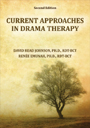
Current Approaches in Drama Therapy: 2nd Edition

By assorted authors including Armand Volkas, edited by David Johnson and Renee Emunah

The second edition of Current Approaches in Drama Therapy offers a revised and updated comprehensive compilation of the primary drama therapy methods and models that are being utilized and taught in the United States and Canada, including four new approaches… A distinct index of key concepts in drama therapy is included, demonstrating the consolidation and breadth of theory in the field. This highly informative and indispensable volume is geared toward drama therapy training programs, mental health professionals, theatre and drama teachers, school counselors, and organizational development consultants.

http://www.amazon.com/Current-Approaches-Drama-Therapy-Johnson/dp/0398078483

Categories
Resources

Piecework: A Woman’s Peace Theology

By several authors including Wendy Kroeker

A book of letters, conversations and reflections about peace from a feminist Mennonite perspective.  This 80-page book written by seven Mennonite women from across Canada. They vary in age and relate at different levels to the church. All share a background in theological studies.

http://www.amazon.com/Piecework-A-Womens-Peace-Theology/dp/0968308015/ref=sr_1_1?ie=UTF8&s=books&qid=1292014752&sr=1-1

Categories
Resources

Our God is Undocumented: Biblical Faith and Immigrant Justice

By Ched Myers and Matthew Colwell

The principle of hospitality and the commandment to welcome the stranger are among the most consistent themes of the Bible. How does that apply to the question of undocumented immigrants in our own country? In alternating chapters Myers examines the biblical dimensions of hospitality, sanctuary, the crossing of borders, and God’s predilection for those on the margins, while Colwell relates the stories of immigrants and immigrant rights activists – their hopes, dreams, and sufferings. These are men and women who, by acting upon their common humanity with the “other,”  have learned to cross a different kind of boundary.

http://www.chedmyers.org/books/our-god-undocumented-biblical-faith-and-immigrant-justice

Categories
Resources

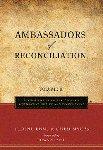
Ambassadors of Reconciliation, Vol. 2: Diverse Christian Practices of Restorative Justice and Peacemaking

 By Elaine Enns and Ched Myers

This volume offers three social-analytic models and nine profiles of contemporary practitioners of restorative justice and peacemaking. “People who work in conflict resolution rarely realize the potential restorative justice offers for addressing the justice dynamics inherent in conflict. Likewise, peacemakers may write off justice advocates as trouble-makers, while non-violent activists often see peacemakers as glossing over underlying wrongs. To bring these approaches together, Enns and Myers offer the metaphor of “full-spectrum” peacemaking. …They also challenge us to go deeper. We must also be aware of and address underlying factors that contribute to and shape conflict, such as inequities of power and privilege and structural injustice. Fortunately, the authors offer analytic tools to help understand these dynamics.” –From the Foreword by Howard Zehr

http://www.chedmyers.org/books/ambassadors-reconciliation-vol-ii-diverse-christian-practices-restorative-justice-and-peacemak

Categories
Resources

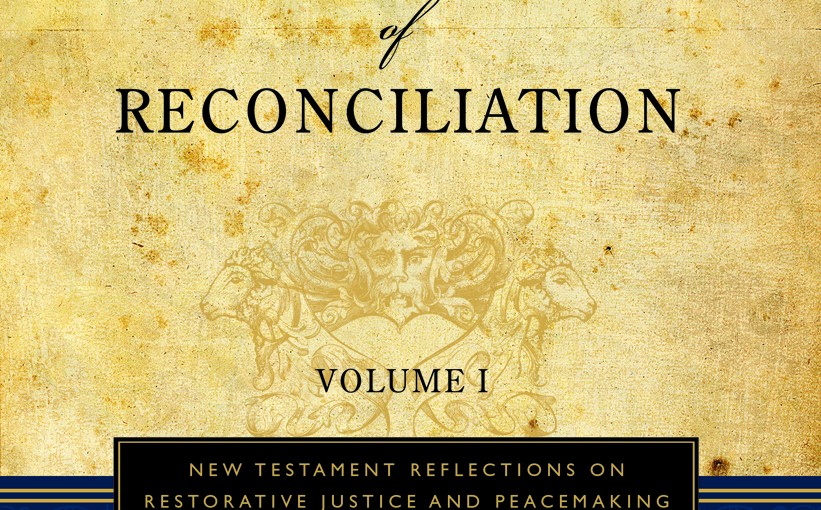
Ambassadors of Reconciliation, Vol. 1: New Testament Reflections on Restorative Justice and Peacemaking

By Elaine Enns and Ched Myers

This volume offers four N.T. studies on restorative justice and peacemaking (2 Cor 5-6; Mark 1-3; Matt 18; and Ephesians).

“Exceedingly rare and a precious gift to church and world is Myers and Enns’ wondrous mixing of ravenous hunger for justice, patient and practical wisdom in restoring justice and making peace, and consummate skill at biblical interpretation.”   –Tom Yoder Neufeld

http://www.chedmyers.org/books/ambassadors-reconciliation-vol-i-new-testament-reflections-restorative-justice-and-peacemaking

Categories
Resources

Global Nonviolent Action Database (GNAD)

Go to http://NVDatabase.swarthmore.edu to access a free global database of nonviolent actions.  Campaigns are drawn from nearly every country in the world, in which people overthrew dictators, changed environmental policies, halted racist discrimination, fought for economic justice, established their religious freedom, changed sexist and other oppressive laws, established national independence, and defended their neighborhoods – all by using nonviolent resistance.  Included are cases in which the campaign failed so that learning can be gained from these cases.

The database was envisioned and is managed by George Lakey, activist, professor and CSOP 2011 Instructor.