Categories
News Profiles

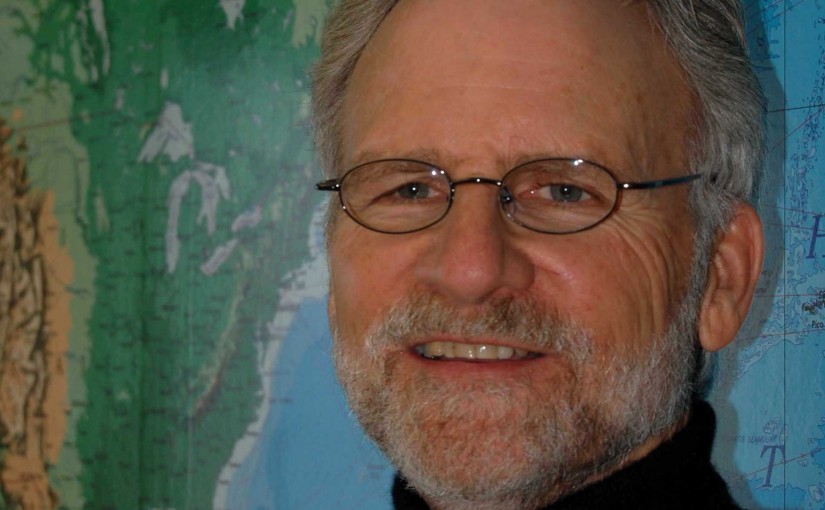
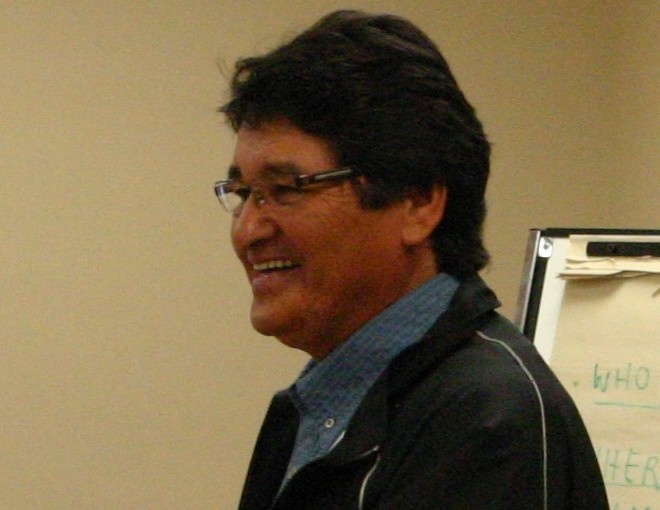
CSOP Participant Profile – Lorne Brandt

by Aaron Epp

Course helps B.C. man promote reconciliation between indigenous and non-indigenous Canadians.

When the Truth and Reconciliation Commission (TRC) of Canada announced it would hold one of its national events in Vancouver, Lorne Brandt wanted to make sure he was prepared.

Part of that preparation involved taking a course titled “Covenants of Peace and Justice” at the 2011 Canadian School of Peacebuilding.

“I realized that in my background, both growing up and [through] many years training and professionally, I have been blessed by First Nations neighbours, teachers, friends, co-workers and patients,” says Brandt, a retired psychiatrist living in Richmond, B.C.

“I reasoned that this was surely preparation for something that I could do to promote reconciliation between these two groups of Canadians … As a follower of Jesus, I would have to also say that I believe His spirit has also been guiding me on this good way.”

Taught by Rev. Stan McKay, an Aboriginal educator who was Canada’s first Aboriginal Moderator of the United Church of Canada, “Covenants of Peace and Justice” introduced a Cree Christian perspective on living in covenant relationships.

With an eye on exploring the role of peacemakers in a global context, McKay and his students examined biblical covenants, historic First Nations treaties, and contemporary struggles for justice during the weeklong course.

Learning more about the background of how treaties shaped the interaction between First Nations peoples and European settlers left a lasting impression on Brandt, who over the past few years has had a desire to connect with First Nations peoples in his area as well as make others – particularly Mennonites – more aware of indigenous issues.

Our ancestors came to this land not appreciating the worldview of its indigenous inhabitants, Brandt says – an inclusive worldview that allowed Europeans to settle here and share in the bounty of the land.

“And what have we done?” Brandt asks. “We’ve taken [the land] and left it worse off. There’s a big injustice there we need to look at, repent of, and try to correct.”

Since attending the CSOP, Brandt has arranged for First Nations guests to come speak to his congregation, Peace Mennonite Church, as well as teach in the church’s adult education hour.

He has also made connections with Hummingbird Ministries, a local organization that has grown out of the Presbyterian Church. Brandt and his wife have attended a number of their sessions and promoted their work in bringing together a variety of First Nations Christians and non-First Nations.

In his role as deacon at Peace Mennonite, Brandt arranged for Hummingbird Ministries to hold its third annual Peace Through the Arts Festival at Peace Mennonite in November 2012.

“I even got to perform some of the songs that I had written back in the 1970s when I was living in the community of South Indian Lake in northern Manitoba,” Brandt says.

Brandt also volunteered at the TRC gathering in Vancouver, and led two discussions in his church’s adult education hour: the first on why Christians should care about the injustices done to First Nations, and the second on what Christians can do about it.

“I do have to say that my attendance at the Canadian School of Peacebuilding played a large role in my going down this path,” Brandt says. “That period of time sent my mind in several directions with respect to the whole issue of our relationship as non-indigenous Canadians with our First Nations Canadian fellow-citizens.”

“I would like to attend further Canadian School of Peacebuilding sessions as well,” he adds. “If one is prepared, they are an excellent means of stirring one to action.”


Categories
News Profiles

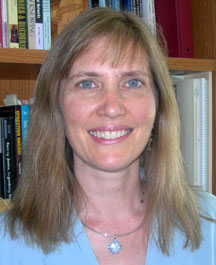
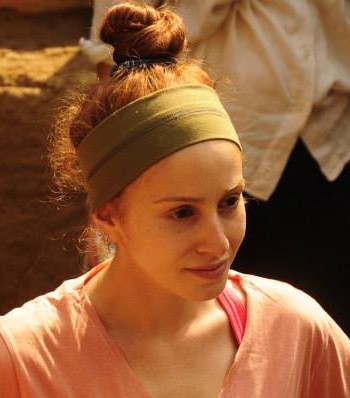
CSOP Participant Profile – Marissa Rykiss

by Aaron Epp

‘I’m really grateful … It was a very inspiring time in my life,’ says Marissa Rykiss

For Marissa Rykiss, attending the Canadian School of Peacebuilding was nothing short of life changing.

The 22-year-old Winnipegger enrolled in the course “Women and Peacebuilding” at the 2012 CSOP as part of a B.A. program in Conflict Resolution Studies at Menno Simons College.

Inspired by her mother, who practices collaborative law, Rykiss wanted to pursue a career as an immigration lawyer in order to make a difference in the world by helping vulnerable people.

After finishing the course, Rykiss realized she wanted to help people in a different way. Now, she plans to pursue a Master of Arts degree in Family Therapy.

First though, Rykiss is becoming a certified yoga instructor. She wants to teach yoga and potentially open her own studio.

Rykiss says her interest in teaching yoga stems from her desire to help people develop their self care so that they can be better people and lead more compassionate, empathetic lives.

“After taking [the CSOP] course, I realized there’s so many other ways I can help people, and I don’t necessarily need to have a title like lawyer to do that,” she says. “My happiness, and the happiness of others, is more important to me than having a title like that.”

Ouyporn Khuankaew, a Buddhist feminist peace trainer from Thailand, and Anna Snyder, associate professor of conflict resolution studies at Menno Simons College, taught the course.

Rykiss says it was the way the course was taught that impacted her so greatly.

“Ouyporn had a non-traditional way of teaching where she offered guided meditation at the beginning of each day, and it just allowed us to become a bit more mindful while we were present in the class,” Rykiss says. “She is one of the most inspiring and engaging women I’ve ever met.”

When the course ended, it was emotional for Rykiss.

“I cried on the last day and was so happy that I decided to participate in that particular course,” she says. “It felt like it was meant to be. It made me ask myself why I need to be pursuing something (a career in law) that isn’t consistent with who I am, and helped me understand that where I need to be is in a more transformative pathway—helping people who can’t help themselves get to a place of awareness and mindfulness.

“It wasn’t intended in the curriculum, but that’s just what I got out of it. A lot of people who participated were put off originally by this new way of thinking, but by the end, everyone there had experienced profound change in the way they thought about learning.”

Rykiss’s experience in the course led her to pursue a practicum placement in Thailand with International Women’s Partnership for Peace and Justice (IWP), an organization Khuankaew co-founded.

Rykiss’s work in Thailand included helping with a weeklong workshop for women that IWP organized. Each day began with yoga. While Rykiss had practiced yoga before, it was during this week that she came to fully appreciate the healing nature of yoga therapy.

“I realized … how important it is for people to learn how to be better to themselves, to treat themselves better and come back to themselves through yoga and meditation,” she says.

The practicum and change in career direction would not have happened without Rykiss’s transformative experience at the CSOP.

“I’m really grateful that I was able to take a course where everything could be condensed into five days,” she says. “There are such a variety of courses [at CSOP], and [the organizers] go out of their way to find people to teach the courses who have first-hand experience with the material.

“It was a very inspiring time in my life.”

Categories
News

Ovide Mercredi awarded University of Manitoba 2013 Distinguished Alumni Award

Ovide Mercredi, CSOP instructor in 2010 and 2012, was recently awarded the 2013 Distinguished Alumni Award by the University of Manitoba’s Alumni Association.    See http://umanitoba.ca/news/blogs/blog/2013/04/26/ovide-mercredi-annouced-as-2013-distinguished-alumni-recipient/ to read more about it.

Categories
Audio Media

Peacebuilder Banquet – Karen Ridd and the story of the Hummingbird

Click    to listen to the story of the hummingbird, as told by Karen Ridd at the CSOP Peacebuilders Banquet, June 29, 2012.

Each week during the Canadian School of Peacebuilding we invite the general public to join our students for a lunch banquet of great local food and storytelling by one of the week’s instructors on the the theme of great peacebuilders.  This is a time to gather as a community of peacebuilders, to celebrate with great food and to be inspired by the stories of peacebuilders from around the world.


Categories
Audio Media

Hummingbird by Anna Eileen

Take a few minutes to listen to this beautiful song, written by Anna Eileen and inspired by her week at the CSOP in 2012.

Hummingbird

Singer/Songwriter: Anna Eileen
Mix Engineer: Jason Phillips
'Hummingbird, your wings are torched
from dropping water on the fire
It keeps blazing while you work
and the elephants close their eyes

I want to see
I want to breath
I want to be
the music that heals

Femme avec peur
Les yeux qui ne veulent pas lui voir
Ton enfant est innocent
des choses qu'ont causé la guere

Je veux voir
Je veux savoir
Nous devons avoir
la musique qui guerisse

Fear-ing flag-born child of christ
how you cover yourself with fear
you chase your siblings with guns
and forget that Jehovah lives here

I want to share
I want to spare
I want to dare
the music that heals

Butterfly, you lead me round
open my eyes to your world
you suffered much and suffer still
drenching your wings in our hurt

Though we are weak
We'll work for peace
We need to seek
the music that heals


Categories
News

CSOP Instructor Ouyporn Khuankaew – Activist, Peace Trainer, Role Model

January 11, 2013 –   Ouyporn Khuankaew travelled a long way to teach at the 2012 Canadian School for Peacebuilding (CSOP) at Canadian Mennonite University (CMU) last summer – and she says that it was well worth her journey.

Khuankaew is a Buddhist feminist peace trainer who has been working with activists in South and Southeast Asia since 1995. In 2002, she co-founded International Women’s Partnership for Peace and Justice (IWP) which runs its own center and workswith activists in Burma, India, Sri Lanka, and Thailand, teaching Buddhist peacebuilding, non-violent action, counselling for trauma survivors, leadership for social change, gender, and sexuality, feminism and Buddhism for change, and meditation retreats for activists. On a personal level, she is a domestic trauma survivor – and that experience, along with the injustices and gender inequality she has witnessed in South and Southeast Asia – led her to pursue a life dedicated to peacebuilding, and to inspiring a new generation of women to do the same.

“My experience at the Canadian School of Peacebuilding was wonderful,” Khuankaew shares. “I loved how the event was organized, with an emphasis on small groups and integrating diverse groups of people. Everyone was so welcoming, so eager to know each other. We were really able to accomplish a lot in a very short period of time. The students especially were very analytical and engaged – especially the young women – and it was exciting to see.”

“I hope that the course that I taught inspired them,” she continues. “When I was young, we didn’t have role models for women doing this kind of work. I hope that I can be that kind of mentor, increasing women’s confidence and helping them connect with likeminded people so they don’t feel alone in their passions and their efforts. I feel a responsibility to help create a space for women to feel connected and empowered. No one is alone.”

“Peacebuilding has become one of the major issues of this generation. We are all in need of peace, whether in family conflicts or widespread war,” says Kuankaew. “I admire CMU’s commitment not just to peace, but to peacebuilding, and the way they are involving women in the solution. In my work, I have seen the impact of feminine involvement. In Burma, when we teach women to be peacebuilders, they can go back and teach men and women, and they help to increase the role and status of women in their communities.”

Khuankaew feels strongly about equipping women as leaders in the peacebuilding process. “In our culture, we assume that women are natural peacemakers,” she says. “We see this role at work in our families – and as important as that is, this role should not be confined to the home. We need it on a global level. A woman’s perspective and approach is different than a man’s. We are uniquely qualified to be peacebuilders. From a young age, we are trained through gender roles to be caring and loving, to share and listen and experience – and that is the foundation of peacemaking. It doesn’t need to be taught. We intuitively understand the emotional and psychological aspects of peacebuilding. We need to be committed to deliver the training required to empower women to take that understanding and use it to impact the world around them.”

“We need to use our hearts, and use more than intellect and logic to solve our issues,” says Khuankaew. “Our world is in trouble because we use our heads without our hearts. When we use our hearts, there’s no argument or anger there – it equalizes us. Women are more in touch with that. But in the end, we all need to work together. It’s not a matter of men versus women, it’s humans working toward a solution, together.”


Article: by Linsday Wright for CMU       

Photograph: of Ouyporn Khuankaew, courtesy of CMU


Categories
News

CMU News Release about 2012 CSOP participant, Schadrack Mutabazi

December 5, 2012

CMU Student Schadrack Mutabazi Maintains Hope for Stability and Reconciliation in Africa’s Congo

Schadrack Mutabazi is a Canadian Mennonite University (CMU) student who is doing his best to concentrate on his studies and embrace his family’s new Canadian home. It’s an everyday challenge for him because even oceans can’t separate him from the trauma he’s faced in his lifetime – and the trauma that continues to plague his family and his country.

Mutabazi was born into the Banyamulenge minority tribe in the Democratic Republic of Congo – which is to say, he was born into persecution and violence. He lived for ten years in exile in Rwanda and five years as a refugee in Uganda, spending his life as the victim of xenophobic persecution and life threatening circumstances, witnessing unspeakable atrocities, and losing many loved ones along the way.

“I have lost many relatives – parents, uncles, brothers, cousins, colleagues, and friends – and I have narrowly escaped life threatening incidents myself. I grew up with no peace, no hope for stability,” he said.

While he’s been victimized, Mutabazi is anything but a victim. In Africa, he became an ordained pastor and founded the HOPU Organization to bring hope and peace to hurt and suffering people – both those who have been persecuted and the persecutors themselves. “Deep inside, we all have interest in finding reconciliation and forgiveness. Even the perpetrators don’t live in peace,” said Mutabazi. “HOPU uses music to repair and restore, building bridges between groups of people who have been fighting for their entire lives. We want to see reconciliation. And we will get there someday. But first, we focus on just getting people sitting in the same room together and finding some common ground – through music, poetry, and other cultural activities.”

This married father of six children has moved his family – including some of his siblings, for a total of eleven people – to Winnipeg in search of the peace and stability he’s been looking for his entire life. At CMU, he is studying Peace and Conflict Transformation Studies and he also attended CMU’s Canadian School of Peacebuilding this past summer. He hopes that advanced education will help him continue to lead his people in healing and restitution.

“One of the most important things I’ve learned during my time at CMU so far has been the power of love and forgiveness,” he said. “It sounds so simple, but I’ve discovered that you must go inward first to find love and healing so that you can help others to do the same. This truth has been profound in my life.”

His work has continued here in Winnipeg, through Shalom Christian Outreach and Heritage Outreach, and Mutabazi plans to use his degree to continue promoting peace, unity, and social justice as both a church and a community leader.

When asked about his home country and the atrocities that continue there today, Mutabazi – holding onto his innate strength and optimism – said, “I see great possibilities for peace and reconciliation in the Congo.”

“The complexity of the real situation has been unrecognized – or undermined – by the organizations that have been trying to help there,” Mutabazi explained, “but God knows what is happening in the Congo. From my experience, I know that with deep spiritual maturity, we can remain positive and learn the process that can support resolution.”

“I am one of many who have experienced this extremely challenging journey,” he said. “What has happened in my life – the killing, the fear – surpasses all human understanding. But we can still preach the message of peace, love, and justice. God promises us, in John 14:27, a ‘peace that the world cannot give.’ Peace comes from God, and God has a wonderful plan for the Congo.”

This past week, increased tensions in the eastern Congo have sent some of the remaining members of Mutabazi’s family fleeing for their lives. Some are safe for now, but have been separated from their families and fears run high. Mutabazi is looking for ways to bring more of his family into Canada.

Article written by Lindsay Wright for CMU.

Categories
News

59 Cents Campaign

June 25, 2012

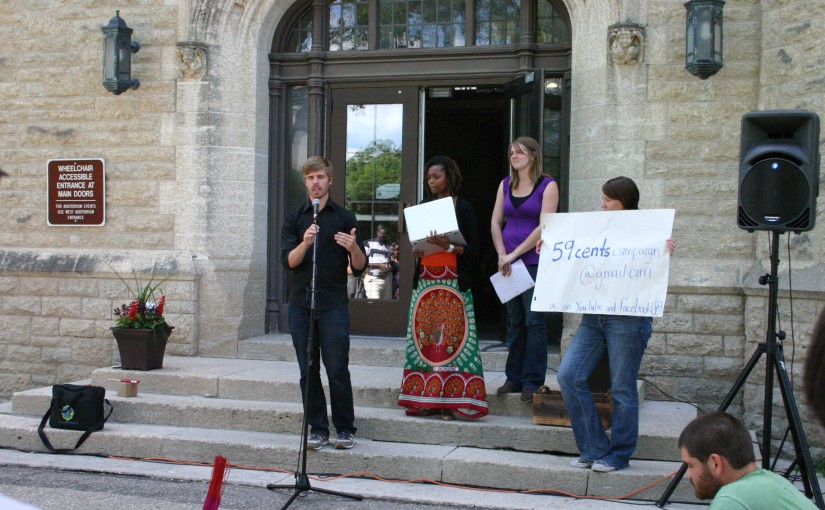
During Session I of the 2012 CSOP, students in Speaking Out…and BeingHeard: Citizen Advocacy worked in small groups throughout the week.  The result of one group’s work was the 59 Cents Campaign, designed to stop the Canadian government’s decision to cut portions of refugee healthcare.  This cost to keep the Federal Interim Health Program open is $0.59 cents per person and this campaign asks all Canadians to place 59 cents in an envelope and send it to the Prime Minister’s office to let him know that we will not stand for these cuts.  Check out the the webpage at www.59cents.org, the  59 Cents Campaign video or e-mail 59centscampaign@gmail.com for more information.

Categories
Audio Media

Interview with Stuart Clark, CSOP 2012 Instructor

Click     to hear an audio interview with Stuart Clark


Categories
Audio Media

Interview with Anna Snyder, 2012 CSOP Instructor

Click   HERE   to hear an interview with Anna Snyder, CSOP 2012 instructor.