Categories
News

Waseskun CSOP Bursary established

A distinguishing mark of the Canadian School of Peacebuilding (CSOP) has been creating space for Aboriginal voices.  Each year the CSOP has offered at least one course with a focus on Aboriginal issues of peace and justice. In order to encourage Aboriginal participation at the CSOP and to help make the CSOP a gathering place of Aboriginal and non-Aboriginal people across Canada, the Waseskun (the Cree word for “the moment after a storm when the sun begins to shine through”) Canadian School of Peacebuilding Bursary has been established to provide financial support to an Aboriginal or Métis participant.

All Aboriginal and Metis CSOP participants are eligible to apply for the Waseskun CSOP Bursary.  Funds for bursary assistance are limited.  CSOP/CMU cannot guarantee any assistance, but will consider and assess each application carefully in relation to all other applications received.  To apply, please submit a completed Waseskun CSOP Bursary Application 2013 along with a CSOP application (http://csop.cmu.ca/index.php/registration/).

Categories
Audio Media

Hummingbird by Anna Eileen

Take a few minutes to listen to this beautiful song, written by Anna Eileen and inspired by her week at the CSOP in 2012.

Hummingbird

Singer/Songwriter: Anna Eileen
Mix Engineer: Jason Phillips
'Hummingbird, your wings are torched
from dropping water on the fire
It keeps blazing while you work
and the elephants close their eyes

I want to see
I want to breath
I want to be
the music that heals

Femme avec peur
Les yeux qui ne veulent pas lui voir
Ton enfant est innocent
des choses qu'ont causé la guere

Je veux voir
Je veux savoir
Nous devons avoir
la musique qui guerisse

Fear-ing flag-born child of christ
how you cover yourself with fear
you chase your siblings with guns
and forget that Jehovah lives here

I want to share
I want to spare
I want to dare
the music that heals

Butterfly, you lead me round
open my eyes to your world
you suffered much and suffer still
drenching your wings in our hurt

Though we are weak
We'll work for peace
We need to seek
the music that heals


Categories
News

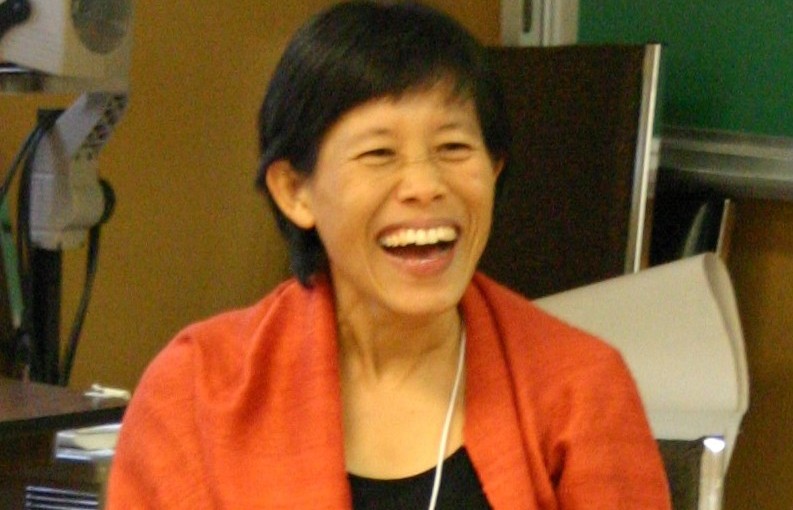
CSOP Instructor Ouyporn Khuankaew – Activist, Peace Trainer, Role Model

January 11, 2013 –   Ouyporn Khuankaew travelled a long way to teach at the 2012 Canadian School for Peacebuilding (CSOP) at Canadian Mennonite University (CMU) last summer – and she says that it was well worth her journey.

Khuankaew is a Buddhist feminist peace trainer who has been working with activists in South and Southeast Asia since 1995. In 2002, she co-founded International Women’s Partnership for Peace and Justice (IWP) which runs its own center and workswith activists in Burma, India, Sri Lanka, and Thailand, teaching Buddhist peacebuilding, non-violent action, counselling for trauma survivors, leadership for social change, gender, and sexuality, feminism and Buddhism for change, and meditation retreats for activists. On a personal level, she is a domestic trauma survivor – and that experience, along with the injustices and gender inequality she has witnessed in South and Southeast Asia – led her to pursue a life dedicated to peacebuilding, and to inspiring a new generation of women to do the same.

“My experience at the Canadian School of Peacebuilding was wonderful,” Khuankaew shares. “I loved how the event was organized, with an emphasis on small groups and integrating diverse groups of people. Everyone was so welcoming, so eager to know each other. We were really able to accomplish a lot in a very short period of time. The students especially were very analytical and engaged – especially the young women – and it was exciting to see.”

“I hope that the course that I taught inspired them,” she continues. “When I was young, we didn’t have role models for women doing this kind of work. I hope that I can be that kind of mentor, increasing women’s confidence and helping them connect with likeminded people so they don’t feel alone in their passions and their efforts. I feel a responsibility to help create a space for women to feel connected and empowered. No one is alone.”

“Peacebuilding has become one of the major issues of this generation. We are all in need of peace, whether in family conflicts or widespread war,” says Kuankaew. “I admire CMU’s commitment not just to peace, but to peacebuilding, and the way they are involving women in the solution. In my work, I have seen the impact of feminine involvement. In Burma, when we teach women to be peacebuilders, they can go back and teach men and women, and they help to increase the role and status of women in their communities.”

Khuankaew feels strongly about equipping women as leaders in the peacebuilding process. “In our culture, we assume that women are natural peacemakers,” she says. “We see this role at work in our families – and as important as that is, this role should not be confined to the home. We need it on a global level. A woman’s perspective and approach is different than a man’s. We are uniquely qualified to be peacebuilders. From a young age, we are trained through gender roles to be caring and loving, to share and listen and experience – and that is the foundation of peacemaking. It doesn’t need to be taught. We intuitively understand the emotional and psychological aspects of peacebuilding. We need to be committed to deliver the training required to empower women to take that understanding and use it to impact the world around them.”

“We need to use our hearts, and use more than intellect and logic to solve our issues,” says Khuankaew. “Our world is in trouble because we use our heads without our hearts. When we use our hearts, there’s no argument or anger there – it equalizes us. Women are more in touch with that. But in the end, we all need to work together. It’s not a matter of men versus women, it’s humans working toward a solution, together.”


Article: by Linsday Wright for CMU       

Photograph: of Ouyporn Khuankaew, courtesy of CMU


Categories
News

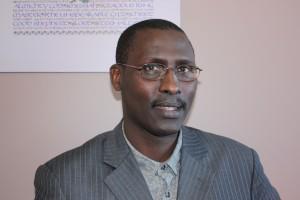
CMU News Release about 2012 CSOP participant, Schadrack Mutabazi

December 5, 2012

CMU Student Schadrack Mutabazi Maintains Hope for Stability and Reconciliation in Africa’s Congo

Schadrack Mutabazi is a Canadian Mennonite University (CMU) student who is doing his best to concentrate on his studies and embrace his family’s new Canadian home. It’s an everyday challenge for him because even oceans can’t separate him from the trauma he’s faced in his lifetime – and the trauma that continues to plague his family and his country.

Mutabazi was born into the Banyamulenge minority tribe in the Democratic Republic of Congo – which is to say, he was born into persecution and violence. He lived for ten years in exile in Rwanda and five years as a refugee in Uganda, spending his life as the victim of xenophobic persecution and life threatening circumstances, witnessing unspeakable atrocities, and losing many loved ones along the way.

“I have lost many relatives – parents, uncles, brothers, cousins, colleagues, and friends – and I have narrowly escaped life threatening incidents myself. I grew up with no peace, no hope for stability,” he said.

While he’s been victimized, Mutabazi is anything but a victim. In Africa, he became an ordained pastor and founded the HOPU Organization to bring hope and peace to hurt and suffering people – both those who have been persecuted and the persecutors themselves. “Deep inside, we all have interest in finding reconciliation and forgiveness. Even the perpetrators don’t live in peace,” said Mutabazi. “HOPU uses music to repair and restore, building bridges between groups of people who have been fighting for their entire lives. We want to see reconciliation. And we will get there someday. But first, we focus on just getting people sitting in the same room together and finding some common ground – through music, poetry, and other cultural activities.”

This married father of six children has moved his family – including some of his siblings, for a total of eleven people – to Winnipeg in search of the peace and stability he’s been looking for his entire life. At CMU, he is studying Peace and Conflict Transformation Studies and he also attended CMU’s Canadian School of Peacebuilding this past summer. He hopes that advanced education will help him continue to lead his people in healing and restitution.

“One of the most important things I’ve learned during my time at CMU so far has been the power of love and forgiveness,” he said. “It sounds so simple, but I’ve discovered that you must go inward first to find love and healing so that you can help others to do the same. This truth has been profound in my life.”

His work has continued here in Winnipeg, through Shalom Christian Outreach and Heritage Outreach, and Mutabazi plans to use his degree to continue promoting peace, unity, and social justice as both a church and a community leader.

When asked about his home country and the atrocities that continue there today, Mutabazi – holding onto his innate strength and optimism – said, “I see great possibilities for peace and reconciliation in the Congo.”

“The complexity of the real situation has been unrecognized – or undermined – by the organizations that have been trying to help there,” Mutabazi explained, “but God knows what is happening in the Congo. From my experience, I know that with deep spiritual maturity, we can remain positive and learn the process that can support resolution.”

“I am one of many who have experienced this extremely challenging journey,” he said. “What has happened in my life – the killing, the fear – surpasses all human understanding. But we can still preach the message of peace, love, and justice. God promises us, in John 14:27, a ‘peace that the world cannot give.’ Peace comes from God, and God has a wonderful plan for the Congo.”

This past week, increased tensions in the eastern Congo have sent some of the remaining members of Mutabazi’s family fleeing for their lives. Some are safe for now, but have been separated from their families and fears run high. Mutabazi is looking for ways to bring more of his family into Canada.

Article written by Lindsay Wright for CMU.
Categories
Resources

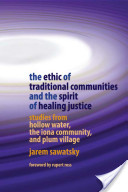
The Ethic of Traditional Communities and the Spirit of Healing Justice: Studies from Hollow Water, the Iona Community, and Plum Village

by Jarem Sawatsky

What is healing justice? Who practices it? What does it look like? In this international study on healing justice, Jarem Sawatsky examines traditional communities including Hollow Water — an Aboriginal and Metis community in Canada renowned for their healing work in the face of 80% sexual abuse rates; the Iona Community — a dispersed Christian ecumenical community in Scotland known for their work towards peace, healing, and social justice, rebuilding of community and the renewal of worship; and Plum Village — a Vietnamese initiated Buddhist community in southern France — and home to the Nobel Peace Prize nominated author — Thich Nhat Hahn. These case studies record a search for the kind of social, structural, and spiritual relationships necessary to sustain a healing view of justice. Through comparing cases, Sawatsky identifies the common patterns, themes and imagination which these communities share. The commonalities among those that practice healing justice are then examined for their implications for wider society, particularly for restorative justice and criminal justice.

http://www.amazon.ca/Traditional-Communities-Spirit-Healing-Justice/dp/1843106876


Categories
Resources

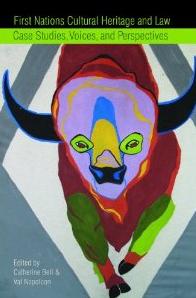
First Nations Cultural Heritage and Law: Case Studies, Voices, and Perspectives

First Nations Cultural Heritage and Law: Case Studies, Voices, and Perspectives

Edited by Catherine Bell and Val Napoleon

First Nations Cultural Heritage and Law explores First Nations perspectives on cultural heritage and issues of reform within and beyond Western law. Written in collaboration with First Nation partners, it contains seven case studies featuring indigenous concepts, legal orders, and encounters with legislation and negotiations; a national review essay; three chapters reflecting on major themes; and a self-reflective critique on the challenges of collaborative and intercultural research. Although the volume draws on specific First Nation experiences, it covers a wide range of topics of concern to Inuit, Metis, and other indigenous peoples.

http://www.amazon.ca/First-Nations-Cultural-Heritage-Law/dp/0774814624/ref=sr_1_1?s=books&ie=UTF8&qid=1352912529&sr=1-1


Categories
Resources

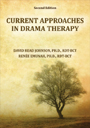
Current Approaches in Drama Therapy: 2nd Edition

By assorted authors including Armand Volkas, edited by David Johnson and Renee Emunah

The second edition of Current Approaches in Drama Therapy offers a revised and updated comprehensive compilation of the primary drama therapy methods and models that are being utilized and taught in the United States and Canada, including four new approaches… A distinct index of key concepts in drama therapy is included, demonstrating the consolidation and breadth of theory in the field. This highly informative and indispensable volume is geared toward drama therapy training programs, mental health professionals, theatre and drama teachers, school counselors, and organizational development consultants.

http://www.amazon.com/Current-Approaches-Drama-Therapy-Johnson/dp/0398078483

Categories
Resources

Piecework: A Woman’s Peace Theology

By several authors including Wendy Kroeker

A book of letters, conversations and reflections about peace from a feminist Mennonite perspective.  This 80-page book written by seven Mennonite women from across Canada. They vary in age and relate at different levels to the church. All share a background in theological studies.

http://www.amazon.com/Piecework-A-Womens-Peace-Theology/dp/0968308015/ref=sr_1_1?ie=UTF8&s=books&qid=1292014752&sr=1-1

Categories
Resources

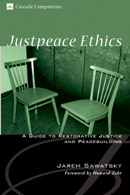
Justpeace Ethics: A Guide to Restorative Justice and Peacebuilding

By Jarem Sawatsky

Drawing on the imaginations of some leading peace and restorative justice practitioners, Justpeace Ethics identifies components of a justpeace imagination—the basis of an alternative ethics, where the end is touched with each step. In this simple companion to justpeace ethics, Jarem Sawatsky helps those struggling with how to respond to conflict and violence in both just and peaceful ways.

http://wipfandstock.com/store/Justpeace_Ethics_A_Guide_to_Restorative_Justice_and_Peacebuilding


Categories
Resources

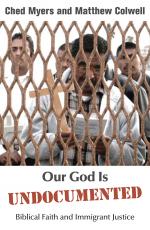
Our God is Undocumented: Biblical Faith and Immigrant Justice

By Ched Myers and Matthew Colwell

The principle of hospitality and the commandment to welcome the stranger are among the most consistent themes of the Bible. How does that apply to the question of undocumented immigrants in our own country? In alternating chapters Myers examines the biblical dimensions of hospitality, sanctuary, the crossing of borders, and God’s predilection for those on the margins, while Colwell relates the stories of immigrants and immigrant rights activists – their hopes, dreams, and sufferings. These are men and women who, by acting upon their common humanity with the “other,”  have learned to cross a different kind of boundary.

http://www.chedmyers.org/books/our-god-undocumented-biblical-faith-and-immigrant-justice