Categories
News Profiles

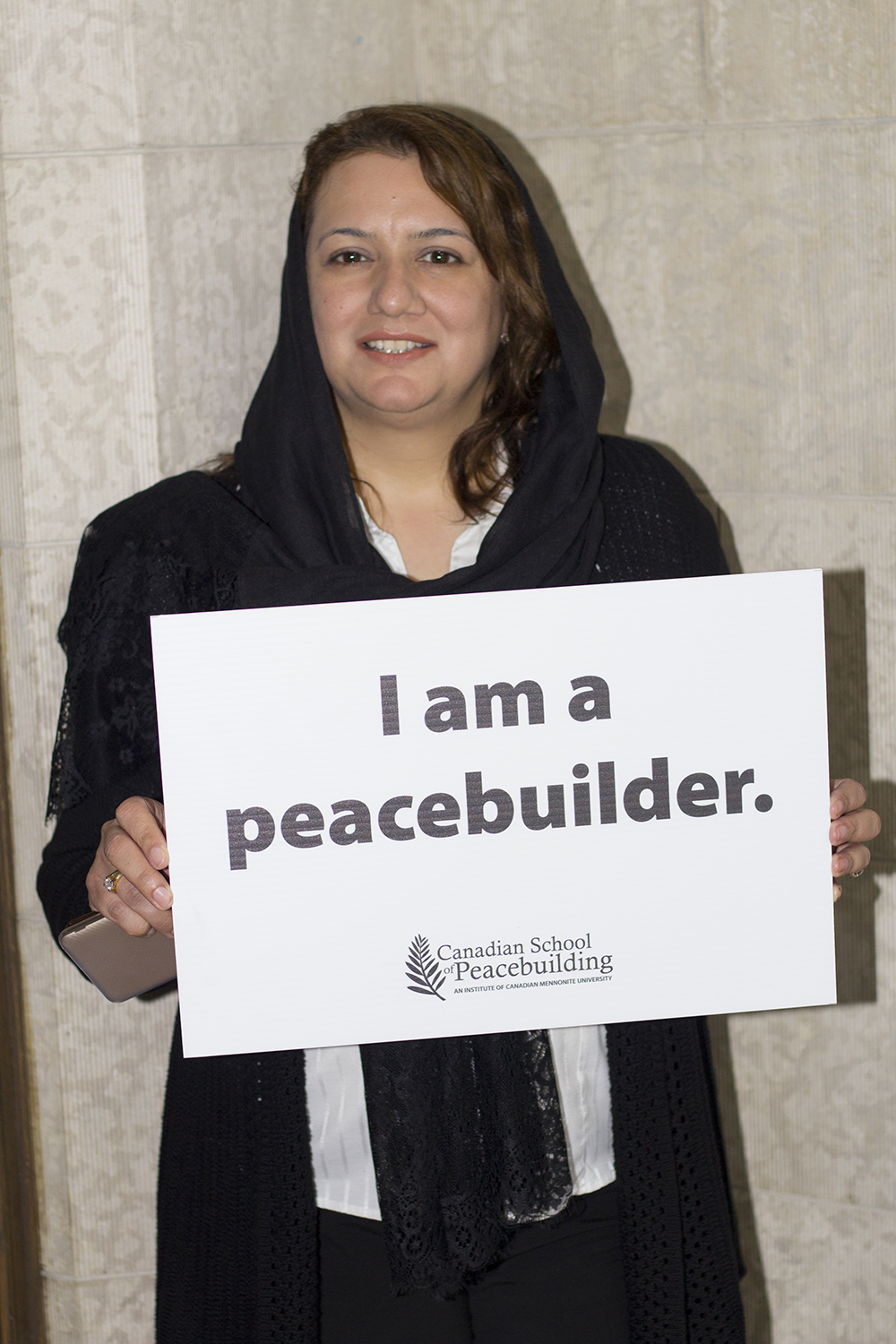
CSOP Participant Profile – Fareeha Iftikar

by Alison Ralph

“It’s like home,” at the CSOP, says inter-faith peacebuilder from Pakistan

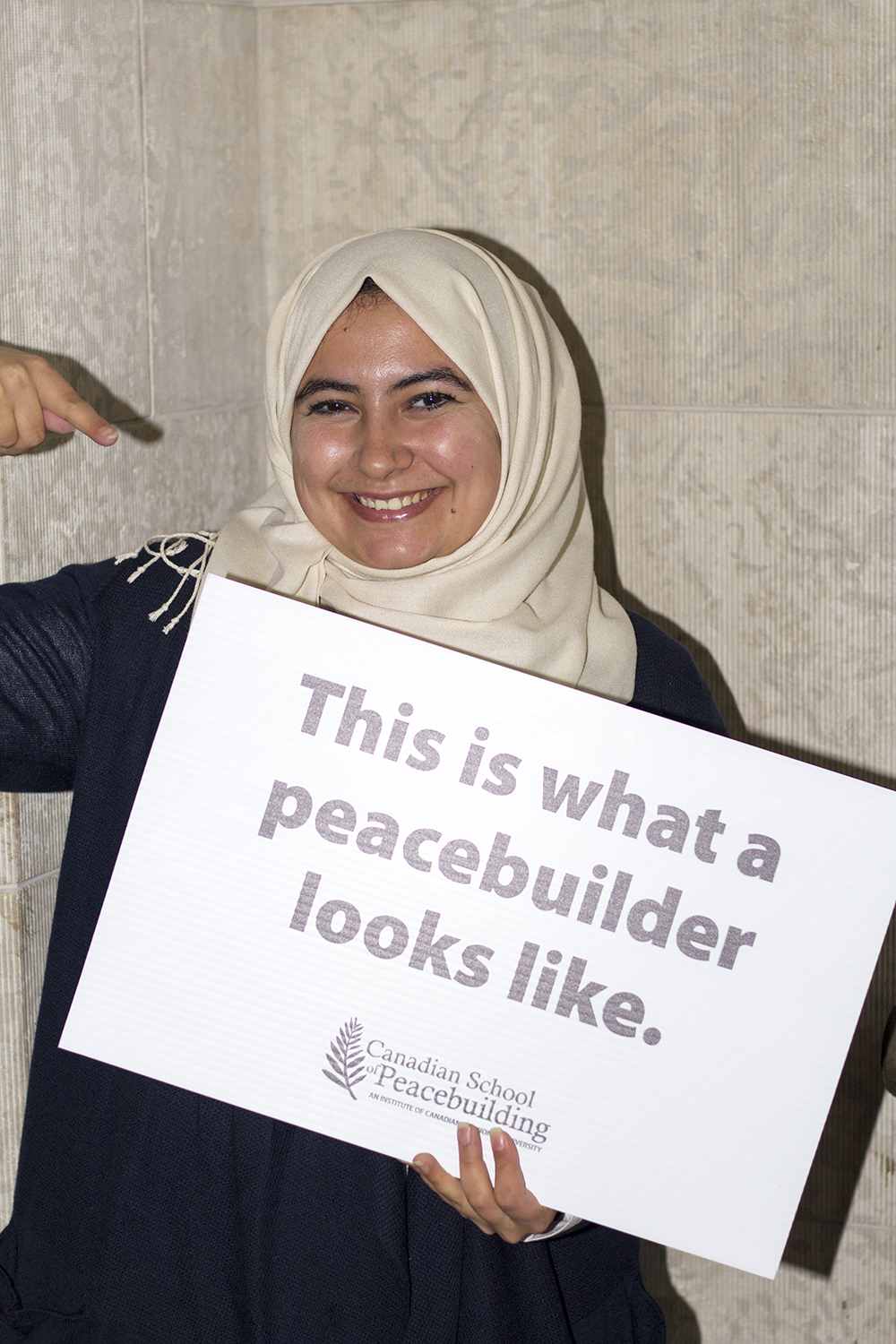
When Fareeha Iftikhar’s plane landed in Winnipeg last June, she says it felt like coming home.

Although she currently lives in Pakistan, Iftikhar was born in Abbotsford, BC. It was her desire to study at the Canadian School of Peacebuilding that brought her back to Canada.

Iftikhar was looking at professional development opportunities when she remembered meeting Wendy Kroeker, co-director of the CSOP, at the Mindanao Peacebuilding Institute in the Philippines, in 2015.

“We looked at the dates and courses and (the CSOP) fit,” says Iftikhar, who works on interfaith peacebuilding projects for Norwegian Church Aid (NGA).

Before joining NGA, Iftikhar worked for the Canadian High Commission in Pakistan.

When the government of Canada established the Office of Religious Freedom in 2013, she and her colleagues encouraged the High Commissioner to meet with leaders of different faiths.

“We did roundtables to bring together people from all walks of life for discussion and developed a network,” she says.

Those discussions highlighted some of the intra-faith and inter-faith challenges facing people in Pakistan. When Iftikhar joined NGA, she knew it was something she wanted to stay involved in.

“Often, it’s a case of people lacking information, and those small misunderstandings can lead to conflict,” she says. “But, people can always learn.”

This past year, Iftikhar produced and hosted a television show in Pakistan called Hum Aik Hain, which means, “We are one.”

The eight-episode series highlighted the contributions of people from diverse backgrounds and faith traditions in Pakistan.

“We had a lot of positive feedback from the community,” Iftikhar says. “It just shows that hard work always pays.”

 In her first week at the CSOP, she took Journalism and Peacebuilding with David Balzer, Assistant Professor of Communications and Media at Canadian Mennonite University. Iftikhar found the course very interesting, given her recent media experience.

“The question I wanted to answer was, how do we quickly and accurately gauge the success of a media project?” she says. “It takes time and repeat messaging to shift people’s thinking, and media is a visual tool with great potential for impact.”

In her second week at the CSOP, Iftikhar took Practices for Transforming the Peacebuilder with Dr. Ron Kraybill, a peacebuilding consultant with over 30 years of experience, including most recently six years as Senior Advisor on Peacebuilding and Development for the UN in Lesotho and the Philippines.

Overall, her experience was wonderful.

“As a Muslim traveling here during Ramadan, I wasn’t sure what it would be like,” Iftikhar says. “Would it be diverse and welcoming? And it is. It’s a diverse group of people from all over the world and they’ve been very welcoming. It’s like home.”
Categories
News Profiles

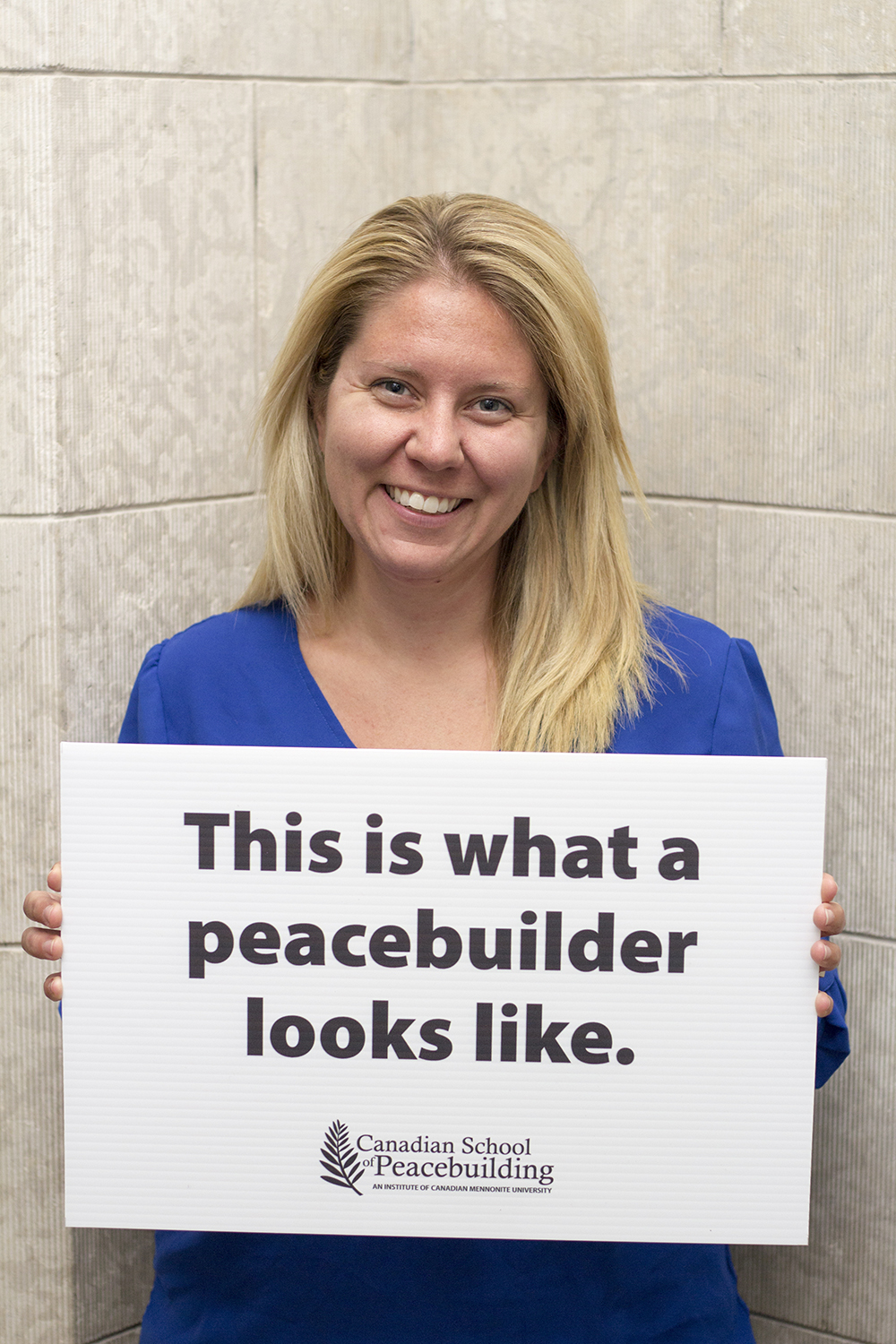
CSOP Participant Profile – Ashley Hayward

by Alison Ralph

Peacebuilder bridges gap between undergrad and master’s studies at the CSOP

Growing up Ashley Hayward was told that she could do anything. It was a positive message, but an overwhelming one as well, with enough options and opportunities to get lost in.

She knew she had to find something that fit with her values. That’s how she found herself at CMU’s Menno Simons College (MSC), majoring in Conflict Resolution Studies.

"From the very first course I took, I realized how applicable it was to my life and the further I went the more I realized how applicable it was to so many things beyond.”

As a working mother and a full-time student, Hayward also knows the value of practicality.

That’s what appealed to her about attending the 2017 Canadian School of Peacebuilding.

Hayward had just completed the Honours thesis for her undergraduate studies at MSC on how language shapes conflict and figured that studying at the CSOP would be a good bridge to her master’s training.

In her first week at the CSOP, Hayward took Journalism and Peacebuilding. She loved it.

“Communications theories are as important to relationships and to peacebuilding as the theory and practice of peacebuilding itself,” Hayward says “It’s critical.”

In her second week at the CSOP, Hayward—who is Métis—took Human Rights and Indigenous Legal Traditions.

She says she’s only just beginning to get to know her Indigenous heritage, and the course has helped her to do that.

Hayward adds that studying with people from a variety of backgrounds was a highlight of her CSOP experience.

“The international perspectives around the table and the actual experience from people around the world, from different walks of life, different parts of their careers, gave a different reference point for us,” she says.

Hayward is now a student in the Joint Master of Arts Program in Peace and Conflict Studies at the University of Manitoba and the University of Winnipeg.

She is the first person in her family to graduate from university.

“I’ve felt a lot of pressure, but I’ve felt a lot of support as well,” she says. “The coolest moment for me was to hear my six-year-old say, ‘My mum’s becoming a problem solver.’”

“It showed me that my kids are picking up on what I’m doing,” she adds. “They’re being impacted by what I’m learning, even if they don’t realize.”

Categories
News Profiles

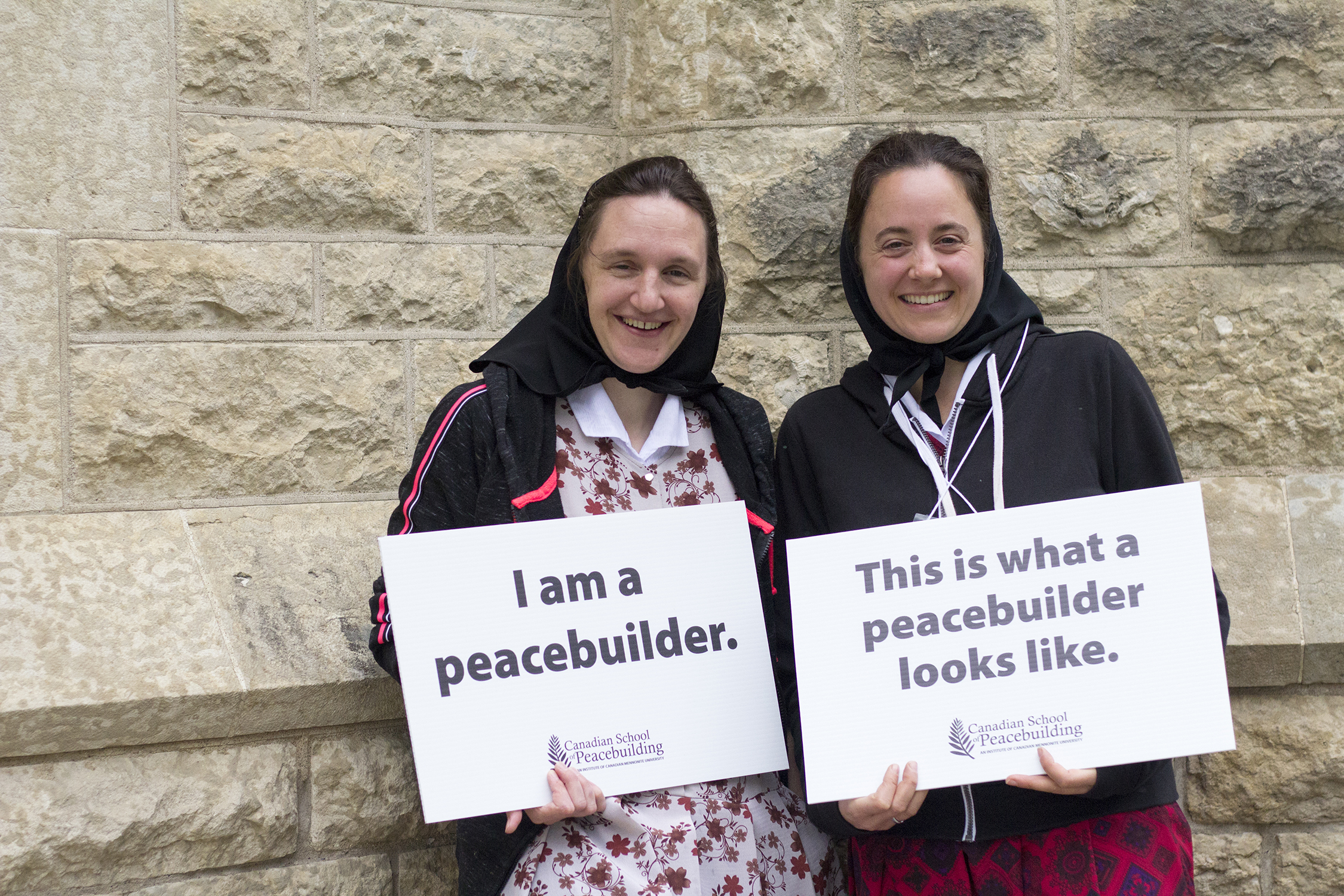
CSOP Participant Profile – Tirzah Maendel and Doris Wurtz

by Aaron Epp

Hutterites learn about the Islamic faith at Canadian School of Peacebuilding

‘This is my effort to bring real knowledge… to my community,’ teacher says

When you engage in interfaith dialogue, you can end up finding strong similarities between what you and your dialogue partners believe.

That’s one of the biggest things Tirzah Maendel and Doris Wurtz learned at the 2017 Canadian School of Peacebuilding (CSOP).

Maendel and Wurtz travelled from their home on the Baker Hutterite Colony, 130 km west of Winnipeg near MacGregor, MB, to take the course Peace Resources in Islam and Christianity.

The course was taught by Dr. Mohammad Shomali, founding director of the International Institute for Islamic Studies in Qom, Iran, and Dr. Harry Huebner, Professor Emeritus of Theology and Philosophy at Canadian Mennonite University.

The class was made up of students from five different continents, including people from different sects of Islam, different denominations of Christianity and one student with a secular Jewish background.

“After one such (interfaith) conversation, people were commenting that they had forgotten that someone’s a Muslim here and someone’s a Christian here,” Wurtz said. “They were so fully in that dialogue that those labels fell away, and that’s what we have to work for.”

Maendel, a graphic designer who runs a print shop, and Wurtz, a high school teacher, took the course so that they could gain a better understanding of the Islamic faith and Muslim culture.

“In the past year, I’ve been involved with two refugee families (from Syria), so I’m hoping to learn how to be a better ally (to) them,” Maendel said.

The global rhetoric surrounding Muslim people as well as the current political climate in the United States inspired Wurtz to take the course.

“I wanted to have real information so that I could be a better teacher of history and social studies. This is my effort to bring real knowledge… to my culture, to my community,” Wurtz said. “The texts that we were given to read and study were exactly what I was looking for.”

Maendel and Wurtz agree that learning about the Islamic faith is fascinating.

“(Muslims) see it as a religion of submitting to God’s will, and (I am trying) to bring that idea of submissiveness together with Christian ideas,” Wurtz said.

The Christian faith and the Islamic faith might not be so different after all.

“Sometimes it seems like taking a different road to the same idea,” Maendel said. “It’s nice how familiar it feels.”

This was Maendel and Wurtz’s first time at the CSOP, but “probably not the last,” according to Wurtz.

“This (five-day) format is so easy for me to participate in as a full-time teacher,” she said. “I’ll probably be doing this every year.”


Categories
News Profiles

CSOP Participant Profile – Duha Alassaf

by Aaron Epp

‘Everybody is accepted’ at the CSOP, Jordanian peacebuilder finds

Duha Alassaf is passionate about peacebuilding.

“Peacebuilding is a subject that should be mandatory in schools and universities for how to deal with others,” she said. “If people only knew peacebuilding, we wouldn’t have these conflicts and wars.”

It’s this interest that led Alassaf to the Canadian School of Peacebuilding last June. Alassaf, who lives in Amman, Jordan, was searching for professional development opportunities online when she found the CSOP.

“I found this program and it just caught my eyes and my heart (because) it’s about peacebuilding,” she said.

Alassaf is a master’s student in the human rights and human development program at the University of Jordan.

She also works as a health officer with the international NGO Medair. Her work involves assessing the psychological status of Syrian refugees and conducting group therapy sessions with them.

At the CSOP, Alassaf took the course Expressive Trauma Integration: Caregiving and Conflict Transformation.

She believes the things that she has learned will aid her in her work with Medair.

“Mostly we work with people who are traumatized, and we are helping them overcome their traumas,” Alassaf explained. “This course is helping me to get familiar with other types of work other than just the use of talk therapy.”

She credited the professor, Dr. Odelya Gertel Kraybill from Lesley University (Cambridge, MA), and the CSOP staff with creating a safe environment for students to learn about sensitive subjects.

“What I really do like the most is the people here,” Alassaf said, adding that as a Muslim woman coming from Jordanian culture, she didn’t have any problems fitting in at the CSOP. “The acceptance and positive vibes are all over the place.”

Alassaf is currently writing a dissertation about using community-based rehabilitation as a tool to promote social justice.

She plans to continue the work she is doing, and hopes to return to the CSOP.

“I just want to thank Canadian Mennonite University, because it has made a small world inside it where everybody is accepted.”

Categories
News Profiles

CSOP Participant Profile – Mary Jane McCallum

by Aaron Epp

Senator finds strong spirituality, support at Canadian School of Peacebuilding

One of Canada’s newest senators is an alumnus of CMU’s Canadian School of Peacebuilding.

Dr. Mary Jane McCallum, who was appointed late last year as one of two independent senators to fill vacancies in the Senate, studied at the CSOP in 2016 and 2017.

McCallum is a First Nations woman of Cree heritage and an advocate for social justice who, over the course of her distinguished career, has provided dental care to First Nations communities across Manitoba.

She is believed to be the first Indigenous woman in Canada to become a dentist.

A residential school survivor, McCallum came to the CSOP to learn about peace skills she could use in her work in northern communities.

“Because I was in residential school for 11 years, I came out of the process very angry and very aggressive, and I was tired of being like that,” McCallum said.

She spoke with a Mohawk elder about her anger, and the elder advised McCallum that if she wanted to learn about peace, she should go to the Mennonite community.

“‘They’re the peacebuilders of the world,’” McCallum recalled the elder saying. Fifteen years later, McCallum found the CSOP.

Last June, McCallum took the course Human Rights and Indigenous Legal Traditions with Val Napoleon, a professor from the University of Victoria in B.C.

McCallum was inspired to take the course after her experiences working in her home community of Brochet, MB, located 1,200 km. north of Winnipeg near the Saskatchewan border.

In Brochet, McCallum managed community health programs, including a children’s dental program, a diabetes program, and a prenatal program. She also volunteered for several committees, including a housing committee, a school committee, and an education committee.

She also ran a monthly dinner and meeting with the Elders to discuss social issues affecting the community.

McCallum wants to see northern communities thrive.

“What did we have before that helped us sustain healthy communities?” McCallum asks. “How do we make our way back to some of the healthier habits or healthier conditions we had before?”

Although she was intimidated by the prospect of studying with a group of lawyers, McCallum enjoyed Human Rights and Indigenous Legal Traditions because it gave her additional tools to use in her work.

“When you’re raised in a violent community, sometimes you don’t see any hope, but there are resources,” McCallum says. “You can do different techniques, different disciplines that will help people to move toward healing, to move toward reconciliation.”

Studying at the CSOP, McCallum says, has been part of her spiritual journey.

“To me, this is an environment that’s safe,” she says of the CSOP. “There’s strong spirituality, there’s support. What more could you want?”

Categories
News Profiles

CSOP Participant Profile – Bridget Crisp

By Aaron Epp

New Zealand nun starts her sabbatical at the Canadian School of Peacebuilding

Ask Bridget Crisp what the best part of being a nun is and she’s quick to answer.

“It’s never boring,” said Crisp, 46, who is a Sister of Mercy in Auckland, New Zealand. “People’s perception is that religious life is set in routine. Yes, you have your routine times that you pray, but your prayer and your work could be different each day… It’s never the same.”

Take travelling to Canada for the first time ever, for instance.

Crisp got to do that this past June when she made her way to Canadian Mennonite University in Winnipeg for the 2016 Canadian School of Peacebuilding (CSOP).

For Crisp, her two weeks at the CSOP were the start of a yearlong sabbatical that also included stops in South Carolina and New York.

Crisp enrolled in the courses Peace Skills Practice with Natasha Mohammed, and Peacebuilding Through Community Development with Judie Bopp and Michael Bopp.

Crisp figured studying at the CSOP would be a great way to add to her skillset. She was not disappointed.

“I’m excited and saturated like a sponge or a prune or a date – stacked with knowledge that I still have to process,” Crisp said during her second week at the CSOP, adding that she would spend time on her sabbatical processing what she learned and discerning what she can use when she gets back to New Zealand.

“(The CSOP shows) you topics and strategies, and it’s up to you to look at your peace toolbox as to which are going to be worthwhile, while keeping in mind the ones you might need down the line,” Crisp said.

“There’s a richness and depth to the ideas as well as the approaches that you can’t just process in a day. You have to do some serious thinking.”

Crisp has always had an interest in social justice. That interest was further developed when she was a student studying agriculture at Massey University in the late ‘80s and early ‘90s.

She attended anti-nuclear protests, and got involved in causes like whaling and apartheid.

One of the first things she did when she became a nun was create a community garden.

Crisp and her colleagues work with members of the community – primarily people on a low income – and teach gardening skills, as well as how to cook nutritious meals on a budget.

Crisp is happy she started her sabbatical at the CSOP.

“It’s been a fantastic experience.”

Categories
News Profiles

CSOP Participant Profile – Hyun Hee Kim

By Beth Downey Sawatzky

On Fear, Perspective and Peace

Hyun Hee Kim, age 32, is a student at Canadian Mennonite University, completing pre-Master's requirements in Peace and Conflict Transformation Studies (PACTS). What you would never guess after an ordinary conversation with her, is that this is in itself is a miracle.

Kim was born in North Korea, fled with her mother and brother to China at age 14, whence they were deported back to North Korea, narrowly escaped firing squad and endured three months in a NK prison camp; when she was 17 the family fled again, living illegally in China until 2004 when they were able to make there way into South Korea with fake documents and gain official citizenship. By this time, Kim was 25; having lived in partial-hiding nearly all her life, she had received no formal education since age 12.*

Kim enrolled with CSOP for relevant degree credit, taking “The Biblical Story of Hope and Healing” with CMU's own Dan Epp-Tiessen, and Al Fuertes' “Psychosocial Trauma Healing.” As to the first, she recounts how Epp-Tiessen framed his course by sharing his own testimony of loss, hope in Christ, and healing:

“I was really impressed by the instructor's story about how he lost his son; he told us 'There is hope, even when you are in a horrible situation,' and hearing about what he had been through, I couldn't imagine being in that situation—but he held on to hope, to God, with prayer and sometimes even lament. It reminded me of my own experience; our time in China…it was very insecure because we stayed illegally, but my brother and I, we cried out to God for help. I am familiar with what it means to cling to hope through fear.”

Unsurprisingly, Kim struggles with “anxiety, that can sometimes be severe,” and frequently receives counselling to help her cope. For her, these two courses have very practical, personal relevance: “It's a very deep feeling and I want to know, where does it come from, this feeling in me? So the word healing in both these courses called to me. This will be, I hope, not just for credit but a healing experience as well, where I can learn from other students and the teachers, and their stories.”

In “Psychosocial Trauma Healing”, Kim says the topic of resilience stood out. “The word resilience, we learned, indicates a person's ability to recover quickly from trauma or stress. I notice that many North Korean defectors, especially women, do not seem very resilient—they seem weak, not like my mother.” It is the first time in a long time this interviewer has heard the adjective “weak” used so utterly without condemnation. Kim's words carry no malice or judgement at all. She says the question that will remain with her coming away from these courses, is one of practical applied compassion:

“As I experienced, although we know there is hope sometimes we are so weak, we are so depressed, so low, so beaten down that we can't even think about hope. We have, for the moment, lost all hope, and feel powerless. I believe it is true everyone has the power to overcome trouble, but when people feel powerless, when they have lost hope, how can we help them build up their strength, their resilience? How do we restore their hope, and encourage them to carry on?”

Asked about recommendations, Kim observes, in what could be a metaphor for so many of us in our daily battles with pain, strife and loss, “When you are in Korea, North or South, it's hard to see different perspectives on life, on peace.” She adds, “I want so many Koreans—North and South Koreans—to take these courses because they can gain such good perspective. [CSOP] is unique, so I would want them to take it.”

* For a more detailed account of Kim's breath-taking testimony, see article “Piecing together her peace” by MCC's Deborah Froese.

Categories
News Profiles

CSOP Participant Profile – Erin Yantzi

By Beth Downey Sawatzky

Lessons in Responsibility

Sometimes, when you discover a good thing, one taste is just not enough. For Erin Yantzi, a third-year student at the University of Waterloo, transferable degree credit from a CSOP intensive was just too good not to come back for seconds.

The double Anthropology and Peace Studies major attended CSOP for the first time in 2013, when she took a course on Palestine that “really opened [her] eyes.” As a result she later interned for two months with Christian Peacemaker Teams in Hebron, Palestine, during the winter of 2015. She says that experience helped her see more clearly “where Christian conviction intersects with society and the individual” and propelled her to further formal study of peacemaking in action. “It made me want to better understand the complexities of various issues around the world and how we as peacemakers can equip ourselves, thoroughly and effectively for those unique issues,” she says.

This year, Yantzi enrolled in “Peace Skills Practice,” an applied peace-building course taught by Natasha Mohammed. She says that the top-notch instructors were one of the foremost reasons she returned to the School of Peacebuilding for a second season: “They really know their stuff and they're practitioners in the field so they can show us what the theories they're introducing actually look like in action. I was also drawn by the opportunity to meet so many different people here, who have all gathered over this common interest that they're very open about.”

Asked what her key take-aways from the course have been, Yantzi says it all comes down to a belief in human responsibility, or as she's come to understand it, “response-ability.”

“One thing I really liked was when Natasha said 'Conflict is not good or bad; it is either productive or destructive depending on how you respond to it.' We often think conflict is out of our control or out of human hands, but in reality humans create it, so humans can solve it—at least when the conflict is amongst humans, as opposed to conflicts with the natural world, like earthquakes, etc. We can choose to respond, and we can choose how to respond. Conflict starts to appear out of our control primarily when we stop thinking about the humans behind it. We don't like to think we have this much control because it's a lot of pressure, a lot of responsibility—but note the root word. 'Response.' Maybe we don't like our instinctive responses to conflict; we wish we didn't have to respond, that we could just hide from the problem or ignore it, but when we own up to the challenge and take responsibility for our power, hope opens up.”

Hope is a key word for Yantzi, as she considers how she would recommend CSOP. She feels the school proposes “more hopeful, trusting ways” of dealing with conflict than are common in everyday public discourse. “Take pacifism, for one example,” she offers, intimating that this conflict transformation tool is not often taken seriously outside of anabaptist circles. “I think I would recommend CSOP generally to people who have a lot of questions about themselves and how the world works, but beyond that, to people who want to be able to practice peace in daily life, who want to see peace grow in our world; especially anybody who is a fan of alternative perspectives on how to make change.”

Categories
News Profiles

CSOP Participant Profile – Marian De Couto

By Beth Downey Sawatzky

On Staying Strong

Marian De Couto, a Toronto native, lived for several years’ time in the city's chapter of L'Arche—a mixed community of people with various disabilities, as well as people generally considered “able”—exploring what she calls “applied solidarity.” This was the same interest that ultimately drew her to Christian Peacemaker Teams [CPT], through whom she has been on assignment in Columbia since December 2015. Her term will not be up until Christmastime 2018. Between now and then, it's up to De Couto and her colleagues to find ways of keeping fit for their task, despite the job challenges.

“The work we do with CPT is difficult on all elements of a person—physical, mental, emotional—so it puts team-members in a kind of 'at-risk' position. We travel a lot, our schedules are pretty irregular, there is a lot of violence in the area generally, and the demands of carrying others' stories bring a natural risk of vicarious trauma, compassion fatigue, things like that. As a result, CPT really encourages extra outside education and training to strengthen team-members in their work.”

Enter intensive training through Canadian School of Peacebuilding. De Couto first heard about CSOP through a CPT colleague. “The training sounded exceptional,” she says, so she enrolled in Al Fuertes' “Psychosocial Trauma Healing” course, seeing it as a valuable professional development opportunity. She did not expect it would be as applicable inwardly, on a personal level, as it was outwardly.

“The professor was really dynamic and experienced! I think the biggest thing I learned is that talking about trauma and healing with others brings up all kinds of wounds, fears, etc., so as we enter into those spaces with others, we need to remember to take care of ourselves. For me and my colleagues in Columbia, self-care is critical to the sustainability of our efforts there. If we're going to do our jobs well, we need to recognize our task is hard!”

In fact, De Couto found her experience so valuable, she's already planning ways to share the wealth: “I just think this information is so relevant to our work, and it's really taught me a lot about what self-care could look like for us in Columbia. I hope to engage my teammates in the material, and the administration team as well. Perhaps through a workshop or something.”

She's not stopping there either. Asked who should know about Canadian School of Peacebuilding, De Couto is exuberant: “Non-Mennonites! When I come here, everybody knows Christian Peacemaker Teams because of its Mennonite roots, and that's great that our work is known, but there's so much good work being done here that other groups need to know about it. It's important! The material is rich and it's not necessary to be Mennonite or even Christian, strictly speaking, to really benefit from the training.”

Categories
News Profiles

CSOP Participant Profile – Folake Aderibigbe

By Aaron Epp

CSOP helps parliamentary aid from Nigeria advocate for women’s rights

Violence in the home, sexual harassment at school and work, rape and defilement, enforcement of gender-biased laws, harmful traditional practices – these are some of the things women in Nigeria face.

Through her role as an assistant in Nigeria’s parliament, Folake Aderibigbe is working to peacefully change her society’s views on women so that they are treated equally.

“Women are not able to talk about it because our culture or society does not allow these things to be said,” Aderibigbe says, “but I think it’s better to come out and say what’s going on.”

Aderibigbe, who is writing a book about domestic violence and its effects on children, traveled from her hometown of Lagos to Canadian Mennonite University (CMU) in Winnipeg this past June to study at the university’s Canadian School of Peacebuilding (CSOP).

Aderibigbe took a course titled Women and Peacebuilding, which explored women’s involvement in peace action, research, and education.

The things Aderibigbe learned in the class will be useful in her work as a parliamentary aid. Only seven of Nigeria’s MPs are female, and Aderibigbe plans to brief them on what she learned.

In Nigeria, women are traditionally “to be seen and not heard,” Aderibigbe says, but she feels it’s important to speak up.

“I’ll use my pen. I’ll (prepare) a write-up and give it to the MPs,” she says. “We (women) need the same education, we need the same rights. We need to network, we need to have a voice, we need to come together as allies.”

While the Nigerian government recently began passing laws prohibiting violence against women, many women are still afraid to come forward.

“It’s hectic (and) sometimes it’s difficult,” Aderibigbe says.

She hopes her work, and sharing the things she learned at the CSOP, will influence the MPs to create even better legislation to protect women.

Born and raised in Lagos, Aderibigbe worked hard to get where she is today.

She has a Bachelor of Arts in Philosophy, as well as graduate degrees in International Relations and Public Administration from the Lagos City University and the University of Lagos, respectively.

After democratic rule returned to Nigeria in 1999, Aderibigbe was among the first sets of people employed to work in parliament.

In addition to assisting six MPs, Aderibigbe’s work includes writing. Five years ago, she published her first book. A Decade of Positive Legislation examines the history of Nigeria’s current parliament and how it works.

As the mother of a 15-year-old girl, issues of violence against women are close to Aderibigbe’s heart.

She says her experience at the CSOP was positive.

“The experience has been good,” Aderibigbe says. “The people are loving and ready to accommodate (students)… The environment is serene and it’s conducive to learning.”

Aderibigbe hopes to bring some MPs with her when she returns to the school in 2016.

“I hope they will come here so that they can better serve their constituents.”