Categories
News Profiles

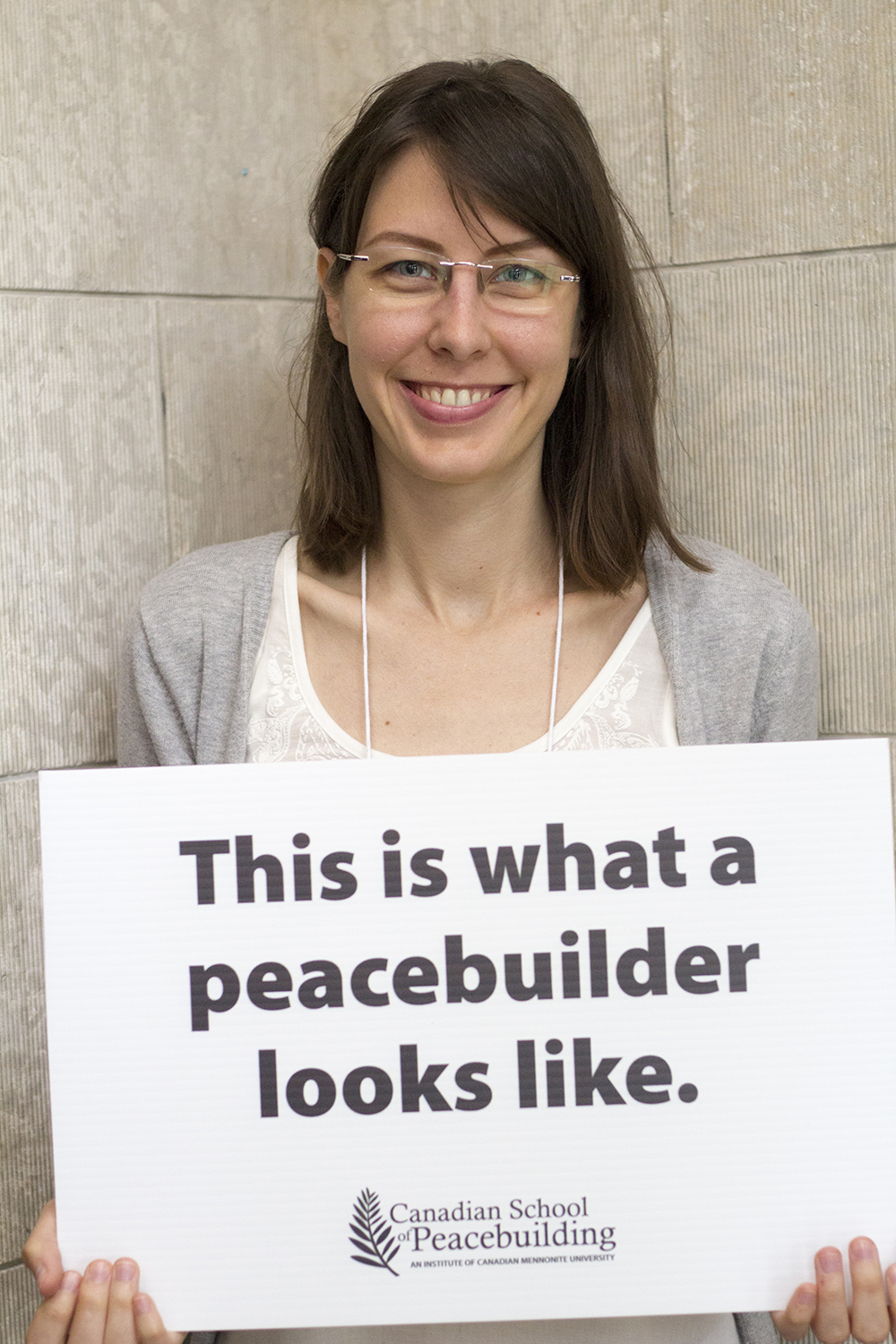
CSOP Participant Profile – Lisa-Marie Hasiuk

By Jonathan Dyck

The CSOP Grows Community of Peacebuilders

“There are not a lot of opportunities like this in the world, where you can have people from all over the world who are all passionate about the same thing,” says Lisa-Marie Hasiuk. Like a lot of students at the Canadian School of Peacebuilding (CSOP), Hasiuk loves the community and the passion for peacebuilding that CSOP, now in its 11th year, brings.

A university student, Hasiuk is an International Development Studies major and has been studying for the last 11 years, due to switching majors. She first heard about CSOP three years ago and was excited to complete her first week of studies with CSOP just this past June.

CSOP sparked a passion for social justice in Hasiuk that she never knew she had. Specifically, it was the course titled “Who is my Neighbor? Ethics in a Bordered World”—taught by Roger Epp, Professor of Political Science at the University of Alberta—that had the biggest impact.

In the future, Hasiuk plans to work one-on-one with people in Indigenous communities. “I think that's where a lot of work needs to happen as opposed to policy change and it has to start at the grass roots,” she says.

She is planning for her future practicum with two people, Michael and Judie Bopp, that she met through the CSOP. “They're people who have done it all. They're doing a lot of work in Indigenous communities and I want to become involved.” Had it not been for the CSOP program, Hasiuk would not have discovered her passion for social justice, nor would she have met the Bopps and thus developed a network through which to pursue her calling to work with Indigenous communities.
Categories
News Profiles

CSOP Participant Profile – Carol McNaughton

by Nicolien Klassen-Wiebe

Peacebuilding across borders

Travel inspires young peacebuilder to attend the CSOP

Carol McNaughton spent a semester in South Africa with Outtatown, Canadian Mennonite University’s (CMU) discipleship program, and has dedicated herself to peacebuilding ever since.

“I did Outtatown right after high school and that kind of sucked me into the Mennonite world I would say.” She began working at Camp Valaqua, a Mennonite camp in Alberta, and participated in Mennonite Central Committee (MCC) programs like Serving and Learning Together, where she spent a year in Cambodia. The 25-year-old now works full-time as the Peace Program Coordinator at MCC Alberta.

It was on Outtatown that McNaughton first heard about the Canadian School of Peacebuilding (CSOP). She took a course shortly afterwards and enjoyed it so much that she returned for more.

This past June she took the CSOP class “Who is my Neighbour? Ethics in a Bordered World” with Roger Epp, Professor of Political Science at the University of Alberta. “I’ve really enjoyed it,” she says. She’s excited to dig further into what they discussed, like the question of who your neighbour is and how to approach ethics if everyone is your neighbour, not just the person who lives next door.

“I chose this course because it felt like it was more out of my comfort zone in some ways … this one was more new to me,” says McNaughton, who has a degree from the University of Calgary in Social Work with a minor in Dance. It was also the themes of neighbours and borders that drew her to the course, as her trip to Israel Palestine two weeks earlier on an MCC learning tour had left the image of the wall cutting through Israel Palestine sharp in her memory.

McNaughton had visited once before, but as a tourist. “I spent most of my time in Israel, [I] hadn’t been to Palestine really,” she says. “It was intense both physically and emotionally to hear those stories but also energizing and inspiring to hear directly from people who are working toward peace and justice.”

A lot of things from the CSOP will stay with McNaughton, but one sticks out in particular. “People at CSOP come from all over the world. That is really the amazing thing about CSOP, is you meet up in a classroom with those different perspectives,” she says.

“Just having that inspiration of having a community of peacebuilders that, even when it doesn’t seem practical in some ways, are still committed that we have to keep caring and we have to keep working through these things to best love our neighbours.”

Categories
News Profiles

CSOP Participant Profile – Andrea De Avila

by Jonathan Dyck

From Mexico to America to Canada: Trauma and Pastoring

“I found out about CSOP (Canadian School of Peacebuilding) through CMU (Canadian Mennonite University) and everyone I knew. They all said it was a great program,” Andrea De Avila says.

Andrea De Avila’s life story begins in Mexico. “I grew up as a Quaker and was only one in a thousand Quakers in Mexico. The faith and tradition that was passed down to me has meant a lot to me.”

“Our family moved to another city closer to the Mexican border, where we tried out multiple different churches and finally my dad discovered a Mennonite church,” she says. “He only knew Mennonites as people who ‘sold cheese’ at that point.”

This was De Avila’s first connection to the Mennonite community. Later she attended Eastern Mennonite University (EMU) in Virginia, got married, and moved to Winnipeg.

De Avila, 27 years old, is now the Associate Pastor at Sargent Mennonite Church in Winnipeg. “My reason for joining CSOP was to learn from different profs and to immerse myself in the world of peacebuilding,” she says. She feels the class she took at the 2018 CSOP—Trauma, Peacebuilding, and Resilience – Level 1— is relevant to her work. “As a pastor, people trust you, and because of that a lot of people tell you their stories of trauma and resilience.”

De Avila feels it is crucial to learn about peacebuilding and help people through trauma they experience through witnessing violence. This is exactly what Vicki Enns, Clinical Director of the Crisis & Trauma Resource Institute, and Wendy Kroeker, Assistant Professor of Peace and Conflict Transformation Studies at CMU, equipped students to do in their class. “I learned very practical ways of grappling with trauma and finding a centering point,” says De Avila.

In her class, De Avila talked about the conflicts behind the United States election and how it related to peacebuilding. “Something that I reflected on in class was that there were two different ways of interpreting the last U.S. election. Something important to know about the CSOP program is that they do not have any biases on anything. When they discuss the 2016 election, they do not do it with an “anti-Trump” agenda … but rather they examine both sides and try to rationalize why people support Trump.” “On one hand there is hearing people's fears, and on the other hand, there was inviting people to listen to that discontent.” CSOP is very informative in terms of understanding why the world is the way it is and presenting it in a way that doesn’t have any biases.

What Andrea learned through her CSOP studies will always be important to her, not just in her work as a pastor, but also in her understanding of the world around her.

Categories
Resources

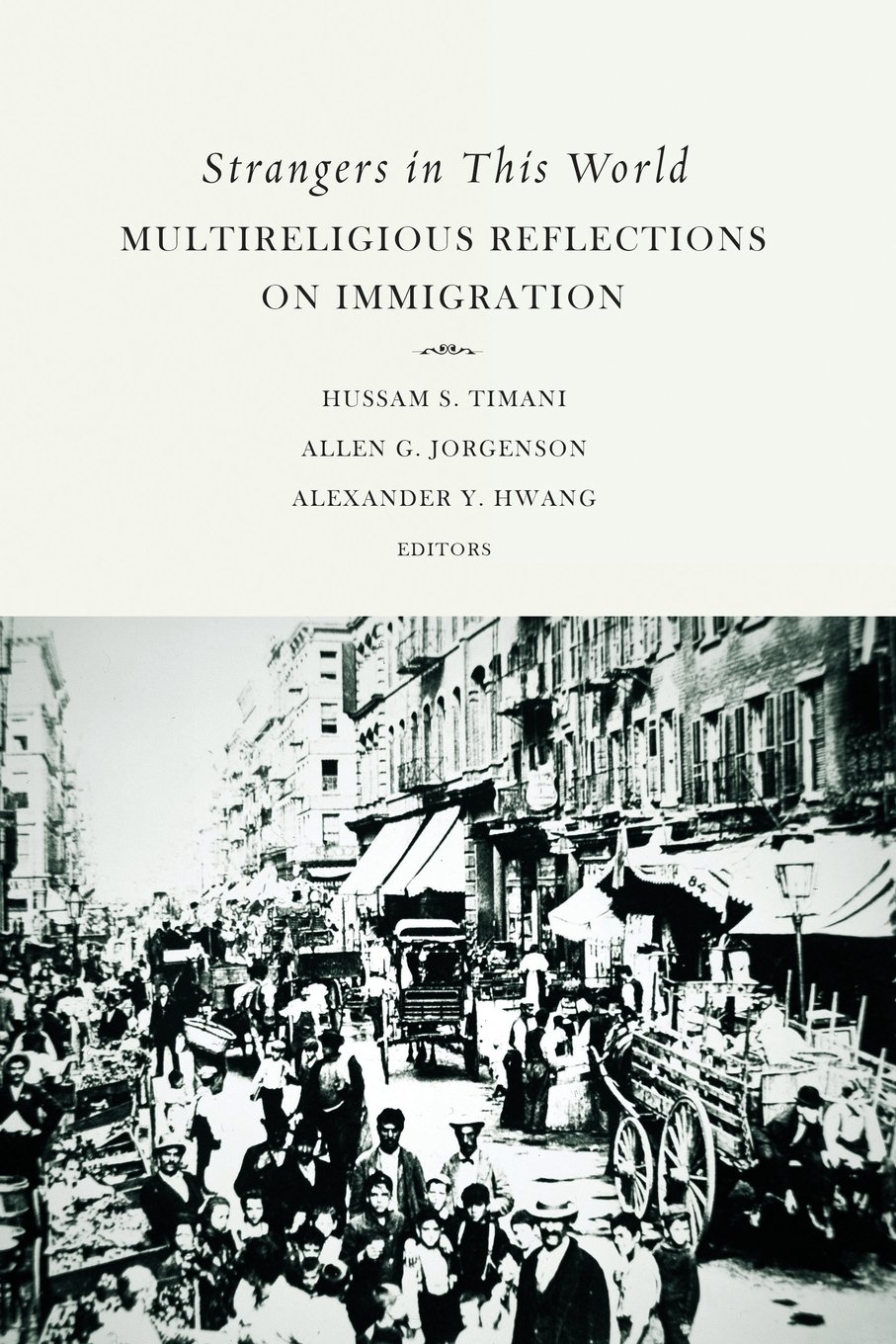
Strangers in This World: Multireligious Reflections on Immigration

By Hussam S. Timani (Author, Editor), Allen G. Jorgenson (Editor), Alexander Y. Hwang (Editor)

With a chapter by Ray Aldred

Immigration is one of the most hotly debated topics today. But, the question involves more than politics and emotion; it includes such critical issues as law, justice, human rights, human dignity, and freedom. Strangers in This World is a collection that brings together an international consortium of scholars to reflect on the religious, political, anthropological, and social realities of immigration through the prism of the historical and theological resources, insights, and practices across an array of religious traditions. The volume, reflecting the diversity of religious cultures, is nevertheless unified in arguing that immigration is an important aspect of the major religions and is found at their core. The contributors unfold this important dimension of the religious traditions and explore the ways that the theme of immigration connects to vital points of theological reflection and practice in Hinduism, Buddhism, Judaism, Christianity, Islam, and Native American religious traditions. At root, the volume is about our collective journey together as immigrant peoples who have stories and settlements to share, as well as challenges and struggles to overcome, that may be faced through the resources our many faiths offer.

https://www.amazon.com/Strangers-This-World-Multireligious-Reflections/dp/1451472978

Categories
Resources

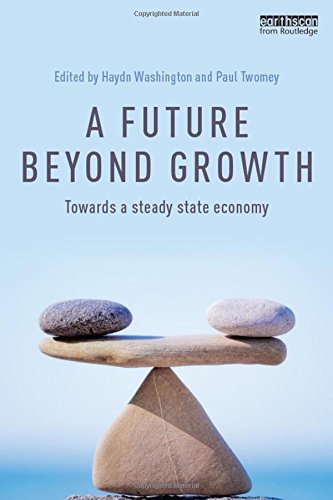
A Future Beyond Growth: Towards a steady state economy

By Haydn Washington (Editor) and Paul Twomey (Editor)

With a chapter by James Magnus-Johnston

There is a fundamental denial at the centre of why we have an environmental crisis – a denial that ignores that endless physical growth on a finite planet is impossible. Nature provides the ecosystem services that support our civilisation, thus making humanity unavoidably dependent upon it. However, society continues to ignore and deny this dependence.

A Future Beyond Growth explores the reason why the endless growth economy is fundamentally unsustainable and considers ways in which society can move beyond this to a steady state economy. The book brings together some of the deepest thinkers from around the world to consider how to advance beyond growth. The main themes consider the deep problems of the current system and key aspects of a steady state economy, such as population; throughput and consumerism; ethics and equity; and policy for change. The policy section and conclusion bring together these various themes and indicates how we can move past the growth economy to a truly sustainable future.

https://www.amazon.ca/Future-Beyond-Growth-Towards-economy/dp/1138953016

Categories
Resources

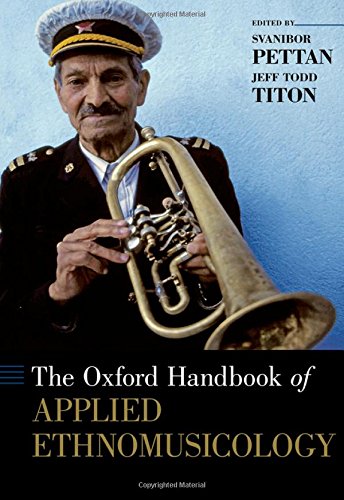
The Oxford Handbook of Applied Ethnomusicology

By Svanibor Pettan (Editor) and Jeff Todd Titon (Editor)

Applied studies scholarship has triggered a not-so-quiet revolution in the discipline of ethnomusicology. The current generation of applied ethnomusicologists has moved toward participatory action research, involving themselves in musical communities and working directly on their behalf.

The essays in The Oxford Handbook of Applied Ethnomusicology, edited by Svanibor Pettan and Jeff Todd Titon, theorize applied ethnomusicology, offer histories, and detail practical examples with the goal of stimulating further development in the field. The essays in the book, all newly commissioned for the volume, reflect scholarship and data gleaned from eleven countries by over twenty contributors. Themes and locations of the research discussed encompass all world continents. The authors present case studies encompassing multiple places; other that discuss circumstances within a geopolitical unit, either near or far. Many of the authors consider marginalized peoples and communities; others argue for participatory action research. All are united in their interest in overarching themes such as conflict, education, archives, and the status of indigenous peoples and immigrants.

A volume that at once defines its field, advances it, and even acts as a large-scale applied ethnomusicology project in the way it connects ideas and methodology, The Oxford Handbook of Applied Ethnomusicology is a seminal contribution to the study of ethnomusicology, theoretical and applied.

https://www.amazon.ca/Oxford-Handbook-Applied-Ethnomusicology/dp/0199351708/

Categories
Resources

Occupying Political Science: The Occupy Wall Street Movement from New York to the World

By Emily Welty (Editor), Matthew Bolton (Editor), Meghana Nayak (Editor), Christopher Malone (Editor)

Occupying Political Science is a collection of critical essays by New York based scholars, researchers, and activists, which takes an unconventional look at the Occupy Wall Street movement through concepts found in the field of political science. Both normative and descriptive in its approach, Occupying Political Science seeks to understand not only the origins, logic, and prospects of the OWS movement, but also its effect on political institutions, activism, and the very way we analyze power.

https://www.palgrave.com/us/book/9781137277398

Categories
Resources

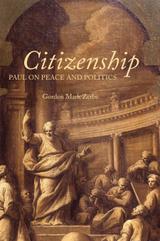
Citizenship: Paul on Peace and Politics

By Gordon Zerbe

In this stimulating collection of essays, Zerbe offers “a revisiting of Paul’s theological vision and practical activism around the theme of citizenship." The chapters in the book are organized according to the citizenship themes of loyalty, mutuality, and security. Essays in the first section, "loyalty," draw attention to the fundamental personal and corporate dynamics of citizenship in the context of Paul's ecclesial politics. The second section, "mutuality," is centred mainly on the internal features of the Messianic assembly as a citizen community, including its approach to social diversity and economic disparity. The third section, "security," includes essays that investigate the questions of violence, peace, and warfare in and pertaining to Paul's writings. A last section, "affinities," engages Paul's perspective with broader conversation partners beyond the fields of biblical and theological studies.

https://www.commonword.ca/ResourceView/2/15099

Categories
Resources

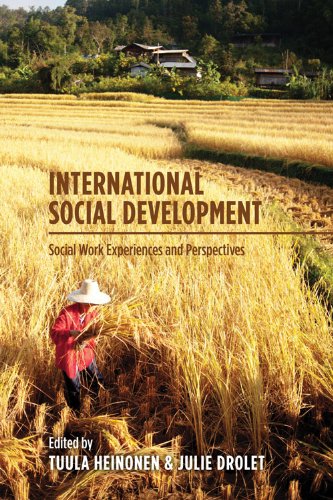
International Social Development: Canadian Social Work Experiences and Perspectives

By Tuula Heinonen (Editor), Julie Drolet (Editor)

With a chapter by Ray Vander Zaag

This edited collection offers a range of the current theoretical concepts and perspectives that shape international social development today. Utilizing examples from actual social workers in regions such as Asia, Eastern Europe and Latin America, International Social Development brings together scholars who are engaged internationally in social development work aimed at addressing poverty, gender inequality, sustainable livelihoods and food security. The first of its kind in Canada, International Social Development will assist students in building critical knowledge, learning methods to mitigate post-colonial attitudes and developing practical skills essential to doing social work in an increasingly interconnected and globalized world. With greater populations across the globe becoming increasingly vulnerable to the effects of poverty, environmental degradation, globalization and urbanization, the need for social work professionals to adopt practices that address such complex social issues is dire.

With this need in mind, the early chapters of the book conceptualize and discuss the general objectives and various models of international social development, with particular attention paid to Canadian aid organizations and the concept of gender in international social research and practice. Subsequent chapters highlight specific international social work projects from around the globe, dealing with discriminatory practices in tsunami-affected South India, food security in Brazil and gender equality in rural China, making this book a well-rounded introduction for students unfamiliar with international social development and a primer on pressing issues for social work professionals already working in the field.

https://www.amazon.ca/International-Social-Development-Experiences-Perspectives/dp/1552665240/

Categories
News Profiles

CSOP Participant Profile – Iryna Dehtiarova

by Alison Ralph

CSOP gives Ukrainian peacebuilder tools to help those affected by war

Conflict in Ukraine led Iryna Dehtiarova to the 2017 Canadian School of Peacebuilding (CSOP).

“The war started three years ago, and people have experienced so much trauma,” says Dehtiarova, who works as a project coordinator for health, education and now peace projects, with Mennonite Central Committee (MCC) in Zaporizhzhia, Ukraine.

“It was surreal. These things happen in other parts of the world, but not here.”

MCC’s response in the Ukraine began with humanitarian aid. Four years on, Dehtiarova and her colleagues have seen the need for psychological support, trauma healing, and peacebuilding.

“A lot of internally displaced people have come to Zaporizhzhia and they are traumatized by the experience,” says Dehtiarova. “We have veterans who are returning, and we want to support them, but we have no idea how to respond.”

Some of Dehtiarova’s colleagues have studied at the CSOP over the years, so when her supervisors approached her about the possibility of coming herself, she was excited.

Dehtiarova says the CSOP is giving her the practical tools she needs to help people in her home community.

In her first week at the CSOP, she took Expressive Trauma Integration: Caregiving and Conflict Transformation with Dr. Odelya Gertel Kraybill, a leading trauma therapist, researcher, and consultant, with experience as a trainer with the UN in the Philippines, South Korea, China, and Japan.

“It relates so well to my context,” says Dehtiarova, recalling a woman in her church who hid when the New Year’s fireworks went off. The noise and flashes of light triggered the trauma she had experienced in the conflict zone.

“Without these courses I wouldn’t have understood her reaction,” Dehtiarova says. “Now I understand not only the emotional response, but also the physical response in the body and the brain, and I can help people to overcome that through art, and creative exercises.”

In her second week at the CSOP, she took Practices for Transforming the Peacebuilder, with Dr. Ron Kraybill, a peacebuilding consultant with over 30 years of experience, including most recently six years as Senior Advisor on Peacebuilding and Development for the UN in Lesotho and the Philippines.

 “People have been vulnerable and I value that,” says Dehtiarova. “To learn from other peoples’ personal experiences is powerful.”