Categories
News Profiles

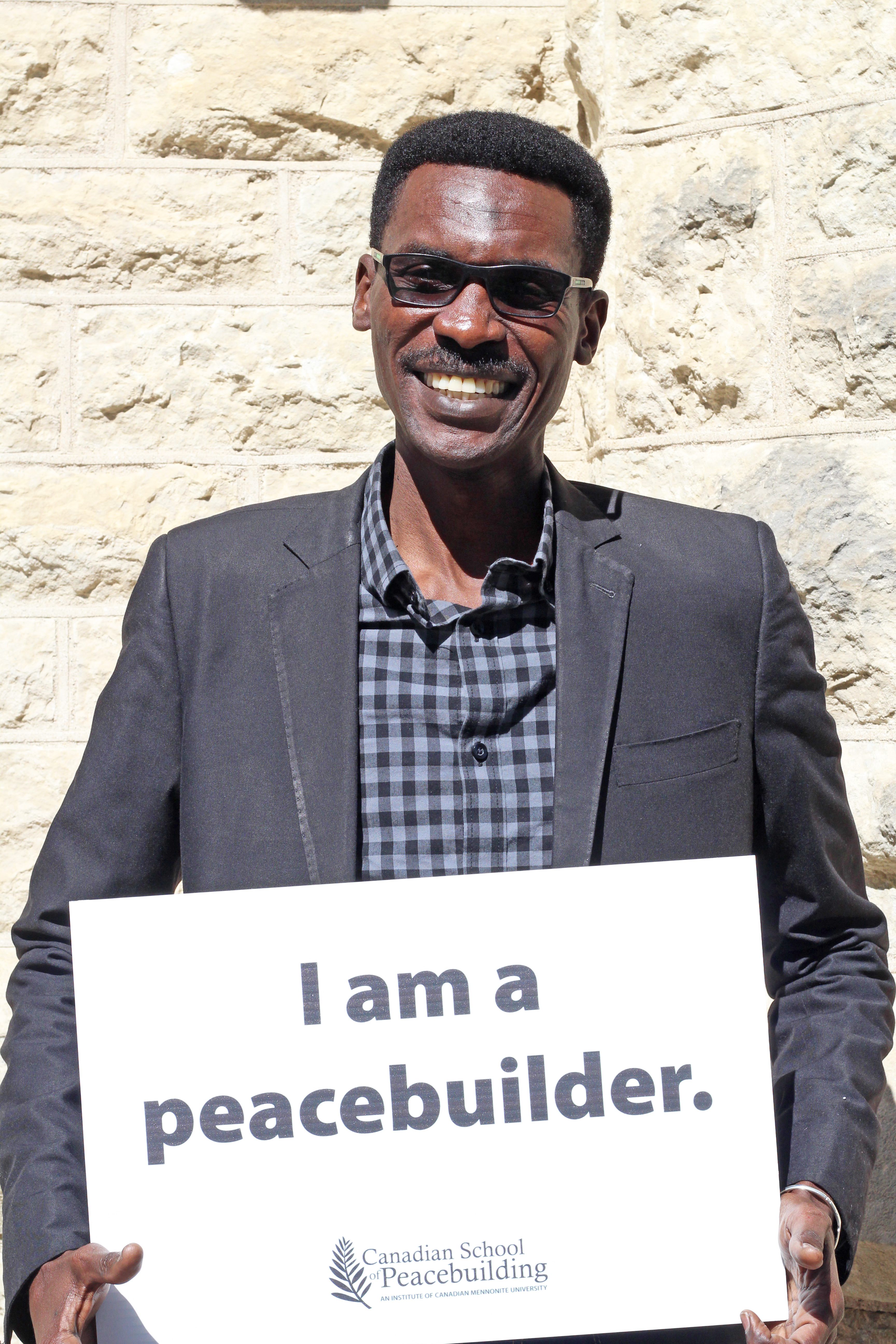
CSOP Participant Profile – Yousuf Abdulaziz

By Nicolien Klassen-Wiebe

International human rights worker finds professional development at CSOP

Yousuf Abdulaziz is no stranger to peacebuilding and human rights work. He has worked for the International Committee of the Red Cross, the United Nations Children's Fund (UNICEF), and Save the Children in the Central African Republic.

Abdulaziz, 42, is originally from Sudan but moved to Egypt with his family. He now works with Save the Children in Iraq, leading the child protection program in the whole country. His program does everything from monitoring and reporting child rights abuses, psycho-social rehabilitation for children, and reunification with families.

But as he has worked in human rights, he has found that short-term emergency responses aren’t enough to help in the long-term picture. When he heard about the Canadian School of Peacebuilding (CSOP) from a friend, he knew he had to take a course.

Abdulaziz took Peace Skills Practice with Natasha Mohammed, a community counsellor, mediator, and victim impact worker who has taught for almost two decades.

At first, he wasn’t sure if he was going to learn anything new, because many concepts in the first class were familiar. But by the next day, he knew he was wrong. For the rest of the week, he was learning new idea after new idea.

“Most people who work in areas of armed conflict like me, when we say peacebuilding and conflict resolution we are always thinking of armed conflict and people who are fighting,” says Abdulaziz. “But when I came here I discovered that it’s not only about that.” He learned that conflict can also be in your own personal life, between family and friends, and is affected by social and cultural elements.

“It’s amazing,” he says of the course. Around 75 percent of the material has a direct connection with his work. He especially appreciated when the course discussed social programming, because that’s currently part of the program Save the Children is running for children in Iraq, whether it’s spaces for kids to draw and play or programs for parents about positive parenting and discipline led by community facilitators.

During the week of the course, Abdulaziz had already started sharing his learning with his team in Iraq. “Now it’s not only a personal gain, but also I feel like the organization itself is going to gain from this course at CSOP.”

“I was telling myself really I’m regretting not attending this course before,” he says. “Can you imagine if I had this three or four years ago? It might make a lot of change in my life and in my career, which will of course have a positive impact on children in the areas where I’m working.”
Categories
News Profiles

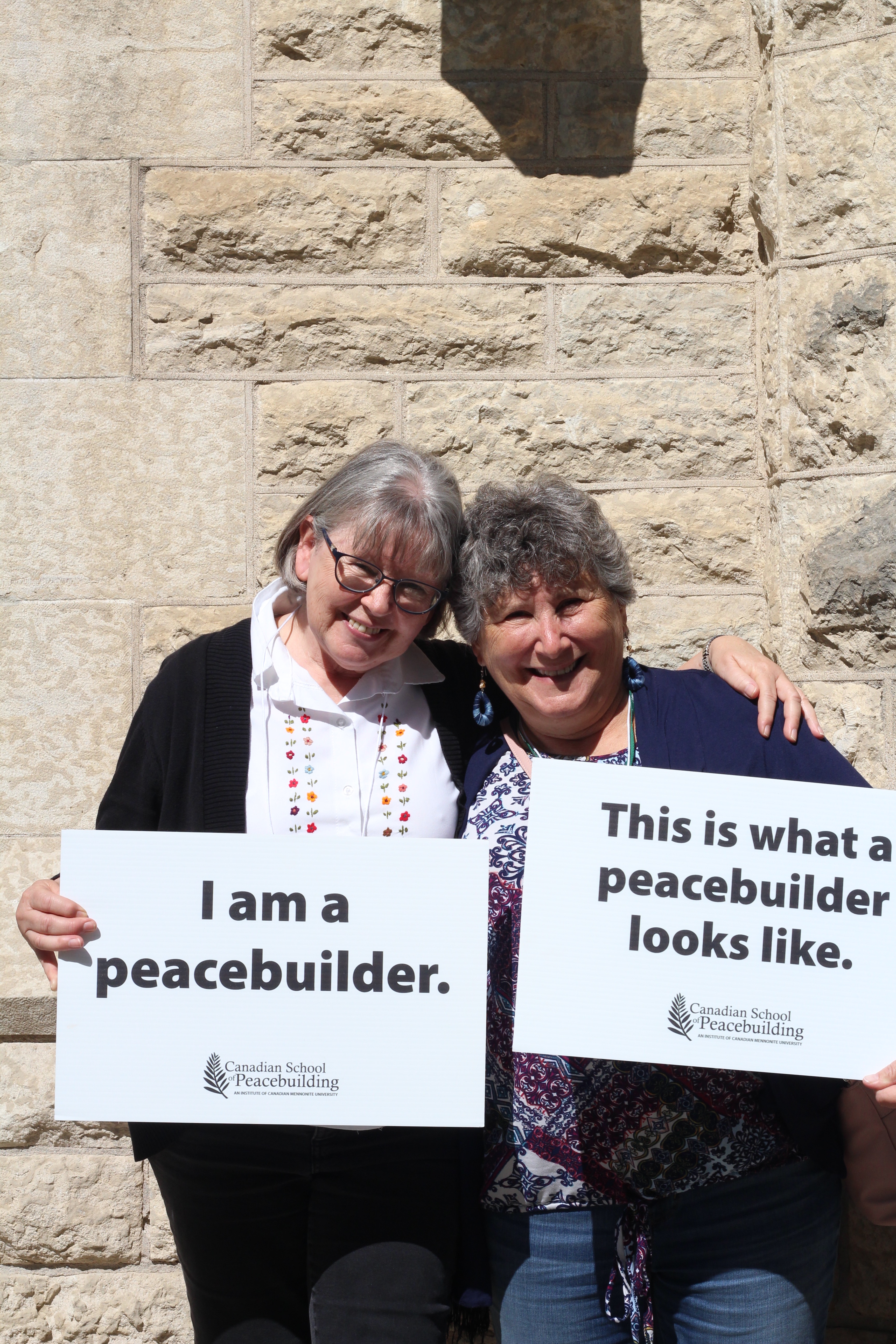
CSOP Participant Profile – Brooke Nagle and Lenora Yarkie

By Nicolien Klassen-Wiebe

A community of change-makers

Connecting with peacebuilders at CSOP empowering and inspiring

Before Brooke Nagle and Lenora Yarkie were even finished their 2019 Canadian School of Peacebuilding (CSOP) courses, they had already chosen their course for next year’s session.

“This is our third year at CSOP,” says Nagle. “I’ve gotten a lot out of these courses. I find they’re really thought provoking and useful in the volunteer work that I do.”

The two women met in El Salvador while volunteering as election observers for the presidential election in 2014. Yarkie, 69, from Alberta, was doing human rights work on Canadian mining in El Salvador with the United Church of Canada. Nagle, 63, from California, was working in the country with the organization Center for Interchange and Solidarity, which runs schools, clean water projects, and provides scholarships for students.

Now, years later, CSOP is an opportunity for the friends to reconnect every year. Although they keep in touch and sometimes see each other at the border of Arizona and Mexico, where they live with a group of Catholic nuns and do volunteer work with migrants, Yarkie says, “CSOP is a special time.”

This year, she took Peace Skills Practice with Natasha Mohammed, a community counsellor, mediator, and victim impact worker who has taught for almost two decades. Nagle took Making Music, War, and Peace with Dr. Svanibor Pettan, internationally renowned lecturer, researcher, and chair of the ethnomusicology program at the University of Ljubljana, Slovenia.

Not only is CSOP a chance to take fascinating courses and catch up with old friends; it’s also a place to form new relationships. “The ability to meet other students, both Canadian and international, who are struggling with some of the same issues in their own countries and hearing their experiences, I think this is huge,” says Yarkie.

Last year, Nagle and her husband travelled to Bangladesh after being invited by a Bangladeshi judge whom they had met at CSOP the previous year. “The people have been very interesting, very inspirational, from around the world. I find it a very impressive program,” she says.

Yarkie emphasizes how meaningful it is to meet people who are on the same page as you and who really understand what you’re talking about, even if you’ve never met before and are from opposite sides of the world.

“You always meet somebody here who is either interested in the international work you’re doing or who has done the same thing,” she says. Sometimes they’ve worked or visited more recently and can provide an update on the situation. “There’s a connection there and there’s a shared learning. This is what I really love.”

The way the world is these days, it’s comforting and empowering to be around people that can relate and are doing similar work, Nagle says. “There’s power in that sense of unity.” “You don’t feel like you’re alone in doing this sort of stuff,” Yarkie agrees.

Categories
Resources

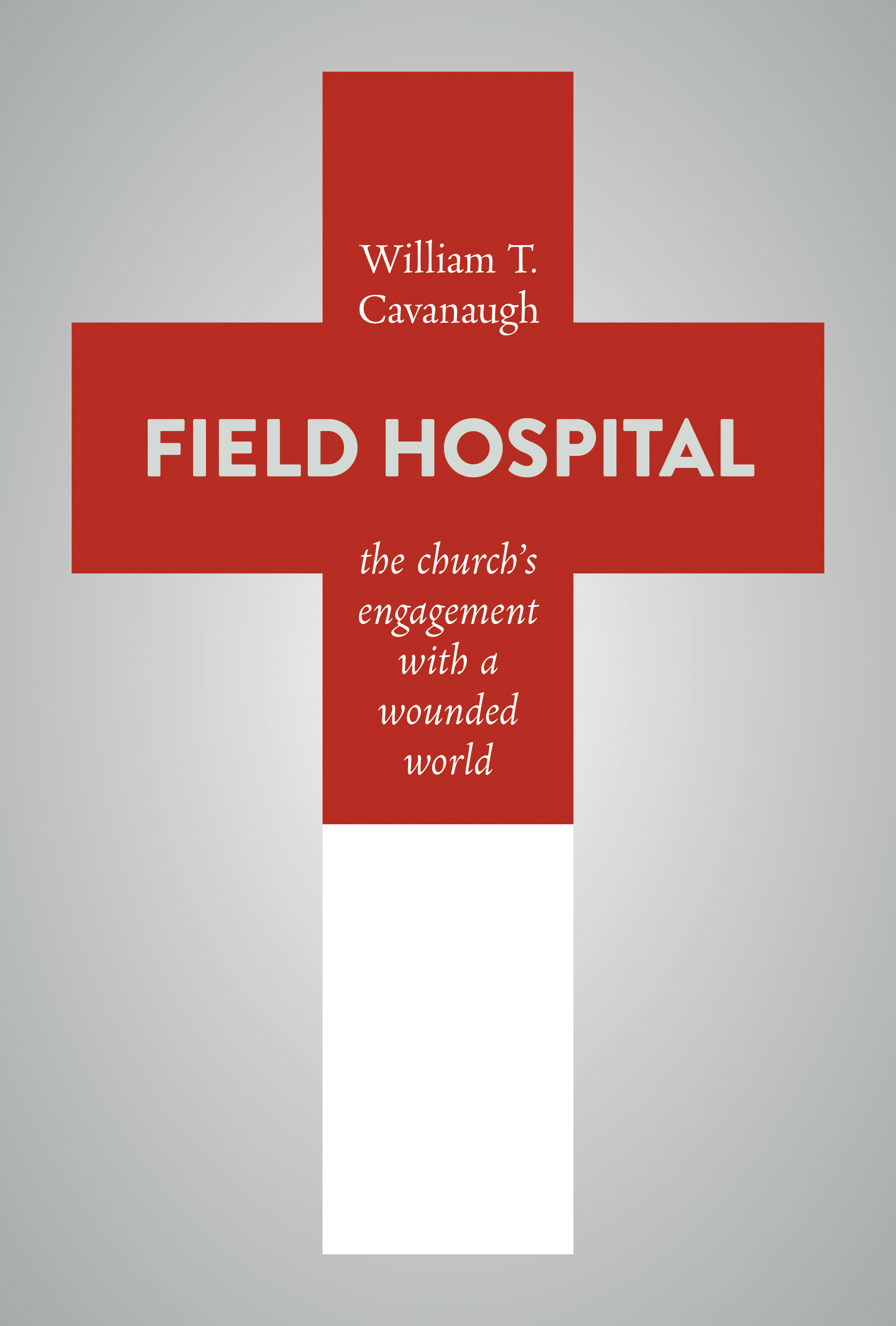
Field Hospital: The Church’s Engagement with a Wounded World

By William T. Cavanaugh

Pope Francis in a 2013 interview famously likened the church to a field hospital. In this book William Cavanaugh adopts Pope Francis's metaphor to show how the church can help heal both the spiritual and the material wounds of the world.

As he examines the intersection of theology with themes of religious freedom, economic injustice, religious violence, and other pressing topics, Cavanaugh emphasizes that the church cannot condemn the evils of the world from a position of superiority. Rather, he says, its practices of solidarity with humanity must be based on a profound recognition that the church shares in the guilt of human sin.

Cavanaugh's Field Hospital provides guideposts for a church that is willing to go outside of itself onto today's battlefields — both metaphorical and literal — not to inflict wounds but to bind them up and heal them.

https://www.eerdmans.com/Products/7297/field-hospital.aspx

Categories
Resources

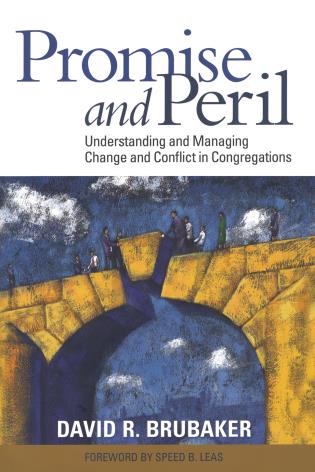
Promise and Peril: Understanding and Managing Change and Conflict in Congregations

By David Brubaker

Congregations cannot exist without finances, priorities, leadership, worship, and decision making, yet these five aspects breed the most conflict between church members and clergy. These conflicts unfortunately tend to bring about the most negative consequences: drops in giving, resignation of leaders, and, perhaps most pointedly, loss of members. The importance of congregations and their effect on our lives is clear, yet what is less clear is what makes conflicts in faith communities inevitable. In Promise and Peril: Understanding and Managing Change and Conflict in Congregations, David Brubaker brings the tools of organizational theory and research to the task of understanding the deeper dynamics of congregational conflict. With a doctorate in sociology and more than twenty years working with congregational conflicts, Brubaker helps to explore the causes and effects of conflicts on a wide range of congregations. This book will help congregations avoid the pitfalls of conflict and instead head toward a healthy relationship between and among church staff and members.

https://rowman.com/ISBN/9781566993821/Promise-and-Peril-Understanding-and-Managing-Change-and-Conflict-in-Congregations

Categories
Resources

The Myth of Religious Violence: Secular Ideology and the Roots of Modern Conflict

By William T. Cavanaugh

The idea that religion has a dangerous tendency to promote violence is part of the conventional wisdom of Western societies, and it underlies many of our institutions and policies, from limits on the public role of religion to efforts to promote liberal democracy in the Middle East. William T. Cavanaugh challenges this conventional wisdom by examining how the twin categories of religion and the secular are constructed. A growing body of scholarly work explores how the category 'religion' has been constructed in the modern West and in colonial contexts according to specific configurations of political power. Cavanaugh draws on this scholarship to examine how timeless and transcultural categories of 'religion and 'the secular' are used in arguments that religion causes violence. He argues three points: 1) There is no transhistorical and transcultural essence of religion. What counts as religious or secular in any given context is a function of political configurations of power; 2) Such a transhistorical and transcultural concept of religion as non-rational and prone to violence is one of the foundational legitimating myths of Western society; 3) This myth can be and is used to legitimate neo-colonial violence against non-Western others, particularly the Muslim world.

https://www.oupcanada.com/catalog/9780195385045.html

Categories
Resources

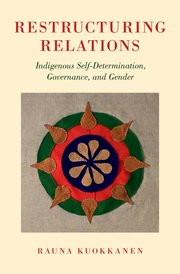
Restructuring Relations: Indigenous Self-Determination, Governance, and Gender

By Rauna Kuokkanen

Adopted in 2007, the UN Declaration on the Rights of Indigenous Peoples establishes self-determination – including free, prior, and informed consent – as a foundational right and principle. Self-determination, both individual and collective, is among the most important and pressing issues for Indigenous women worldwide. Yet Indigenous women's interests have been overlooked in the formulation of Indigenous self-government, and existing studies of Indigenous self-government largely ignore issues of gender. As such, the current literature on Indigenous governance conceals patriarchal structures and power that create barriers for women to resources and participation in Indigenous societies.

Drawing on Indigenous and feminist political and legal theory–as well as extensive participant interviews in Canada, Greenland, and Scandinavia – this book argues that the current rights discourse and focus on Indigenous-state relations is too limited in scope to convey the full meaning of "self-determination" for Indigenous peoples. The book conceptualizes self-determination as a foundational value informed by the norm of integrity and suggests that Indigenous self-determination cannot be achieved without restructuring all relations of domination nor can it be secured in the absence of gender justice. As a foundational value, self-determination seeks to restructure all relations of domination, not only hegemonic relations with the state. Importantly, it challenges the opposition between "self-determination" and "gender" created and maintained by international law, Indigenous political discourse, and Indigenous institutions. Restructuring relations of domination further entails examining the gender regimes present in existing Indigenous self-government institutions, interrogating the relationship between Indigenous self-determination and gender violence, and considering future visions of Indigenous self-determination, such as rematriation of Indigenous governance and an independent statehood.

https://global.oup.com/academic/product/restructuring-relations-9780190913281?cc=ca&lang=en&

Categories
Resources

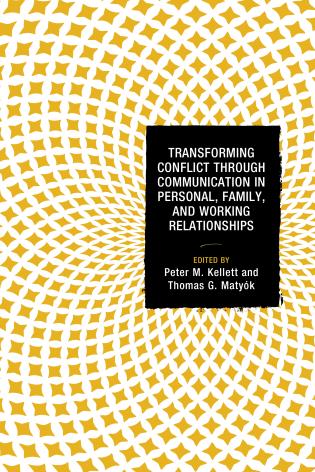
Transforming Conflict through Communication in Personal, Family, and Working Relationships

By Peter M. Kellett (Editor) and Thomas G. Matyók (Editor)

With a chapter by Joy Meeker

A transformational approach to conflict argues that conflicts must be viewed as embedded within broader relational patterns and social and discursive structures. Central to this book is the idea that the origins of transformation can be momentary, situational, and small-scale or large-scale and systemic. The momentary involves shifts and meaningful changes in communication and related patterns that are created in communication between people. Momentary transformative changes can radiate out into more systemic levels, and systemic transformative changes can radiate inward to more personal levels. This book engages this transformative framework by bringing together current scholarship that epitomizes and highlights the contribution of communication scholarship and communication-centered approaches to conflict transformation in personal, family, and working relationships and organizational contexts. The resulting volume presents an engaging mix of scholarly chapters, think pieces, and personal experiences from the field of practice and everyday life. The book embraces a wide variety of theoretical and methodological approaches, including narrative, critical, intersectional, rhetorical, and quantitative. It makes a valuable additive contribution to the ongoing dialogue across and between disciplines on how to transform conflicts creatively, sustainably, and ethically.

https://rowman.com/ISBN/9781498515030/Transforming-Conflict-through-Communication-in-Personal-Family-and-Working-Relationships

Categories
Resources

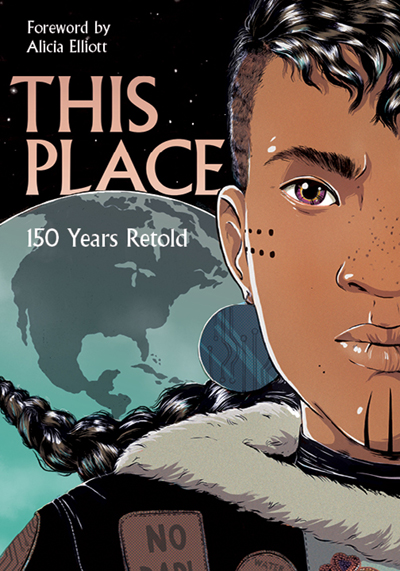
This Place: 150 Years Retold

By Kateri Akiwenzie-Damm, Sonny Assu, Brandon Mitchell, Rachel and Sean Qitsualik-Tinsley, David A. Robertson, Niigaanwewidam James Sinclair, Jen Storm, Richard Van Camp, Katherena Vermette, Chelsea Vowel

Illustrated by Tara Audibert, Kyle Charles, GMB Chomichuk, Natasha Donovan, Scott B. Henderson, Ryan Howe, Andrew Lodwick, Jen Storm

Colour by Scott A. Ford, Donovan Yaciuk

Explore the past 150 years through the eyes of Indigenous creators in this groundbreaking graphic novel anthology. Beautifully illustrated, these stories are an emotional and enlightening journey through Indigenous wonderworks, psychic battles, and time travel. See how Indigenous peoples have survived a post-apocalyptic world since Contact.

https://highwaterpress.com/product/this-place/

Categories
Resources

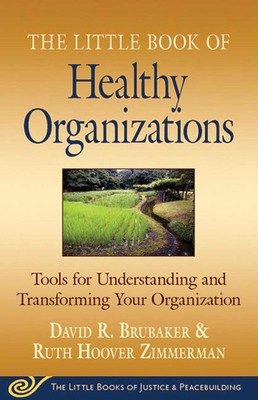
Little Book of Healthy Organizations: Tools For Understanding And Transforming Your Organization

By David Brubaker and Ruth H. Zimmerman

The best way to change the world may be one organization at a time. With this ambitious claim, the authors of this highly readable primer provide insightful analysis for evaluating and improving the health of any organization. They advocate a "systems approach," which views organizations as living systems, interconnected in their various departments, and interfacing with their environments. Leaders of organizations from all sectors will find sound advice concerning the four major components of organizations — their structure, leadership, culture, and environment. Find out: What the classic dispute over "who gets the corner office" is really about. The difference between a good leader and a great one. What new hires may know about an organization that longer-term employees don't. How organizational change and conflict are not only inevitable, but survivable. Each chapter contains examples from the authors' varied experiences with organizational change and conflict, written from a spirited, hopeful approach for creating a better world. A title in The Little Books of Justice and Peacebuilding Series.

https://www.simonandschuster.ca/books/Little-Book-of-Healthy-Organizations/David-Brubaker/9781561486649

Categories
News Profiles

CSOP Participants Profile – Monday Adah Ogbe

By Nicolien Klassen-Wiebe

CSOP inspires Nigerian peacebuilder to reconnect and reflect

It was when Monday Adah Ogbe left his home country and flew across the ocean to attend the 2018 Canadian School of Peacebuilding (CSOP) that he connected with his roots.

Ogbe, 41, is a minister in a Catholic church in Nigeria and works with the non-governmental organization Pax Amor Initiative, which provides clothing and other material resources, health education, gender violence education, and conflict resolution in rural communities in northern Nigeria.

Recently, though, he asked for some time off to reflect on his life and get refreshed. He stumbled across the CSOP while doing a Google search for master’s programs and it quickly became part of his plan. “I just felt I needed peace building,” he says.

Peace has been an ongoing struggle in Ogbe’s life. As a Christian living in a Muslim area of Nigeria, he grew up amidst a lot of conflict. He and his family were attacked and had to flee twice because of Boko Haram, a jihadist terrorist organization. But it’s not just Boko Haram that is the problem. Religious clashes between Christians and Muslims happen time and time again, sometimes just starting from small issues. He says you never know when something little will turn into a crisis.

People are stuck in a cycle of trauma, but Ogbe says they don’t have resources in their community to help them deal with it. “Sometimes I think the church is the only resource where you go, you are consoled, you speak to somebody, you are prayed for. That is the only resource we have for healing trauma,” he says.

That’s why his CSOP class “Trauma, Peacebuilding, and Resilience – Level 1” with Vicki Enns, Clinical Director of the Crisis & Trauma Resource Institute, and Wendy Kroeker, Assistant Professor of Peace and Conflict Transformation Studies at CMU, was so meaningful. “I feel it’s going to be very relevant and useful for me,” he says.

Ogbe also took “Conflict and Development Issues in Indigenous Communities” with Tabitha Martens, an Indigenous rights activist and PhD student studying Indigenous Food Sovereignty. He says he’s going home with a new understanding of his own Indigenous roots and motivation to connect with his roots, where he finds his identity.

He says CSOP’s welcoming atmosphere of openness makes it easy to build friendships. “It was very profound, very deep,” he says. “If I had the opportunity, I’d take all the CSOP courses.”

Ogbe is currently studying for a Master of Arts in International Development Studies at Saint Mary’s University in Halifax, NS.