Categories
Resources

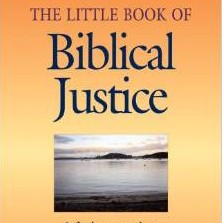
The Little Book of Biblical Justice: A Fresh Approach to the Bible’s Teaching on Justice

By Chris Marshall

A biblical scholar identifies basic features of the Bible’s teachings on justice, treating the subject with a direct, yet almost lyrical tone. He manages a thorny, multi-faceted subject clearly and ultimately singles out the areas of theological agreement among the Bible’s writers on the subject.

Upfront, Marshall addresses the many complexities that surround “justice” in the Bible: the Bible seems to hold conflicting points of view; there is a huge amount of data to deal with; the world of the Bible and our present world are vastly different.

http://www.amazon.com/Little-Book-Biblical-Justice-Peacebuilding/dp/1561485055/ref=sr_1_4?ie=UTF8&qid=1418158434&sr=8-4&keywords=little+book+of+biblical

Categories
Resources

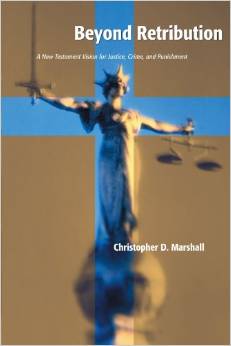
Beyond Retribution: A New Testament Vision for Justice, Crime, and Punishment

By Christopher D. Marshall

Recently a growing number of Christians have actively promoted the concept of “restorative justice” and attempted to develop programs for dealing with crime based on restorative principles. But is this approach truly consistent with the teaching of Scripture? To date, very little has been done to test this claim. Beyond Retribution fills a gap by plumbing the New Testament on the topics of crime, justice, and punishment.

Christopher Marshall first explores the problems involved in applying ethical teachings from the New Testament to mainstream society. He then surveys the extent to which the New Testament addresses criminal justice issues, looking in particular at the concept of the justice of God in the teachings of Paul and Jesus. He also examines the topic of punishment, reviewing the debate in social thinking over the ethics and purpose of punishment — including capital punishment — and he advocates a new concept of “restorative punishment.” The result of this engaging work is a biblically based challenge to imitate the way of Christ in dealing with both victims and offenders.

http://www.amazon.com/Beyond-Retribution-Testament-Punishment-Scripture/dp/0802847978/ref=sr_1_1?s=books&ie=UTF8&qid=1418159264&sr=1-1&keywords=christopher+marshall

Categories
News Resources

Peace, Conflict and Violence: Peace Psychology for the 21st Century

By Daniel J. Christie

This comprehensive book brings together the key concepts, themes, theories, and practices that are defining peace psychology as we begin the 21st century. It is rooted in psychology, but includes a wide range of interpersonal, community, national and international contexts, multiple levels of analysis from micro to macro, and multi-disciplinary perspectives. It reflects the breadth of the field and captures the main intellectual currents in peace psychology: violence, social inequalities, peacemaking, and the pursuit of social justice. This book contains a wide range of topics, including ethnic conflict, family violence, hate crimes, militarism, conflict management, social justice, nonviolent approaches to peace, and peace education. It is ideal for readers interested in peace education, international studies, psychology, political science, anthropology, and sociology.

http://www.amazon.com/Peace-Conflict-Violence-Psychology-Century/dp/0130968218/ref=sr_1_2?s=books&ie=UTF8&qid=1417730146&sr=1-2

Categories
Resources

Nonkilling Psychology

By Daniel J. Christie

This book demonstrates the rich diversity of research approaches developed so far within the field of psychology. In this collection of essays, one moves from biomedical aspects to moral dimensions, through various renditions of social psychology. The book is organized into three sections: (I) psychological causes and consequences of killing; (II) The prevention of killing: from interpersonal to international; and (III) personal transformation: from killing to nonkilling. What brings humans to kill each others or themselves? Is a nonkilling society possible? Answers have been attempted, unanswered questions have been raised, and unexplored issues wait for further investigation.

http://www.amazon.com/Nonkilling-Psychology-Daniel-J-Christie/dp/0982298382/ref=sr_1_3?s=books&ie=UTF8&qid=1417730215&sr=1-3

Categories
News

Mubarak Awad is “The ‘Palestinian Gandhi’ Who Still Believes Non-Violence Is the Answer”

Mubarak Awad, non-violent activist and teacher and 2013 CSOP instructor, was recently featured in an article in Newsweek.  Read the article at http://www.newsweek.com/2014/08/22/palestinian-gandhi-who-still-believes-non-violence-answer-264041.html

Categories
News

“Walking with Our Sisters” comes to Winnipeg

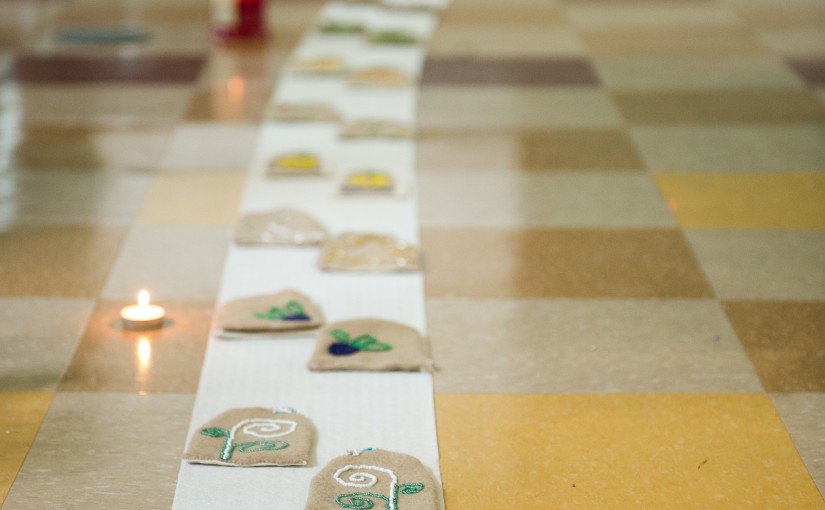
For those of you in the Winnipeg area, from now until April 12, the “Walking with our Sisters” art installation is on display at the Urban Shaman Gallery of Contemporary Aboriginal Art.  The gallery is located at 290 McDermot Avenue in Winnipeg and gallery hours are 10am – 8pm.  The gallery is closed Sundays and Mondays.

At the 2013 Canadian School of Peacebuilding, the “Human Rights and Indigenous Legal Traditions” class participated in making moccasin vamps for  “Walking with our Sisters,”  an art installation created to raise awareness of the hundreds of missing and murdered aboriginal women in Canada.  Other CSOP participants were invited to become involved by walking alongside a visual representation of our forgotten sisters, created by class members.

Check out the video of the CSOP work on this project, get more information on “Walking with our Sisters” and, for those of you outside of the Winnipeg area, take a look at the exhibition touring calendar to find out when the installation will be in your area

Categories
News Profiles

CSOP Participant Profile – Lorne Brandt

by Aaron Epp

Course helps B.C. man promote reconciliation between indigenous and non-indigenous Canadians.

When the Truth and Reconciliation Commission (TRC) of Canada announced it would hold one of its national events in Vancouver, Lorne Brandt wanted to make sure he was prepared.

Part of that preparation involved taking a course titled “Covenants of Peace and Justice” at the 2011 Canadian School of Peacebuilding.

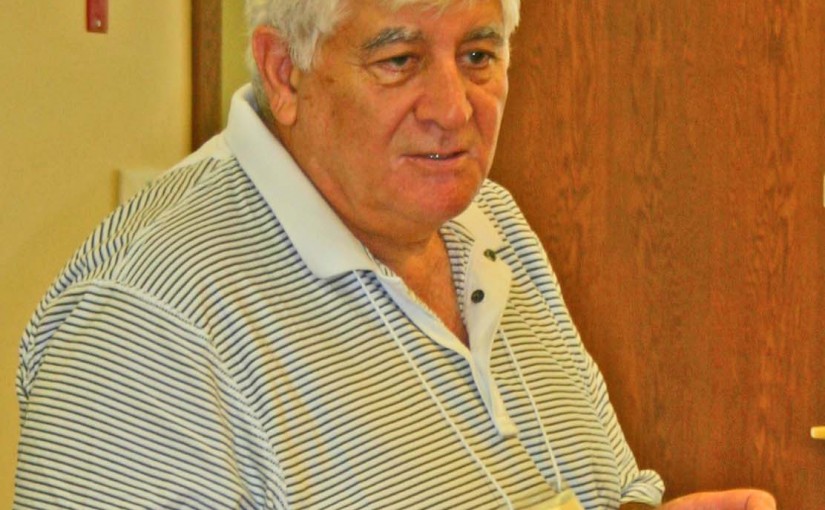
“I realized that in my background, both growing up and [through] many years training and professionally, I have been blessed by First Nations neighbours, teachers, friends, co-workers and patients,” says Brandt, a retired psychiatrist living in Richmond, B.C.

“I reasoned that this was surely preparation for something that I could do to promote reconciliation between these two groups of Canadians … As a follower of Jesus, I would have to also say that I believe His spirit has also been guiding me on this good way.”

Taught by Rev. Stan McKay, an Aboriginal educator who was Canada’s first Aboriginal Moderator of the United Church of Canada, “Covenants of Peace and Justice” introduced a Cree Christian perspective on living in covenant relationships.

With an eye on exploring the role of peacemakers in a global context, McKay and his students examined biblical covenants, historic First Nations treaties, and contemporary struggles for justice during the weeklong course.

Learning more about the background of how treaties shaped the interaction between First Nations peoples and European settlers left a lasting impression on Brandt, who over the past few years has had a desire to connect with First Nations peoples in his area as well as make others – particularly Mennonites – more aware of indigenous issues.

Our ancestors came to this land not appreciating the worldview of its indigenous inhabitants, Brandt says – an inclusive worldview that allowed Europeans to settle here and share in the bounty of the land.

“And what have we done?” Brandt asks. “We’ve taken [the land] and left it worse off. There’s a big injustice there we need to look at, repent of, and try to correct.”

Since attending the CSOP, Brandt has arranged for First Nations guests to come speak to his congregation, Peace Mennonite Church, as well as teach in the church’s adult education hour.

He has also made connections with Hummingbird Ministries, a local organization that has grown out of the Presbyterian Church. Brandt and his wife have attended a number of their sessions and promoted their work in bringing together a variety of First Nations Christians and non-First Nations.

In his role as deacon at Peace Mennonite, Brandt arranged for Hummingbird Ministries to hold its third annual Peace Through the Arts Festival at Peace Mennonite in November 2012.

“I even got to perform some of the songs that I had written back in the 1970s when I was living in the community of South Indian Lake in northern Manitoba,” Brandt says.

Brandt also volunteered at the TRC gathering in Vancouver, and led two discussions in his church’s adult education hour: the first on why Christians should care about the injustices done to First Nations, and the second on what Christians can do about it.

“I do have to say that my attendance at the Canadian School of Peacebuilding played a large role in my going down this path,” Brandt says. “That period of time sent my mind in several directions with respect to the whole issue of our relationship as non-indigenous Canadians with our First Nations Canadian fellow-citizens.”

“I would like to attend further Canadian School of Peacebuilding sessions as well,” he adds. “If one is prepared, they are an excellent means of stirring one to action.”


Categories
News Profiles

CSOP Participant Profile – Marissa Rykiss

by Aaron Epp

‘I’m really grateful … It was a very inspiring time in my life,’ says Marissa Rykiss

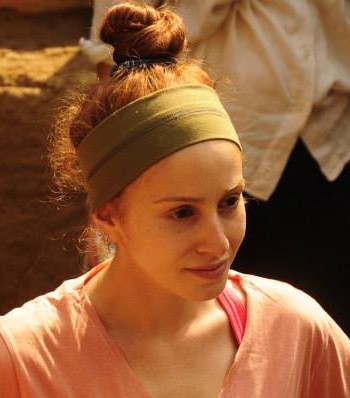
For Marissa Rykiss, attending the Canadian School of Peacebuilding was nothing short of life changing.

The 22-year-old Winnipegger enrolled in the course “Women and Peacebuilding” at the 2012 CSOP as part of a B.A. program in Conflict Resolution Studies at Menno Simons College.

Inspired by her mother, who practices collaborative law, Rykiss wanted to pursue a career as an immigration lawyer in order to make a difference in the world by helping vulnerable people.

After finishing the course, Rykiss realized she wanted to help people in a different way. Now, she plans to pursue a Master of Arts degree in Family Therapy.

First though, Rykiss is becoming a certified yoga instructor. She wants to teach yoga and potentially open her own studio.

Rykiss says her interest in teaching yoga stems from her desire to help people develop their self care so that they can be better people and lead more compassionate, empathetic lives.

“After taking [the CSOP] course, I realized there’s so many other ways I can help people, and I don’t necessarily need to have a title like lawyer to do that,” she says. “My happiness, and the happiness of others, is more important to me than having a title like that.”

Ouyporn Khuankaew, a Buddhist feminist peace trainer from Thailand, and Anna Snyder, associate professor of conflict resolution studies at Menno Simons College, taught the course.

Rykiss says it was the way the course was taught that impacted her so greatly.

“Ouyporn had a non-traditional way of teaching where she offered guided meditation at the beginning of each day, and it just allowed us to become a bit more mindful while we were present in the class,” Rykiss says. “She is one of the most inspiring and engaging women I’ve ever met.”

When the course ended, it was emotional for Rykiss.

“I cried on the last day and was so happy that I decided to participate in that particular course,” she says. “It felt like it was meant to be. It made me ask myself why I need to be pursuing something (a career in law) that isn’t consistent with who I am, and helped me understand that where I need to be is in a more transformative pathway—helping people who can’t help themselves get to a place of awareness and mindfulness.

“It wasn’t intended in the curriculum, but that’s just what I got out of it. A lot of people who participated were put off originally by this new way of thinking, but by the end, everyone there had experienced profound change in the way they thought about learning.”

Rykiss’s experience in the course led her to pursue a practicum placement in Thailand with International Women’s Partnership for Peace and Justice (IWP), an organization Khuankaew co-founded.

Rykiss’s work in Thailand included helping with a weeklong workshop for women that IWP organized. Each day began with yoga. While Rykiss had practiced yoga before, it was during this week that she came to fully appreciate the healing nature of yoga therapy.

“I realized … how important it is for people to learn how to be better to themselves, to treat themselves better and come back to themselves through yoga and meditation,” she says.

The practicum and change in career direction would not have happened without Rykiss’s transformative experience at the CSOP.

“I’m really grateful that I was able to take a course where everything could be condensed into five days,” she says. “There are such a variety of courses [at CSOP], and [the organizers] go out of their way to find people to teach the courses who have first-hand experience with the material.

“It was a very inspiring time in my life.”
Categories
Resources

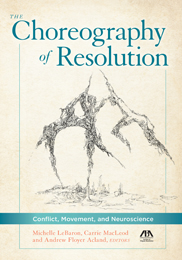
The Choreography of Resolution: Conflict, Movement, and Neuroscience

The Choreography of Resolution: Conflict, Movement, and Neuroscience

Edited by Michelle LeBaron (Instructor – CSOP 2011), Carrie MacLeod, Andrew Floyer Acland

The Choreography of Resolution will revolutionize how mediators handle conflict resolution. Learning how neuroscience is proving what dancers have known for centuries – this book explores the links between the physical, mental, and psychological factors that affect conflict. Examining the autobiographical and practice experiences with diverse cultural, historical and social realities highlights both challenges and breakthroughs in this burgeoning area. Comprehensive in review, this ground-breaking book investigates:

– the role of movement in conflict dynamics
– exposes the limitations of omitting the body from the understandings of conflict
– explores the ethical dimensions of embodied approaches
– proposes key strategies for conflict intervention

Come take the journey through the body as the authors examine how a closed body leads to a closed mind and how movement and dance can positively alter conflict resolution.

http://apps.americanbar.org/abastore/index.cfm?pid=5100023&section=main&fm=Product.AddToCart

Categories
Resources

The Hidden Door: Mindful Sufficiency as an Alternative to Extinction

The Hidden Door: Mindful Sufficiency as an Alternative to Extinction

By Mark Burch (Instructor – CSOP 2011)

Many people sense that consumer culture is dragging us toward extinction.  We feel trapped in a cell of our own making. If humanity is to have any sort of future worth living in, we must discover an exit from our confinement. There is a door, hidden in plain sight.

What sort of culture might appear if we took seriously the essential values and principles that form the deep structure of voluntary simplicity and used them to inform a new perspective of the good life? Might we discover an exit from the confining cell of consumer culture? Can we find the passage leading beyond individual lifestyle choice to cultural renaissance? This book aims to help seed this renaissance by widening the conversation about how we transition from the road to extinction to a path with heart that has a future.

https://www.createspace.com/4477285