Categories
News Profiles

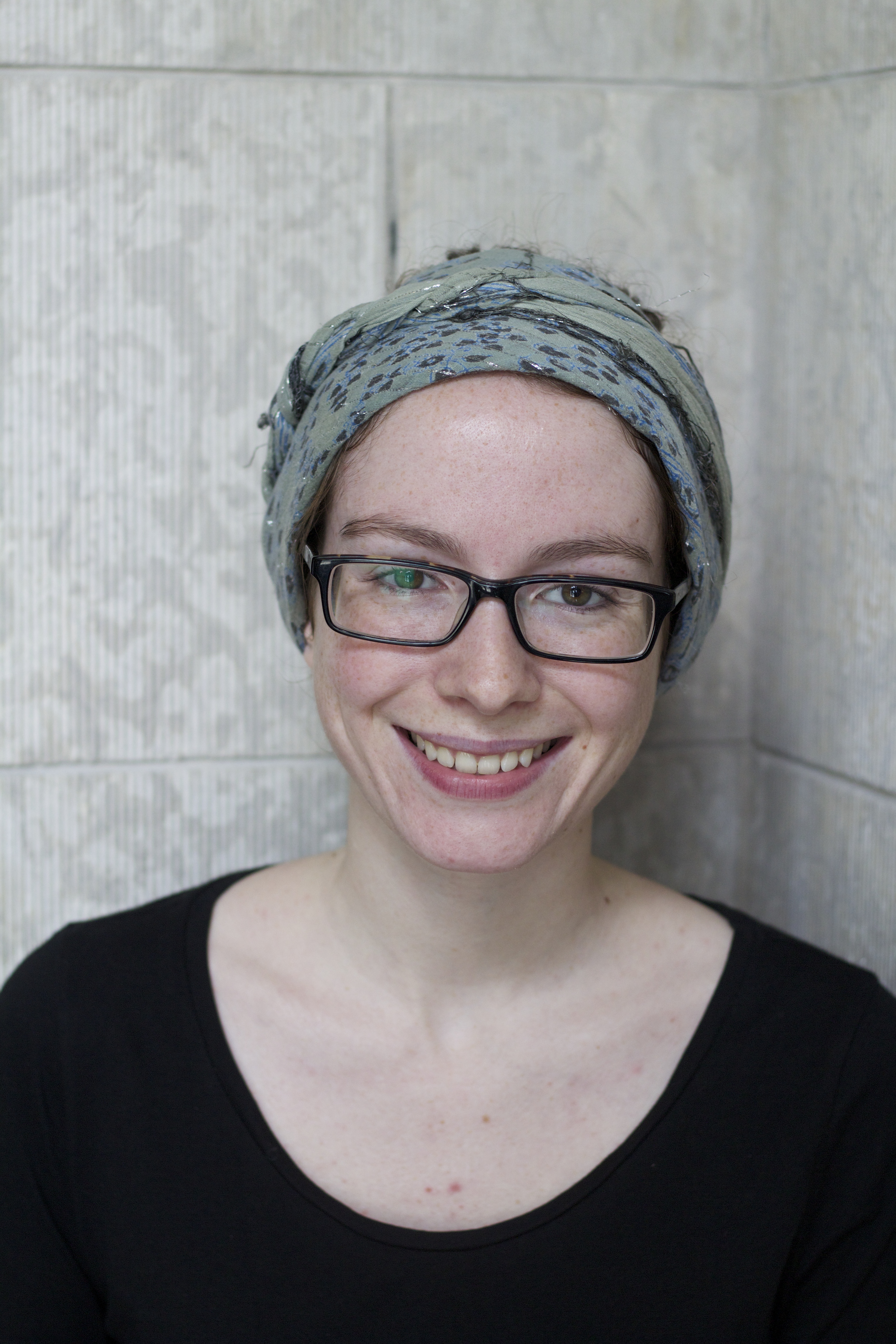
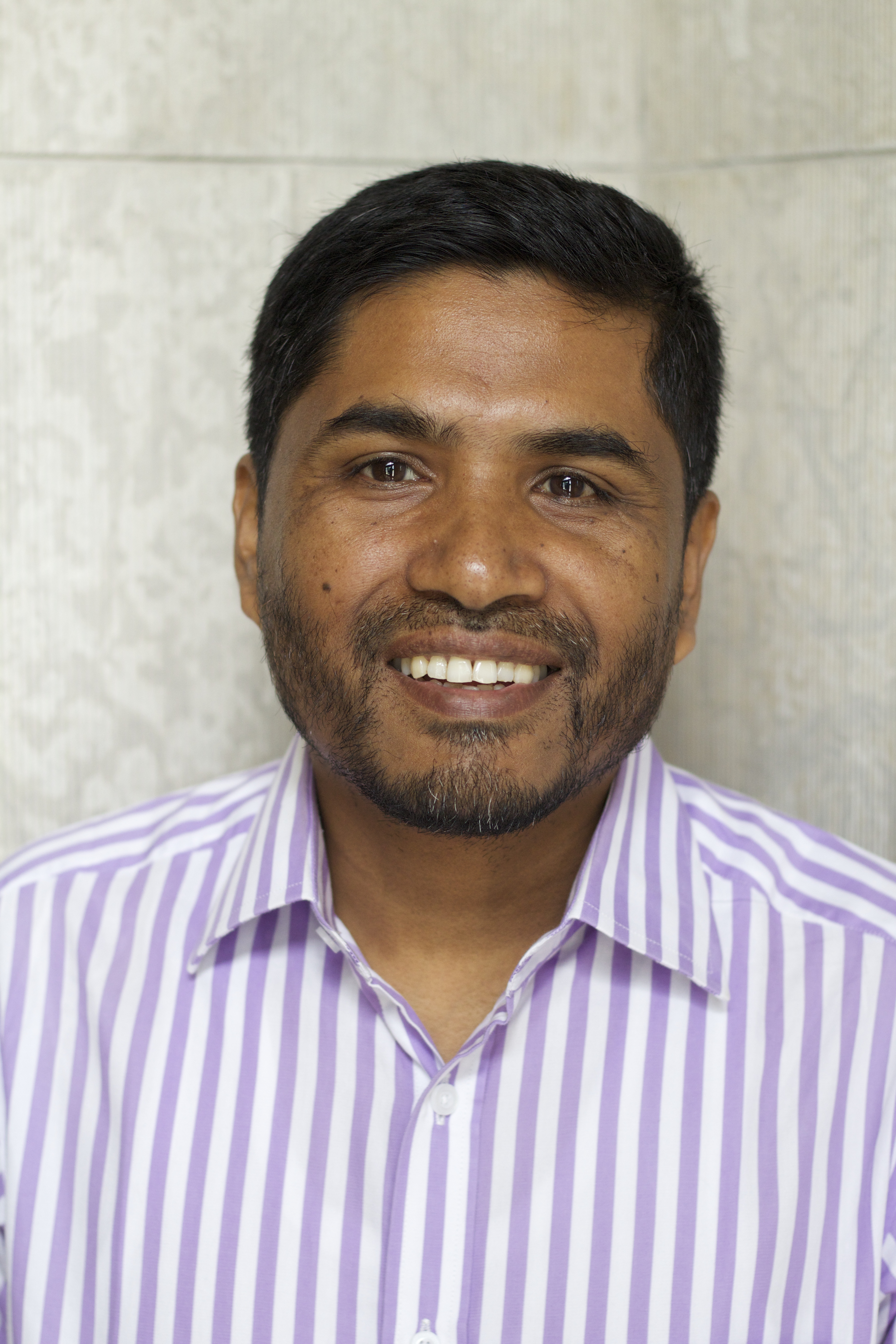
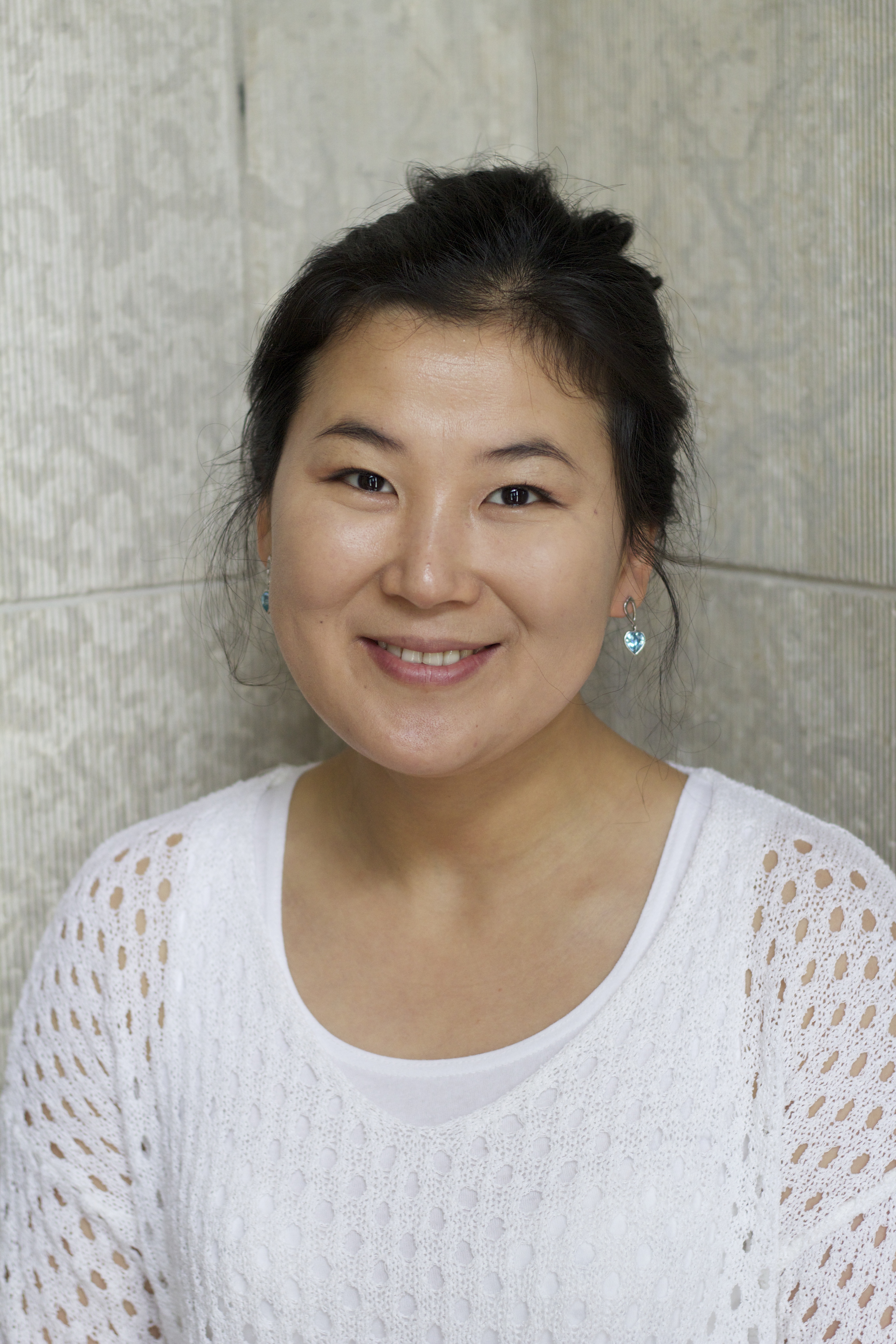
CSOP Participant Profile – Hyun Hee Kim

By Beth Downey Sawatzky

On Fear, Perspective and Peace

Hyun Hee Kim, age 32, is a student at Canadian Mennonite University, completing pre-Master's requirements in Peace and Conflict Transformation Studies (PACTS). What you would never guess after an ordinary conversation with her, is that this is in itself is a miracle.

Kim was born in North Korea, fled with her mother and brother to China at age 14, whence they were deported back to North Korea, narrowly escaped firing squad and endured three months in a NK prison camp; when she was 17 the family fled again, living illegally in China until 2004 when they were able to make there way into South Korea with fake documents and gain official citizenship. By this time, Kim was 25; having lived in partial-hiding nearly all her life, she had received no formal education since age 12.*

Kim enrolled with CSOP for relevant degree credit, taking “The Biblical Story of Hope and Healing” with CMU's own Dan Epp-Tiessen, and Al Fuertes' “Psychosocial Trauma Healing.” As to the first, she recounts how Epp-Tiessen framed his course by sharing his own testimony of loss, hope in Christ, and healing:

“I was really impressed by the instructor's story about how he lost his son; he told us 'There is hope, even when you are in a horrible situation,' and hearing about what he had been through, I couldn't imagine being in that situation—but he held on to hope, to God, with prayer and sometimes even lament. It reminded me of my own experience; our time in China…it was very insecure because we stayed illegally, but my brother and I, we cried out to God for help. I am familiar with what it means to cling to hope through fear.”

Unsurprisingly, Kim struggles with “anxiety, that can sometimes be severe,” and frequently receives counselling to help her cope. For her, these two courses have very practical, personal relevance: “It's a very deep feeling and I want to know, where does it come from, this feeling in me? So the word healing in both these courses called to me. This will be, I hope, not just for credit but a healing experience as well, where I can learn from other students and the teachers, and their stories.”

In “Psychosocial Trauma Healing”, Kim says the topic of resilience stood out. “The word resilience, we learned, indicates a person's ability to recover quickly from trauma or stress. I notice that many North Korean defectors, especially women, do not seem very resilient—they seem weak, not like my mother.” It is the first time in a long time this interviewer has heard the adjective “weak” used so utterly without condemnation. Kim's words carry no malice or judgement at all. She says the question that will remain with her coming away from these courses, is one of practical applied compassion:

“As I experienced, although we know there is hope sometimes we are so weak, we are so depressed, so low, so beaten down that we can't even think about hope. We have, for the moment, lost all hope, and feel powerless. I believe it is true everyone has the power to overcome trouble, but when people feel powerless, when they have lost hope, how can we help them build up their strength, their resilience? How do we restore their hope, and encourage them to carry on?”

Asked about recommendations, Kim observes, in what could be a metaphor for so many of us in our daily battles with pain, strife and loss, “When you are in Korea, North or South, it's hard to see different perspectives on life, on peace.” She adds, “I want so many Koreans—North and South Koreans—to take these courses because they can gain such good perspective. [CSOP] is unique, so I would want them to take it.”

* For a more detailed account of Kim's breath-taking testimony, see article “Piecing together her peace” by MCC's Deborah Froese.
Categories
Media Video

Peacebuilders’ Banquet – Niigaanwewidam James Sinclair

Each week at the CSOP, we host a lunch banquet of great local food and storytelling by one of the week's instructors.  This is a time to gather as a community of peacebuilders, to celebrate with great food and to be inspired by the stories of peacebuilders from around the world. Take a few minutes to be renewed and inspired by this video from the CSOP banquet, June 16, 2016, with storyteller, Niigaanwewidam James Sinclair.


Looking for more stories from the Canadian School of Peacebuilding?  Check out out other videos, audio stories, participant profiles or download a FREE copy of the e-book version of Voices of Harmony and Dissent: How Peacebuilders are Transforming Their Worlds, a collection of stories and essays by CSOP instructors.

Categories
News Profiles

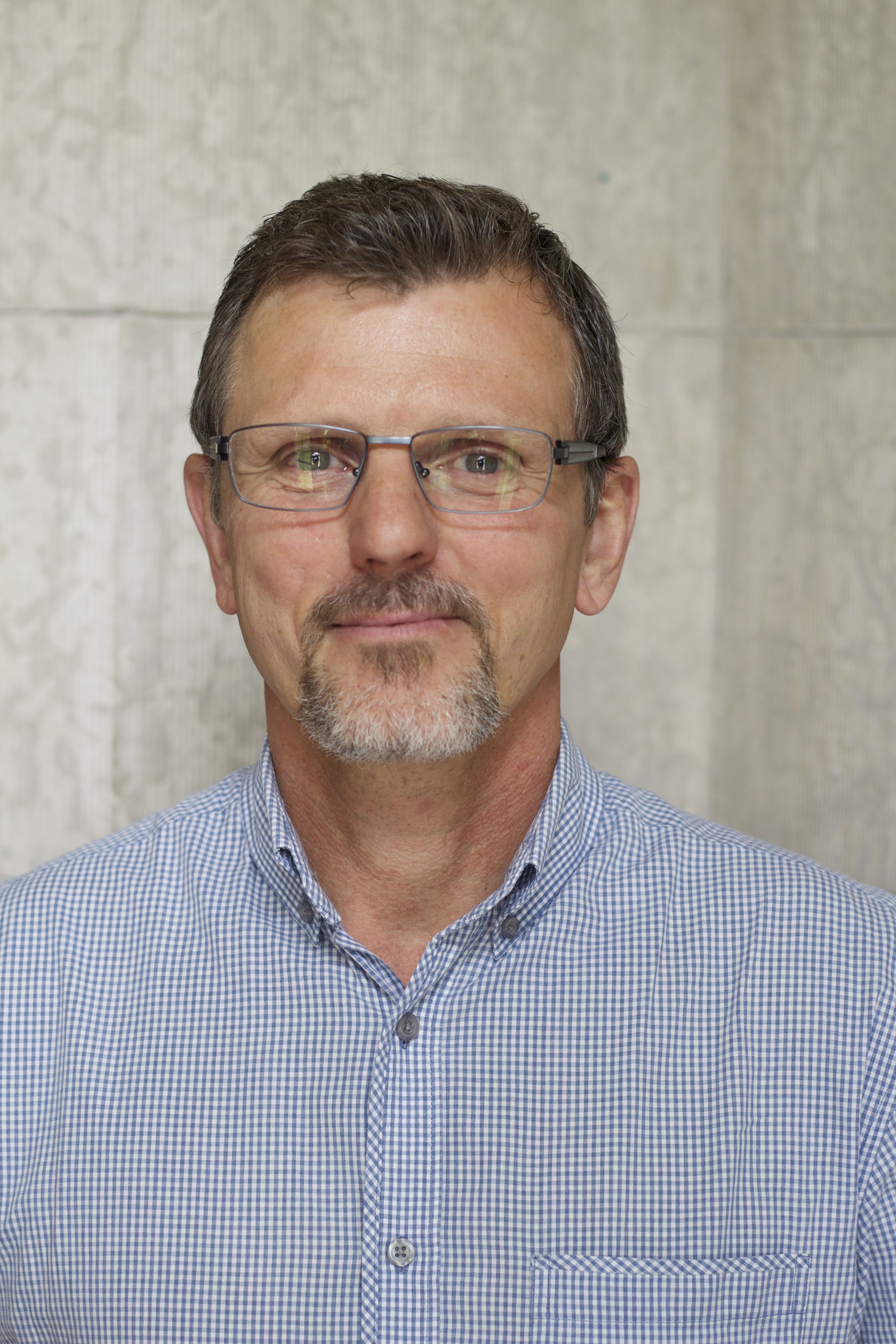
CSOP Participant Profile – David Stoesz

By Aaron Epp

‘The take back has been tangible’

Time spent at the CSOP well worth it for school principal

It’s difficult for teachers to get time off during the school year – they get most of July and August off, after all – but David Stoesz managed to do it so that he could attend the Canadian School of Peacebuilding last June.

Stoesz, who has been an educator for more than 25 years and currently works as the principal at the Bedson campus of Winnipeg Mennonite Elementary and Middle Schools (WMEMS), is a student in CMU’s Master of Peacebuilding and Collaborative Development program.

At the 2016 CSOP, he took The Biblical Story of Healing and Hope with CMU professor Dr. Dan Epp-Tiessen in partial fulfillment of his degree requirements.

“I don’t think there’s anyone in that room who hasn’t had their jaw dropped,” Stoesz said of the course, adding that the class is diverse: he estimated a 40-year age range among the 25 students, and noted that the class included six Canadian pastors, a cleric from Bangladesh, and two Muslim students from Iran.

In addition to the variety of perspectives students brought, Stoesz was impressed with Epp-Tiessen’s lectures.

“It’s been really, really engaging,” Stoesz said. “There was a fair amount of reading and writing to do ahead of time (but) that shows up in class. It’s paying off. He’s really connecting those pieces, and it’s dovetailed nicely.”

While many educators in his shoes study Educational Administration at the graduate level, Stoesz thought learning about peacebuilding at CMU would be a better way to serve his school.

“The peacebuilding and collaborative development seems to me to be more organically centred maybe on the needs of our society, and as I’m an educational administrator… I’m at the grassroots level of meeting the needs of our society: training children and working with families,” he said.

Stoesz takes pleasure in teaching students at WMEMS to have an “attitude of gratitude,” something that connects with the course he took at the CSOP, which talked about having an attitude of thankfulness even in the face of hardship.

“You see in the Psalms struggle (and) difficulty, and (yet) so often the Psalms turn to praise,” Stoesz said. “Praise is an act of gratitude.”

In the end, what Stoesz learned at the CSOP directly applies to his work as an educator – making it easier to get that time off in June to attend.

“I’m able to make the case with my superintendent and get that OK from my board, and support from staff, because (being at the CSOP) is a rare opportunity to actually explore issues of faith and peacebuilding with others,” Stoesz said. “The take back has been tangible.”

Categories
News Profiles

CSOP Participant Profile – Alain Tshinza

By Aaron Epp

Hip-hop artist, youth worker sharpens his skills at the CSOP

Hip-hop musician, graphic designer, filmmaker, youth worker – Alain Tshinza is involved in a lot of different things. It’s these endeavours that brought him to the 2016 Canadian School of Peacebuilding (CSOP).

“Part of the reason I decided to take a class here is to be more relevant in the way I communicate,” the 40-year-old said.

Tshinza took the course Reconciling Our Future: Stories of Kanata and Canada with instructor Niigaanwewidam James Sinclair.

He took the class partly because he’s a newcomer to Canada – he moved to Winnipeg two years ago – but also because the story of Canada’s indigenous peoples resonates with Tshinza’s own background. He grew up in Luxembourg, the son of Congolese immigrants.

“When I see the struggles of indigenous people (in Canada) it reminds me of the story of indigenous people in the Congo or any other country in Africa,” Tshinza said.

“For me, understanding different perspectives is very important,” he added, noting that what he learned about Canada’s history at the CSOP will help him in his work. “I want to contribute to empowering people through my music and my art, and I would like to travel across Canada (including to) northern reserves. I would like to make my music and my art more relevant in a social context in terms of building up people.”

Tshinza currently works as the executive director at Freeze Frame, Manitoba’s Media Arts Centre for Young People.

The centre is a not-for-profit and charitable organization, offering workshops and programs throughout the year, and organizes the International Film Festival for Kids of All Ages each spring.

Prior to moving to Winnipeg, Tshinza earned a Master’s degree in visual arts, and worked as a graphic designer for 12 years.

He also directed a handful of documentaries, including a feature length film about hip-hop culture in Luxembourg called Hamilius.

One of Tshinza’s passions is mentoring young artists.

“I see myself equipping them through workshops to write their own songs, to shoot their own film, to design their own story,” he says.

Studying at the CSOP was a step toward that goal.

“You receive a lot of practical, historical, (and) spiritual information (at the CSOP),” Tshinza said. “What I love is the fellowship that you can have with so many people. I’ve been in touch with a (Canadian) missionary who lives in the Philippines, someone from Sudan… I consider it a privilege.”

Categories
News Profiles

CSOP Participant Profile – Erin Yantzi

By Beth Downey Sawatzky

Lessons in Responsibility

Sometimes, when you discover a good thing, one taste is just not enough. For Erin Yantzi, a third-year student at the University of Waterloo, transferable degree credit from a CSOP intensive was just too good not to come back for seconds.

The double Anthropology and Peace Studies major attended CSOP for the first time in 2013, when she took a course on Palestine that “really opened [her] eyes.” As a result she later interned for two months with Christian Peacemaker Teams in Hebron, Palestine, during the winter of 2015. She says that experience helped her see more clearly “where Christian conviction intersects with society and the individual” and propelled her to further formal study of peacemaking in action. “It made me want to better understand the complexities of various issues around the world and how we as peacemakers can equip ourselves, thoroughly and effectively for those unique issues,” she says.

This year, Yantzi enrolled in “Peace Skills Practice,” an applied peace-building course taught by Natasha Mohammed. She says that the top-notch instructors were one of the foremost reasons she returned to the School of Peacebuilding for a second season: “They really know their stuff and they're practitioners in the field so they can show us what the theories they're introducing actually look like in action. I was also drawn by the opportunity to meet so many different people here, who have all gathered over this common interest that they're very open about.”

Asked what her key take-aways from the course have been, Yantzi says it all comes down to a belief in human responsibility, or as she's come to understand it, “response-ability.”

“One thing I really liked was when Natasha said 'Conflict is not good or bad; it is either productive or destructive depending on how you respond to it.' We often think conflict is out of our control or out of human hands, but in reality humans create it, so humans can solve it—at least when the conflict is amongst humans, as opposed to conflicts with the natural world, like earthquakes, etc. We can choose to respond, and we can choose how to respond. Conflict starts to appear out of our control primarily when we stop thinking about the humans behind it. We don't like to think we have this much control because it's a lot of pressure, a lot of responsibility—but note the root word. 'Response.' Maybe we don't like our instinctive responses to conflict; we wish we didn't have to respond, that we could just hide from the problem or ignore it, but when we own up to the challenge and take responsibility for our power, hope opens up.”

Hope is a key word for Yantzi, as she considers how she would recommend CSOP. She feels the school proposes “more hopeful, trusting ways” of dealing with conflict than are common in everyday public discourse. “Take pacifism, for one example,” she offers, intimating that this conflict transformation tool is not often taken seriously outside of anabaptist circles. “I think I would recommend CSOP generally to people who have a lot of questions about themselves and how the world works, but beyond that, to people who want to be able to practice peace in daily life, who want to see peace grow in our world; especially anybody who is a fan of alternative perspectives on how to make change.”

Categories
News Profiles

CSOP Participant Profile – Marian De Couto

By Beth Downey Sawatzky

On Staying Strong

Marian De Couto, a Toronto native, lived for several years’ time in the city's chapter of L'Arche—a mixed community of people with various disabilities, as well as people generally considered “able”—exploring what she calls “applied solidarity.” This was the same interest that ultimately drew her to Christian Peacemaker Teams [CPT], through whom she has been on assignment in Columbia since December 2015. Her term will not be up until Christmastime 2018. Between now and then, it's up to De Couto and her colleagues to find ways of keeping fit for their task, despite the job challenges.

“The work we do with CPT is difficult on all elements of a person—physical, mental, emotional—so it puts team-members in a kind of 'at-risk' position. We travel a lot, our schedules are pretty irregular, there is a lot of violence in the area generally, and the demands of carrying others' stories bring a natural risk of vicarious trauma, compassion fatigue, things like that. As a result, CPT really encourages extra outside education and training to strengthen team-members in their work.”

Enter intensive training through Canadian School of Peacebuilding. De Couto first heard about CSOP through a CPT colleague. “The training sounded exceptional,” she says, so she enrolled in Al Fuertes' “Psychosocial Trauma Healing” course, seeing it as a valuable professional development opportunity. She did not expect it would be as applicable inwardly, on a personal level, as it was outwardly.

“The professor was really dynamic and experienced! I think the biggest thing I learned is that talking about trauma and healing with others brings up all kinds of wounds, fears, etc., so as we enter into those spaces with others, we need to remember to take care of ourselves. For me and my colleagues in Columbia, self-care is critical to the sustainability of our efforts there. If we're going to do our jobs well, we need to recognize our task is hard!”

In fact, De Couto found her experience so valuable, she's already planning ways to share the wealth: “I just think this information is so relevant to our work, and it's really taught me a lot about what self-care could look like for us in Columbia. I hope to engage my teammates in the material, and the administration team as well. Perhaps through a workshop or something.”

She's not stopping there either. Asked who should know about Canadian School of Peacebuilding, De Couto is exuberant: “Non-Mennonites! When I come here, everybody knows Christian Peacemaker Teams because of its Mennonite roots, and that's great that our work is known, but there's so much good work being done here that other groups need to know about it. It's important! The material is rich and it's not necessary to be Mennonite or even Christian, strictly speaking, to really benefit from the training.”

Categories
News Profiles

CSOP Participant Profile – Bob Aloneissi

By Aaron Epp

CSOP an eye-opening experience for veteran Alberta lawyer

Bob Aloneissi sees conflict in a whole new light after attending the 2016 Canadian School of Peacebuilding.

“I was the kind of person who didn’t like conflict – I thought it meant court litigation,” he says.

Now, Aloneissi doesn’t think conflict is so bad.

“It’s not the conflict that’s bad, it’s the energy that we put into a conflict and how we perceive it that’s good or bad,” he says. “There will always be conflict. (The questions are), what values do we assign to it? What energy do we put into it? And, how do we resolve it?”

Aloneissi travelled from his home in Edmonton, AB, where he has spent the last 28 years working as a lawyer, to take the course, Peace Skills Practice with instructor Natasha Mohammed.

“I wish that I had taken the course… before becoming a lawyer, because a lot of what we do as lawyers is conflict resolution,” he said. “This is something every lawyer should learn about.”

Throughout his career, Aloneissi has been drawn to defending people who have the resources of the state stacked against them.

“When they’re facing an accusation that may or may not be true, they’re so very vulnerable in that position,” Aloneissi.

In recent years, Aloneissi has become interested in restorative justice – particularly victim-offender dialogues, where aggrieved individuals can confront the person who wronged them.

He recalls one powerful experience where a father forgave the man who had killed his son in a drunk driving-related accident.

“That’s the kind of (thing) that’s possible if people are willing to go the extra mile (rather than) just do the same old thing, which we know doesn’t work,” Aloneissi said. “This is more difficult than the usual but it’s more fulfilling. It’s healing. You get a chance to right the wrong.”

Aloneissi had never been to Winnipeg before coming for the 2016 CSOP, but he’s glad he made the trip.

“I’ve been given so much material that I could probably spend the next six months to a year digesting it all,” he says. “It’s something I hope a lot more people would take advantage of.”

In addition to the things he learned, Aloneissi is thankful for the diverse student body at the CSOP. He met people from Iran, the United States, and various countries in Africa.

He also met a young couple in his class, both of whom are lawyers.

“I admired them for taking the course together, and especially at the early part of their careers,” Aloneissi said. “It’s going to help them tremendously.”


Categories
News Profiles

CSOP Participant Profile – Lee Kosa

By Aaron Epp

CSOP embodies ‘dialogue-based posture’ the church needs to take, B.C. pastor says

When pastor Lee Kosa was renegotiating his contract with his church’s board last year, he didn’t want more money. What he asked for instead was more time off and the opportunity to travel to Winnipeg to study at the 2016 Canadian School of Peacebuilding (CSOP).

The board said yes. Kosa is glad they did.

“(The CSOP has) exceeded my expectations tremendously,” says Kosa, who serves as the lead pastor at Cedar Park Church, a Mennonite Brethren congregation in Delta, B.C. “I honestly can’t imagine the two weeks going any better.”

Kosa thinks a lot about where the Church is going. In his view, the evangelical church in its current form is “monologue-based and defensive in its posture toward culture.”

In order for the church to survive, “we have to move toward a more dialogue-based posture toward culture,” Kosa says. “I feel like that is embodied at the CSOP.”

During his first week at the CSOP, Kosa took Peace Skills Practice with Natasha Mohammed. The course equipped Kosa with tools and models to use the next time he faces conflict.

In his second week at the CSOP, Kosa took Arts and Peacebuilding with Rosanna “Dessa” Quesada-Palm.

It’s a fitting course for Kosa, who holds a Bachelor’s degree in illustration from the Rhode Island School of Design, and worked in the field of marketing, communications, and design before becoming a pastor.

The course is directly applicable to Kosa’s work because his church runs an arts camp for young people. The camp was established when the local public school system began cutting back its arts funding.

At the church’s arts camp, children can learn and practice a variety of different art forms, including stop-motion animation, culinary arts, and music.

“I want to see how I can integrate peacebuilding into the arts,” Kosa says. “I’ve just been affirmed (at the CSOP) that there’s so much the arts have to give.”

Kosa is passionately committed to the lifelong pursuit of becoming a peacemaker at home, in his work, and in his community.

One of the things he most appreciated about his time at the CSOP is that the courses are taught by instructors who not only have an academic background, but are also active practitioners themselves.

“Being taught by people who know the academic world and have an education, but are in the trenches doing this work and have done it for years, it's just so different,” he says. “Their voices carry a different authority and weight.”

“I'd recommend it to any pastor,” he adds. “I’m going to go back to Vancouver telling everyone I know: You’ve got to go to the CSOP.”

Categories
Media Video

Peacebuilders’ Banquet – Dessa Quesada-Palm

Each week at the CSOP, we host a lunch banquet of great local food and storytelling by one of the week's instructors.  This is a time to gather as a community of peacebuilders, to celebrate with great food and to be inspired by the stories of peacebuilders from around the world. Take a few minutes to be renewed and inspired by this video from the CSOP banquet, June 23, 2016, with storyteller, Dessa Quesada-Palm.


Looking for more stories from the Canadian School of Peacebuilding?  Check out out other videos, audio stories, participant profiles or download a FREE copy of the e-book version of Voices of Harmony and Dissent: How Peacebuilders are Transforming Their Worlds, a collection of stories and essays by CSOP instructors.

Categories
News Profiles

CSOP Participant Profile – Zahid Rohman

By Beth Downey Sawatzky

God has no flag

At a time when the fears and antipathies defining global politics revolve so closely around religious violence and conflict, peacebuilding that strives to unite religious groups is more relevant than ever. This year, one CSOP student in particular distinctively embodied such bridge-building passion:

Zahid Rohman is a practising Muslim. He holds a Master's degree in World Religions and Culture from the University of Dhaka in his home country of Bangladesh, and has studied intermittently at Eastern Mennonite University since 2012. This experience of Mennonites and anabaptism prompted him to pursue further exposure, contacting MCC Bangladesh where he learned about the CSOP:

“I came [to CSOP] partly to study the courses, but also to study Mennonites generally. According to my experiences, in the United States and now here, I have found Mennonites to be very generous, soft, gentle people. Their beliefs are very near my own in so many ways,” he says.

But such discoveries of fellow-feeling no longer surprise Rohman.  “There are many many ideas which, in my experience, are common—in agreement—between religions. God has no flag, no nation, no country. All of human kind are his creations and most all religions have common basic principles. The points of disagreement are often exaggerated or misinterpreted, and this leads to an artificial wall being built between people that is unnecessary.  The Quran teaches that humans are created for the welfare of other humans. If this is so, how can we continue as we are, divided? Only when we discard artificially inflamed barriers, walls, can we embrace the common truth that binds us together.”

From under the continual pile-up of negative media messaging vis-a-vis religious conflict, Rohman's ability to name division sown in falsehood for what it is, his words of hope and possibility, come as a welcome relief. This is an active habit of thought for him which, he says, found a name for the first time in his course with Dan Epp-Tiessen: “For me, the one most memorable thing from this course was the instructor's definition of hope. He told us, 'hope is not desire, nor expectation. Hope is an action.'”

In his working life, Rohman serves as the Assistant General Manager of the Bangladesh Institute of Health & Sciences [BHIS]; as a result, he deals daily with people who have suffered physical and/or psychological trauma, often due to the violence of prejudiced government systems discriminating between tribal and settler peoples. In his context, hope is a key occupational skill; Rohman says has been grateful for the unique professional development opportunity CSOP has been in this respect.

“I would recommend CSOP especially to those involved in helping professions” he says. “Health, social work, clergy, etc. For instance, I know there are at least 200 students enrolled in BIHS nursing programs right now, and every last one of them should take a CSOP course. However, I really think all people should know about CSOP regardless of profession, because it deals with real life issues that affect everybody in one way or another. For example, everyone has trauma, or they will be traumatized at some time, or they will know somebody close who has been. Furthermore, I think everyone should learn how to view stories—life stories, religious stories, etc.—through the lens of hope and healing, because this view can bring new life to those who take it. For those who choose to come, taking a CSOP course will change your life's vision. It will make you a more open person.”